Arvind Kejriwal and Manish Sisodia Submit Surety Bonds After Court Discharge in Excise Policy Case
Synopsis
In a significant legal development, Arvind Kejriwal and Manish Sisodia have provided surety bonds following their discharge from a corruption case linked to the Delhi excise policy. This article delves into the implications of their legal journey and the ongoing challenges posed by the CBI.
Key Takeaways
Arvind Kejriwal and Manish Sisodia submitted surety bonds of Rs 50,000 each.
The Rouse Avenue Court discharged them from a corruption case related to the Delhi excise policy.
The CBI has appealed the discharge order in the Delhi High Court.
The trial court dismissed the CBI's claims of a conspiracy.
Kejriwal has requested a transfer of the CBI's petition to a different bench.
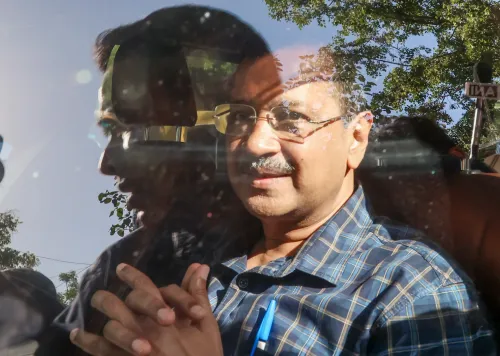
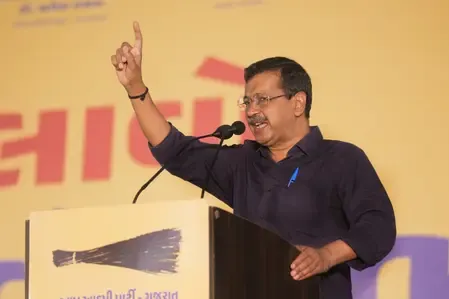
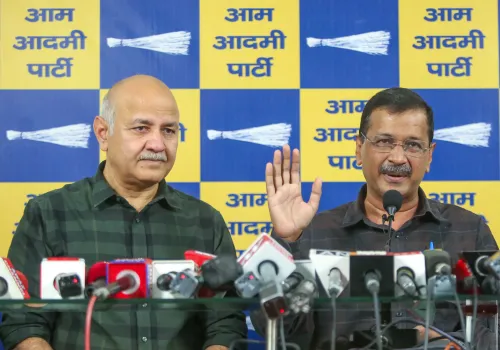
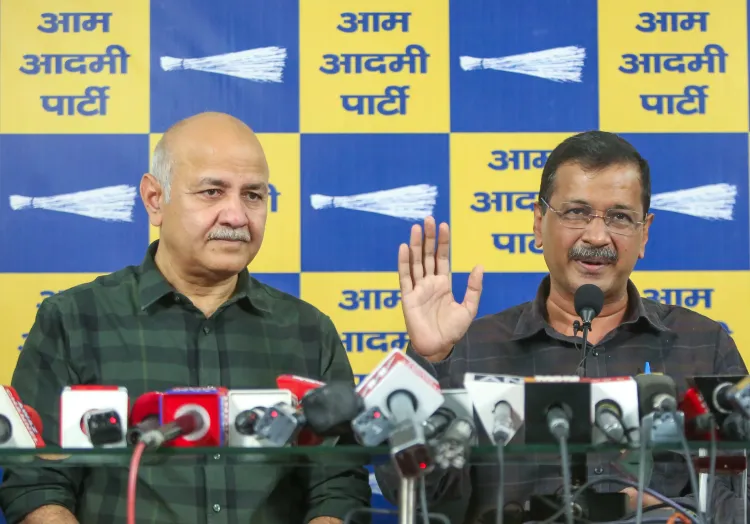
New Delhi, March 14 (NationPress) On Saturday, Arvind Kejriwal, the former Chief Minister of Delhi, along with Manish Sisodia, the former Deputy Chief Minister, submitted surety bonds worth Rs 50,000 each at a court here after their release from a corruption case tied to the now-defunct Delhi excise policy.
The leaders from the Aam Aadmi Party (AAP) appeared before the Rouse Avenue Court and presented the surety bonds as directed by the court upon their discharge from the case, which was under investigation by the Central Bureau of Investigation (CBI).
According to legal norms, individuals who are discharged or acquitted in criminal cases must provide a surety bond to guarantee their presence in court should the prosecution appeal the ruling.
In a thorough judgment comprising over 1,100 paragraphs, the Rouse Avenue Court, on February 27, discharged all defendants, including Kejriwal and Sisodia, regarding the alleged discrepancies in the creation and execution of the excise policy initiated by the AAP-led government of Delhi.
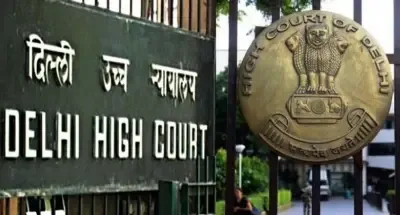
Meanwhile, the CBI has contested the discharge order at the Delhi High Court via a criminal revision petition. Recently, a single-judge Bench led by Justice Swarana Kanta Sharma issued notices to Kejriwal, Sisodia, and other defendants concerning the probe agency’s appeal against the trial court's refusal to impose charges.
During the hearing, the Delhi High Court also suspended the trial court’s directive for departmental action against a CBI officer involved in the investigation and noted that comments made about the investigating body and the officer would remain on hold.
The case revolves around alleged irregularities in the formulation and implementation of the excise policy introduced by the then AAP-led government, which the CBI asserted was intended to favor certain private liquor companies in exchange for purported bribes.
However, the trial court dismissed the CBI's narrative of an overarching conspiracy, stating that existing records showed the policy was derived from a consultative and deliberative process aligned with established procedures.
In another development, Kejriwal has appealed to Chief Justice Devendra Kumar Upadhyaya for the reassignment of the CBI’s revision petition from Justice Sharma’s Bench to a different one in the Delhi High Court.
Point of View
It is essential to present an unbiased view of the ongoing legal challenges faced by prominent political figures. The discharge of Kejriwal and Sisodia marks a critical moment in the scrutiny of the Delhi excise policy, while the CBI's appeal highlights the continuing tension between investigative bodies and political leadership. This situation encapsulates the complexities of governance and accountability.
NationPress
23 Sept 2026
Frequently Asked Questions
What bonds did Kejriwal and Sisodia submit?
Kejriwal and Sisodia submitted surety bonds of Rs 50,000 each as required by the court following their discharge from the corruption case.
Why were they discharged from the case?
They were discharged due to a ruling from the Rouse Avenue Court, which found insufficient grounds for the alleged irregularities in the excise policy.
What is the CBI's next step?
The CBI has filed a criminal revision petition at the Delhi High Court challenging the trial court's discharge order.
What does the discharge mean for Kejriwal and Sisodia?
The discharge means they are no longer formally accused in the case, but the CBI's appeal could still change that status.
What implications does this case have for the AAP?
The ongoing legal challenges may affect the AAP's political standing and public perception, particularly regarding governance and accountability.