How is the Vijayan Government’s Full Budget Addressing Welfare and Federal Resistance Ahead of Assembly Elections?
Synopsis
In a strategic move ahead of the Assembly elections, the Kerala government, led by Finance Minister K.N. Balagopal, unveiled a comprehensive budget focusing on welfare spending and infrastructure while resisting fiscal neglect from the Centre. This budget positions the LDF government as a defender of social security and federal rights.
Key Takeaways
Strong focus on welfare spending.
Resistant stance against central fiscal policies.
Significant allocations for women's security pensions.
Emphasis on infrastructure development.
Proactive engagement in federalism discussions.
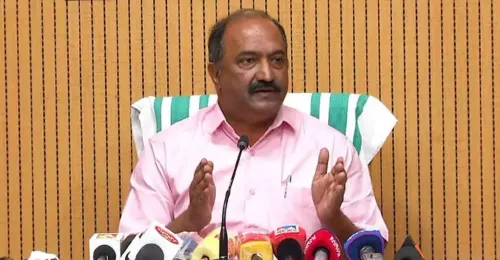
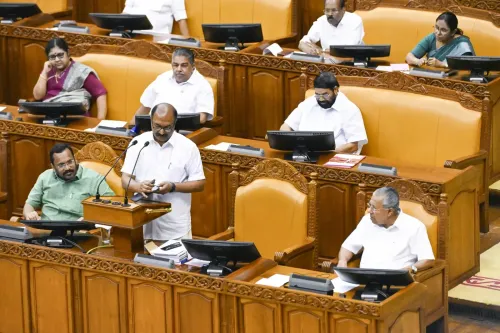
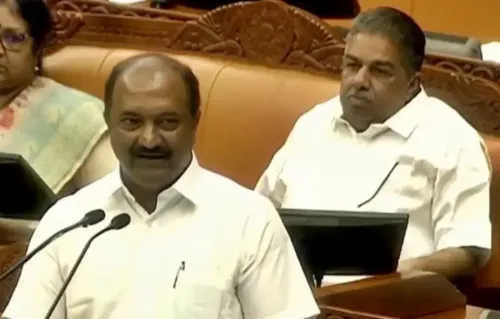
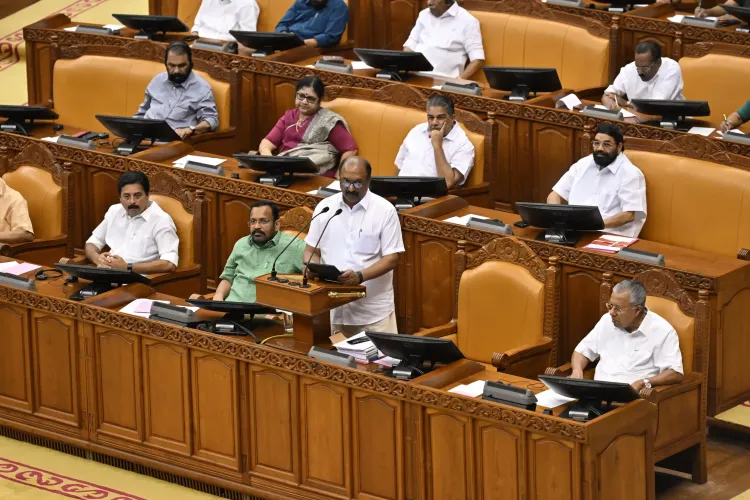
Thiruvananthapuram, Jan 29 (NationPress) On Thursday, State Finance Minister K.N. Balagopal unveiled the sixth successive budget of the LDF administration in the Kerala Assembly, placing a robust focus on welfare expenditures, infrastructure enhancement, and a stand against what he labeled as ongoing fiscal negligence by the Centre.
The Vijayan administration opted for a comprehensive budget despite the upcoming Assembly elections, diverging from the traditional approach of presenting a vote-on-account budget.
In his opening remarks, Balagopal emphasized that the government had fulfilled all its commitments and expressed confidence in subjecting each developmental and welfare initiative to public evaluation.
He proclaimed that Kerala had established a “new normal,” anticipating transformative changes in the state over the next decade.
The Finance Minister seized this opportunity to launch a pointed political critique against the Centre, accusing it of undermining Kerala’s tradition of social harmony and federal principles through sectarian forces.
A key aspect of the budget was the sustained focus on welfare pensions.
The government has allocated Rs 14,500 crore for welfare pensions in the forthcoming financial year, which includes Rs 3,820 crore dedicated to women’s security pensions.
Balagopal noted that the LDF government had progressively increased welfare pensions, with nearly 30 percent of the state's populace currently receiving some form of welfare assistance.
He highlighted that government aid is now reaching close to one crore individuals.
By the conclusion of the government’s second term, he stated that a total of Rs 54,000 crore would have been distributed as welfare pensions over a decade.
Reaffirming that the state’s debt remains within manageable limits, the Finance Minister asserted that Kerala had made “constructive strides” over the previous four years, despite what he termed “serious neglect” from the Centre.
He indicated that the budget officially registers the state’s protest against this neglect.
According to budget data, public debt rose from 12.60 percent in 2023-24 to 15.68 percent in 2024-25. However, the ratio of public debt to domestic growth increased only slightly, from 23.60 percent to 24.83 percent, which Balagopal claimed demonstrates fiscal stability.
The Finance Minister accused the Centre of diminishing Kerala’s tax share, restricting borrowing limits, and tightening financial controls towards the year’s end.
Despite these challenges, he remarked that the state managed to remain solvent through enhanced own-tax revenue mobilization.
He further claimed that the Centre is gradually eroding states’ financial autonomy, cautioning that such actions jeopardize the essence of Indian federalism.
“Federalism is the soul of India, and this budget encapsulates our resistance to efforts aimed at weakening it,” he stated.
In terms of infrastructure, Balagopal credited Chief Minister Pinarayi Vijayan’s political determination for the swift advancement of National Highway development, asserting that long-delayed projects have finally come to fruition under the current administration.
With Assembly elections approaching, this budget intertwines strong welfare pledges with a clear political narrative, positioning the LDF government as both a 'protector' of social security and a 'defender' of Kerala’s fiscal rights within the federal structure.
Point of View
The budget presented by the Kerala government reflects a crucial balance between welfare commitments and political strategy, particularly in the context of upcoming elections. The focus on social security and federal rights resonates with a broader audience, as it emphasizes the need for states to maintain autonomy against central pressures.
NationPress
10 Oct 2026
Frequently Asked Questions
What are the key features of the Kerala budget?
The budget emphasizes welfare spending, infrastructure development, and a stance against fiscal neglect by the Centre, with significant allocations towards welfare pensions.
How much has been allocated for welfare pensions?
The budget allocates Rs 14,500 crore for welfare pensions in the next financial year, including Rs 3,820 crore for women’s security pensions.
What is the government's stance on federalism?
The Finance Minister has asserted that the budget reflects a resistance to attempts to undermine the federal structure, emphasizing the importance of federalism as the 'soul of India.'
How does the budget address infrastructure needs?
The budget highlights significant advancements in National Highway development, attributing progress to the political will of Chief Minister Pinarayi Vijayan.
What impact does this budget have on the upcoming elections?
With Assembly elections nearing, the budget strategically combines welfare commitments with a political message, positioning the LDF government favorably among voters.