Concerns Spike as Kerala Minister Reviews Wayanad Rehab Site Amid Housing Defects
Synopsis
Kerala Revenue Minister K. Rajan’s recent visit to the Wayanad rehabilitation project has spotlighted critical issues surrounding housing quality and delays in providing permanent homes for landslide survivors.
Key Takeaways
Minister Rajan's visit highlights significant issues in Wayanad's rehabilitation efforts.
Concerns about construction quality have been raised amidst visible damage.
The project aims to complete 410 homes by October.
Political tensions are rising with planned protests from the Youth Congress.
Transparency and accountability remain at the forefront of community concerns.
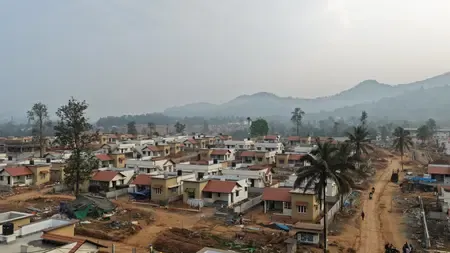
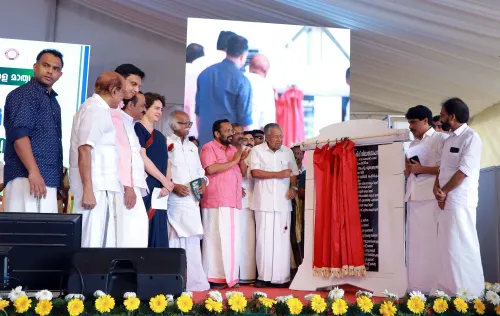
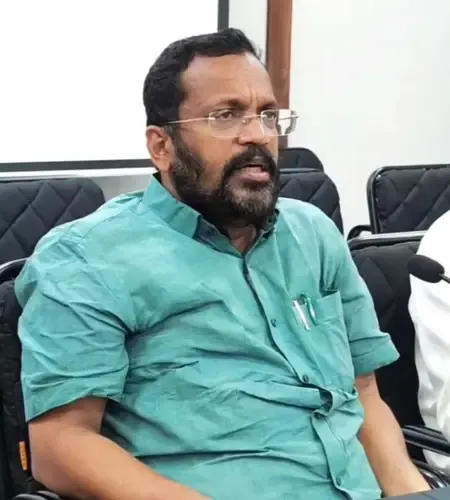
Kalpetta, April 18 (NationPress) Growing alarm regarding the rehabilitation of landslide victims in Wayanad has come to the forefront, following Kerala Revenue Minister K. Rajan's visit on Saturday to the Elston Estate project. This visit has reignited discussions about construction standards, delays, and accountability.
The Minister evaluated a residence in the Mundakkai–Chooralmala rehabilitation township where cracks were allegedly discovered, accompanied by local leaders from the ruling Left party.
With potential protests on the horizon, law enforcement was deployed in the vicinity.
During the inspection, noticeable seepage marks on the roof raised concerns, although Minister Rajan refuted the claims of structural damage, asserting that only water stains were evident.
He emphasized that the houses have yet to be officially handed over to the beneficiaries, with only land titles distributed thus far.
"If issues arise post-handover, they will be addressed seriously. The contractor will be held accountable as per the agreement," he stated, assuring the public that the state government is committed to ensuring corrective measures.
The project, which comprises 410 homes, aims for completion by October; failure to meet this deadline will lead to consequences for those responsible.
In the meantime, the Youth Congress has declared a protest at the site, further amplifying the political tension.
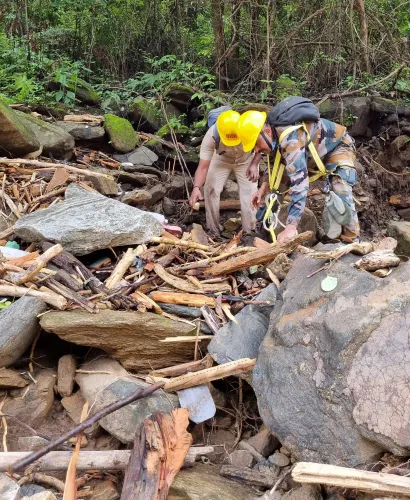
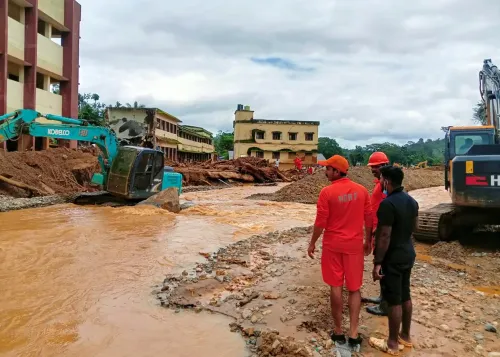
Devastating landslides occurred in July 2024, displacing hundreds.
Victims are still awaiting permanent housing, with many rehabilitation commitments yet to be honored.
Although over 1,000 families were initially identified for resettlement, the current list has dwindled to about 451, sparking concerns regarding transparency and eligibility.
Equally concerning are allegations about the quality of construction.
Houses purportedly built at an expense of around Rs 30 lakh each have displayed signs of damage even before occupancy.
While officials claim that over 170 houses have been completed, reports indicate that only a small number are even partially livable, with many lacking essential finishing touches.
Questions are also being raised regarding the allocation of funds received after the disaster.
With significant financial aid, the lack of transparent accounting has raised suspicions of mismanagement.
Locals allege widespread irregularities, citing incomplete infrastructure and substandard construction as proof.
Beyond housing, many indirectly affected, including small traders and plantation workers who lost their livelihoods, remain unaddressed.
As the state government defends its actions and promises remedial steps, the visible cracks—both literal and administrative—continue to intensify the worries of a community yearning to reconstruct its future.
Point of View
The quality of construction and the delayed handover of homes raise pressing questions about accountability and transparency. It is crucial to address these issues to restore public trust and ensure that the needs of affected families are prioritized.
NationPress
19 Sept 2026
Frequently Asked Questions
What prompted the Kerala Minister's visit to Wayanad?
The visit was prompted by growing concerns about the rehabilitation process for landslide survivors and the quality of construction at the Elston Estate project.
What issues were reported during the Minister's inspection?
Cracks and seepage marks were reported in some houses, leading to concerns about construction quality.
How many houses are included in the rehabilitation project?
The project comprises 410 houses designed for the landslide survivors.
What are the allegations related to the construction quality?
There are allegations that houses, costing around Rs 30 lakh each, have shown signs of damage before occupancy.
What actions are being taken in response to these concerns?
The state government has assured that issues will be addressed seriously, and the contractor will be held accountable.