Kerala AYUSH University: Govt forms panel to draft bill in 2 months

Synopsis
Kerala has moved to carve out a standalone AYUSH University from the Kerala University of Health Sciences umbrella — a structural shift that could make it the country's most specialised hub for Ayurveda, Homoeopathy, Siddha, and Unani education and research. With a bill due in two months and headquarters planned at Tripunithura, the state is betting on institutional depth to give India's traditional medicine sector global academic credibility.
Key Takeaways
Kerala Health Minister K.
Muraleedharan announced a four-member committee on Tuesday to draft the Kerala AYUSH University Bill .
The panel has two months to submit the draft legislation.
The university will consolidate all AYUSH institutions currently affiliated with the Kerala University of Health Sciences (KUHS) .
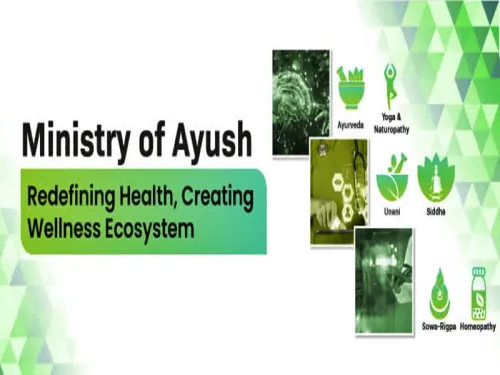
It will cover Ayurveda, Homoeopathy, Siddha, Unani , and other recognised AYUSH streams.
The proposed headquarters is the School of Fundamental Research in Ayurveda , Tripunithura .
The initiative aligns with the Centre's emphasis on expanding AYUSH through specialised education and evidence-based practice.
Kerala has taken its first formal step toward establishing a dedicated AYUSH University, with Health and Devaswom Minister K. Muraleedharan on Tuesday announcing the constitution of a four-member committee to draft the enabling legislation. The panel has been given two months to submit the draft Kerala AYUSH University Bill, marking a significant push to elevate the state's traditional medicine sector to a standalone academic institution.
What the Proposed University Will Cover
The new university is envisaged as a unified academic body that will bring together all AYUSH educational institutions in Kerala currently affiliated with the Kerala University of Health Sciences (KUHS). Its mandate will span academic programmes, clinical training, research, drug development, and policy initiatives across Ayurveda, Homoeopathy, Siddha, Unani, and other recognised AYUSH streams.
The institution is proposed to be headquartered at the School of Fundamental Research in Ayurveda at Tripunithura, a location that already serves as a centre for classical Ayurvedic scholarship in the state.
Committee Structure and Mandate
The drafting committee will be chaired by the Principal Secretary of the AYUSH Department, with the State Mission Director of the National AYUSH Mission serving as convener. The other two members are the Director of Ayurvedic Medical Education and the Principal and Controlling Officer of the Government Homoeopathic Medical College.
Beyond framing the legislation, the committee has been tasked with examining governance structure, academic framework, research priorities, and administrative systems before submitting its recommendations.
Why This Matters for Kerala and India
Kerala is already regarded nationally as a leading centre for Ayurveda, home to a dense network of traditional medicine colleges, practitioners, and wellness infrastructure. A dedicated university is expected to sharpen that edge by creating what Minister Muraleedharan described as 'an integrated academic ecosystem capable of meeting international standards in teaching and research.'
Notably, the initiative aligns with the Centre's broader push to expand the AYUSH sector through specialised education and evidence-based clinical practice. India's traditional medicine industry has seen growing global interest, and a state-level university with research and pharmaceutical innovation at its core could enhance India's indigenous healthcare systems on the world stage.
Broader Impact on AYUSH Education
The proposed university is expected to strengthen interdisciplinary research, raise the quality of AYUSH education, and expand avenues for clinical studies and pharmaceutical innovation. By consolidating institutions currently spread across the KUHS umbrella, it aims to reduce administrative fragmentation and allow for more focused, sector-specific academic governance.
With the draft bill due within two months, the next milestone will be legislative scrutiny and stakeholder consultations before the university can be formally constituted.
Point of View
Not merely symbolic. Separating AYUSH institutions from the KUHS umbrella into a dedicated university signals a recognition that traditional medicine requires its own academic governance — not a sub-division of a broader health sciences body. The real test will be whether the new university can build credible research output that meets peer-reviewed international standards, rather than functioning as an administrative reshuffle with a new nameplate. India's AYUSH sector has long struggled with the evidence gap; a university designed around pharmaceutical innovation and clinical studies could begin to close it — if the legislation gives it genuine autonomy and research funding, not just a reorganised organogram.
NationPress
19 Sept 2026
Frequently Asked Questions
What is the Kerala AYUSH University being proposed?
It is a dedicated state university planned to bring all AYUSH educational institutions in Kerala — currently affiliated with the Kerala University of Health Sciences — under a single specialised body. The university will oversee academic programmes, clinical training, research, drug development, and policy across Ayurveda, Homoeopathy, Siddha, Unani, and other AYUSH streams.
What has the Kerala government done to set it up?
Health Minister K. Muraleedharan announced the formation of a four-member drafting committee on Tuesday, tasked with submitting the Kerala AYUSH University Bill within two months. The committee will also examine governance structure, academic framework, and administrative systems.
Where will the AYUSH University be located?
The university is proposed to be headquartered at the School of Fundamental Research in Ayurveda at Tripunithura, Kerala.
Who is on the drafting committee?
The committee is chaired by the Principal Secretary of the AYUSH Department. The State Mission Director of the National AYUSH Mission serves as convener, with the Director of Ayurvedic Medical Education and the Principal and Controlling Officer of the Government Homoeopathic Medical College as the other two members.
Why is a separate AYUSH University needed in Kerala?
A dedicated university is intended to remove AYUSH institutions from the broader Kerala University of Health Sciences umbrella, enabling more focused academic governance, stronger interdisciplinary research, and greater emphasis on pharmaceutical innovation and clinical studies in traditional medicine.