Kerala NRK leader urges CM Satheesan to fund Thiruvananthapuram-Kasaragod rail via diaspora bonds
Synopsis
With over ₹3 lakh crore in NRE deposits sitting idle in Kerala's banks, a veteran UAE-based NRK leader has urged CM Satheesan to issue tax-free diaspora bonds for the Thiruvananthapuram-Kasaragod rail corridor — turning a remittance-dependent economy into an investment-led one, modelled on the Konkan Railway's own financing playbook.
Key Takeaways
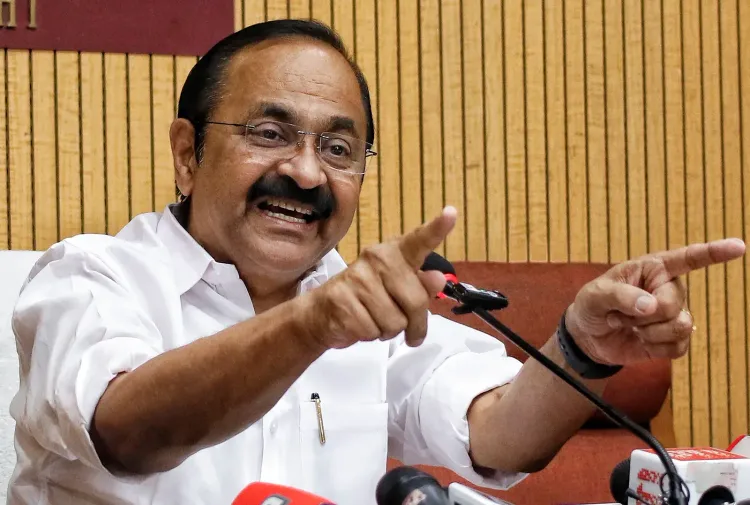
Shamsudheen , Chairman of Pravasi Bandhu Welfare Trust , has written to Kerala CM V.D.
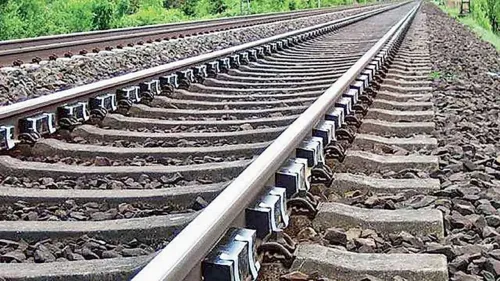
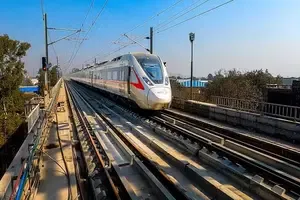
Satheesan urging diaspora bond financing for the Thiruvananthapuram-Kasaragod high-speed rail corridor .
He proposes secured, redeemable, tax-free, non-convertible bonds targeted at Non-Resident Keralites, modelled on the Konkan Railway bond scheme.
Malayalis remit an estimated ₹2.3–2.5 lakh crore annually — reportedly nearly one-fifth of India's total inward remittances.
Over ₹3 lakh crore in NRE deposits are currently parked in Kerala banks earning modest returns rather than funding productive investment.
The proposal aligns with a policy direction stated by CM Satheesan in his Budget, which called for shifting diaspora wealth from remittances to investments.
Shamsudheen also urged the government to extend the bond model to other major infrastructure projects beyond the rail corridor.
A veteran Non-Resident Keralite with nearly five decades in the UAE has written to Kerala Chief Minister V.D. Satheesan, urging him to make the proposed Thiruvananthapuram-Kasaragod high-speed rail corridor the first major infrastructure project to convert the state's enormous expatriate savings into long-term productive investments. The letter, from K.V. Shamsudheen, Chairman of Pravasi Bandhu Welfare Trust, arrives as Kerala's government has itself signalled a policy shift from remittance dependency toward diaspora-led capital formation.
The Konkan Railway Blueprint
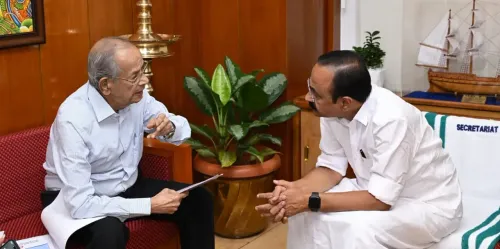
Shamsudheen's proposal draws directly from the financing playbook of the Konkan Railway, which successfully mobilised NRI funds through tax-free bonds in the 1990s. He has suggested that the state issue secured, redeemable, tax-free, non-convertible bonds specifically targeted at Non-Resident Keralites to raise capital for the ambitious rail project, which is being developed under the leadership of Metro Man E. Sreedharan.
'I had the privilege of promoting Konkan Railway tax-free bonds among NRIs in the UAE. I witnessed first-hand the tremendous enthusiasm expatriates showed for nation-building projects. I believe Malayali expatriates will respond similarly if a credible investment opportunity is created for Kerala,' Shamsudheen said in his letter.
The Scale of Kerala's Untapped Diaspora Wealth
The financial case Shamsudheen presents is substantial. Malayalis remit an estimated ₹2.3–2.5 lakh crore to Kerala annually — reportedly close to one-fifth of India's total inward remittances. Additionally, over ₹3 lakh crore in Non-Resident External (NRE) deposits are currently parked in Kerala's banks, earning modest interest rather than being deployed into the productive economy.
According to Shamsudheen, a significant portion of expatriate wealth continues to flow into gold and real estate — assets that generate limited employment or economic multiplier effects — rather than into sectors capable of accelerating growth and creating jobs.
'If even a fraction of these savings is channelled into infrastructure, industries and employment-generating projects, Kerala can fundamentally transform its economy,' he argued.
Alignment with the State Budget's Policy Direction
The proposal, Shamsudheen noted, closely mirrors a policy direction already articulated by Chief Minister Satheesan in his Budget address, where he observed that Kerala's diaspora had long been the backbone of the state's economy through remittances, and that the next phase must focus on converting those remittances into investments. The letter effectively calls on the government to operationalise that stated intent through a concrete financing instrument.
Shamsudheen argued that Kerala's core challenge is not a shortage of capital but the absence of structured avenues to channel household savings into long-term productive assets. 'Kerala is not merely a land of opportunities, it is a land of untapped resources. What is required is an investor-friendly ecosystem capable of inspiring confidence among the global Malayali community,' he said.
Beyond the Rail Project
Shamsudheen's letter goes beyond the high-speed corridor. He urged the government to replicate the bond-based financing model across other major infrastructure projects, arguing that Kerala possesses enormous untapped financial and human resources that remain dormant for want of the right investment architecture. The Thiruvananthapuram-Kasaragod corridor, he suggested, could serve as the proof-of-concept that demonstrates the viability of diaspora-funded infrastructure at scale.
Whether the Satheesan government translates the proposal into a formal policy instrument will be closely watched by Kerala's global Malayali community and infrastructure observers alike.
Point of View
And the Konkan Railway precedent shows diaspora bonds can work when backed by a credible sovereign-linked guarantee. The harder question is whether the Satheesan government has the institutional capacity to structure, market, and service such instruments at scale. Kerala's track record on large infrastructure execution is mixed, and bond investors — unlike remitters — demand returns and accountability. The real test is not whether the diaspora will invest, but whether the state can build the regulatory and governance framework that makes it rational for them to do so.
NationPress
26 Sept 2026
Frequently Asked Questions
What is the Thiruvananthapuram-Kasaragod high-speed rail corridor?
It is an ambitious high-speed railway project proposed for Kerala, being developed under the leadership of Metro Man E. Sreedharan, that would connect Thiruvananthapuram in the south to Kasaragod in the north of the state. The corridor is intended to dramatically reduce travel time across Kerala's length.
What type of bonds has K.V. Shamsudheen proposed for funding the project?
Shamsudheen has proposed secured, redeemable, tax-free, non-convertible bonds targeted specifically at Non-Resident Keralites, modelled on the tax-free bond scheme that successfully financed the Konkan Railway by mobilising NRI funds in the UAE and elsewhere.
How much money do Keralite expatriates send home and hold in banks?
According to Shamsudheen's letter, Malayalis remit an estimated ₹2.3–2.5 lakh crore to Kerala annually, which is reportedly close to one-fifth of India's total inward remittances. Additionally, over ₹3 lakh crore in Non-Resident External deposits are currently held in Kerala banks.
Why does Shamsudheen argue that Kerala's capital is 'untapped'?
He argues that the challenge is not a shortage of capital but the absence of structured investment avenues. A large share of expatriate wealth flows into gold and real estate rather than job-creating sectors, and NRE deposits sit in banks earning modest interest instead of being deployed into infrastructure or industry.
How does this proposal connect to Kerala's Budget?
Chief Minister V.D. Satheesan stated in his Budget that the next phase of Kerala's economic development should focus on converting diaspora remittances into investments. Shamsudheen's letter explicitly references this policy direction and calls on the government to operationalise it through the bond financing model for the high-speed rail project.