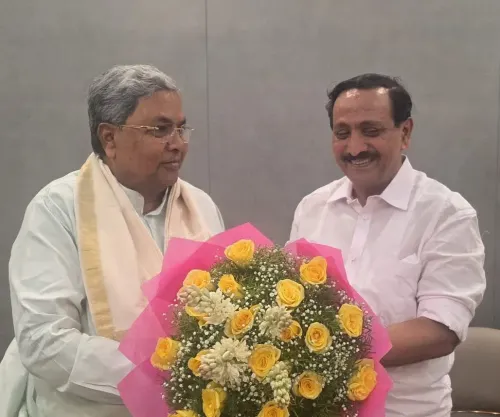
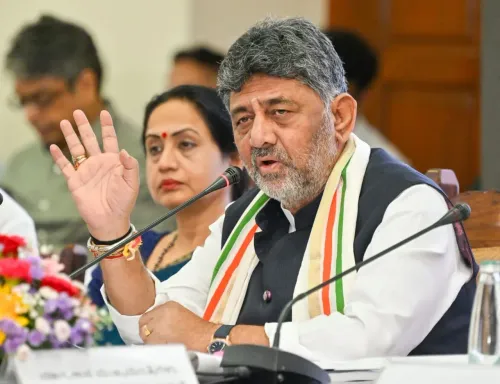
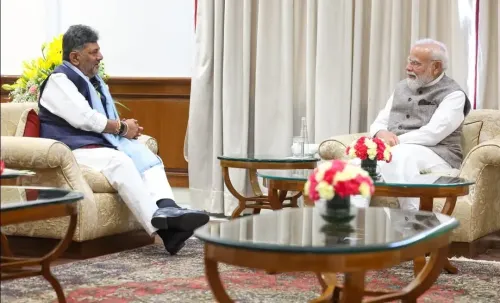
Kerala PWD Minister Basheer calls on CM Shivakumar in Bengaluru

Synopsis
Kerala's Public Works Minister P. K. Basheer called on Karnataka Chief Minister D. K. Shivakumar in Bengaluru on 14 June 2026, with talks focusing on inter-state cooperation — continuing a long-standing bilateral engagement between the two southern states on roads, connectivity, and shared infrastructure.
Key Takeaways
Kerala Minister for Public Works Shri P.
Basheer met Karnataka Chief Minister Shri D.
Shivakumar in Bengaluru on 14 June 2026 .
Discussions focused on strengthening inter-state cooperation between Karnataka and Kerala, according to the Chief Minister's Office.
Both states share a history of bilateral engagement on NH-766 and border road upgrades under the central Bharatmala programme .
Key stakeholders include the Public Works Departments of both states and border-district communities in areas such as Kodagu , Dakshina Kannada , and Kasaragod .
Follow-up technical meetings between the two PWDs are expected, with potential joint project announcements ahead of the next budget cycle.
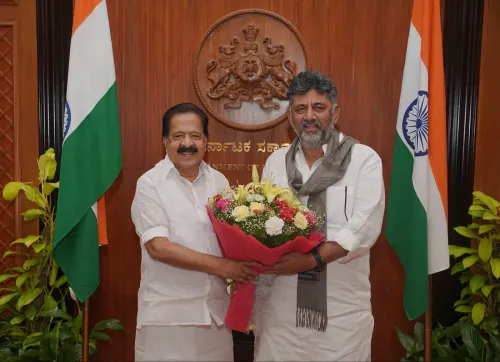
The Chief Minister's Office of Karnataka announced on Sunday, 14 June 2026 that Kerala's Minister for Public Works, Shri P. K. Basheer, called on Chief Minister Shri D. K. Shivakumar in Bengaluru, with discussions centred on strengthening inter-state cooperation between the two southern neighbours.
Context
The meeting was described as a 'cordial exchange of views on matters of mutual interest,' according to the official post from the Chief Minister's Office. While the full agenda was not disclosed, the visit underscores the active bilateral channel maintained between Karnataka and Kerala, two states that share a long border and a range of common administrative concerns.
P. K. Basheer heads Kerala's Public Works Department, which oversees the state's road network and related infrastructure. His counterpart engagement with CM Shivakumar — who has been closely associated with infrastructure and urban development priorities in Karnataka — signals that connectivity and public works featured prominently in the conversation.
Policy Backdrop
Karnataka and Kerala have a documented history of bilateral engagement on cross-border infrastructure. As far back as 2019–2020, both states held technical-level talks on improving NH-766 and other border roads under the central Bharatmala programme, a flagship national highway expansion initiative. Periodic chief-minister-level meetings since 2015 have also addressed coordination on the Cauvery basin and Mullaperiyar dam-related matters alongside road and power projects.
Under India's constitutional framework, neighbouring states are encouraged to engage directly on concurrent subjects — including roads, transport corridors, and resource sharing — without necessarily routing every discussion through the Union government. Such visits are a recognised instrument of cooperative federalism.
Stakeholders and Impact
The most immediate stakeholders are the Public Works Departments of both states, border-district administrations, and highway users who depend on smooth inter-state road connectivity. Improved coordination between the two PWDs can accelerate clearances for bridge and road projects that straddle state boundaries, directly benefiting commuters and freight movement in districts such as Kodagu, Dakshina Kannada, and Kasaragod.
Tourism and trade corridors linking Bengaluru to Kozhikode, Kochi, and the broader Malabar coast also stand to gain from smoother inter-state public-works coordination, as delays in border-segment road upgrades have historically been a friction point for both states.
What's Next
Observers will watch for follow-up technical meetings between the two public works departments, which typically translate ministerial-level goodwill into project-specific action plans. Any joint announcements on road or bridge projects along the Karnataka–Kerala border could emerge in the lead-up to the next state budget cycle for either government.
The visit adds momentum to a pattern of direct southern-state diplomacy that bypasses prolonged central mediation, and may pave the way for a broader bilateral framework covering power, tourism infrastructure, and water management alongside roads.
Point of View
Hosting a Kerala cabinet colleague reinforces his image as a proactive administrator who values regional partnerships. The visit also fits a broader pattern in which southern states have increasingly coordinated bilaterally on roads, power, and water — a quiet but consequential shift in how Indian federalism operates at the sub-national level. Whether this goodwill translates into concrete project timelines will be the real test of the meeting's significance.
NationPress
14 Sept 2026
Frequently Asked Questions
Why did Kerala PWD Minister P. K. Basheer visit Karnataka CM D. K. Shivakumar?
P. K. Basheer, Kerala's Minister for Public Works, called on Karnataka Chief Minister D. K. Shivakumar in Bengaluru on 14 June 2026 to discuss matters of mutual interest, with a focus on strengthening inter-state cooperation between the two states.
What issues do Karnataka and Kerala typically discuss in bilateral meetings?
Karnataka and Kerala have historically coordinated on border road upgrades, the Bharatmala national highway programme (including NH-766), Cauvery basin management, Mullaperiyar dam coordination, and power and tourism infrastructure projects.
What is the Bharatmala programme and how does it connect Karnataka and Kerala?
Bharatmala is a central government flagship initiative to upgrade national highways across India. Karnataka and Kerala held talks as early as 2019–2020 on improving NH-766 and other border roads under this programme, which directly affects connectivity between the two states.
Who is D. K. Shivakumar?
D. K. Shivakumar is the Chief Minister of Karnataka, known for his focus on infrastructure and urban development. He previously served as Deputy Chief Minister and is a senior leader of the Indian National Congress in the state.
What could come out of the Karnataka–Kerala public works discussions?
Possible outcomes include follow-up technical meetings between the two states' Public Works Departments and joint announcements on road or bridge projects along the Karnataka–Kerala border, potentially timed to the next state budget cycle.