CM Sai: Chhattisgarh's Khaera Village Runs 100% on Solar Power
Synopsis
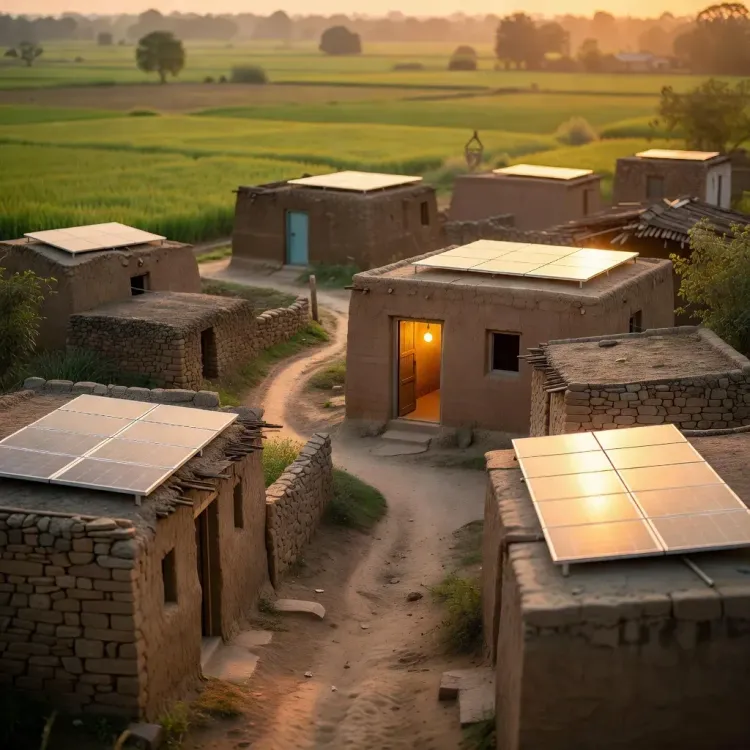
Chhattisgarh CM Vishnu Deo Sai announces village Khaera in Rajnandgaon as the state's first settlement fully powered by rooftop solar under PM Surya Ghar Muft Bijli Yojana, calling it a national inspiration.
Key Takeaways
Village Khaera in Rajnandgaon district has been declared Chhattisgarh's first village powered entirely by solar energy.
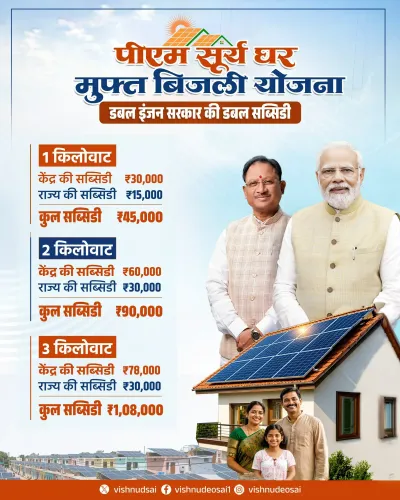
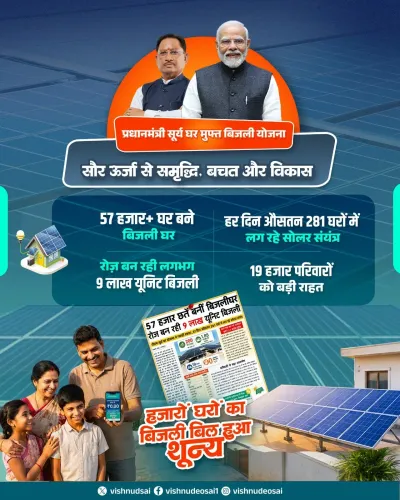
The achievement is credited to the central government's PM Surya Ghar Muft Bijli Yojana , which targets rooftop solar for one crore households nationwide.
The scheme provides up to 300 units of free electricity per month to each beneficiary household.
CM Vishnu Deo Sai called Khaera an inspiration for villages across India and Chhattisgarh to pursue full solar saturation.
Chhattisgarh, a coal-rich state, is positioning itself as an early adopter of village-level decentralised solar power under BJP governance.
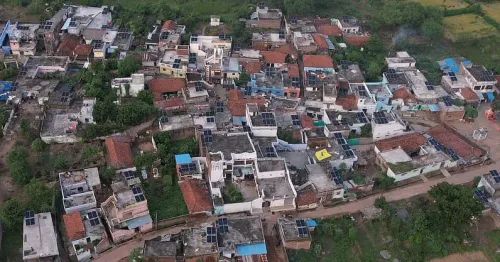
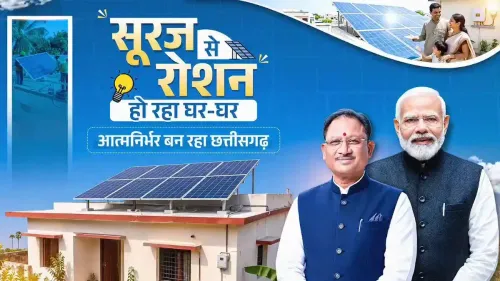
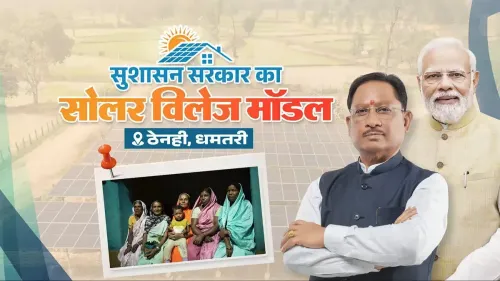
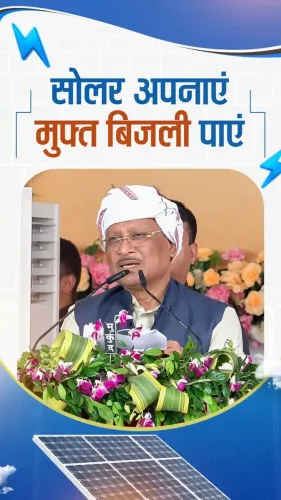
A single village in Rajnandgaon district has quietly rewritten what rural energy looks like in Chhattisgarh — and Chhattisgarh Chief Minister Vishnu Deo Sai is making sure the country takes note. On Monday, 2 November 2026, CM Sai announced that village Khaera in Rajnandgaon has emerged as the state's first settlement to be lit entirely by solar energy, a milestone he attributes directly to the central government's flagship PM Surya Ghar Muft Bijli Yojana.
Khaera's Solar Milestone: What the Village Achieved
Writing in Hindi on X, CM Sai declared: 'शत-प्रतिशत सौर ऊर्जा से रोशन छत्तीसगढ़ का यह पहला गांव देश और प्रदेश के अन्य गांवों के लिए प्रेरणा बनेगा' — ('This first village of Chhattisgarh, illuminated by 100 per cent solar energy, will become an inspiration for other villages across the country and the state'). The claim positions Khaera not merely as a local success story but as a replicable template. Every rooftop, every bulb — powered by the sun.
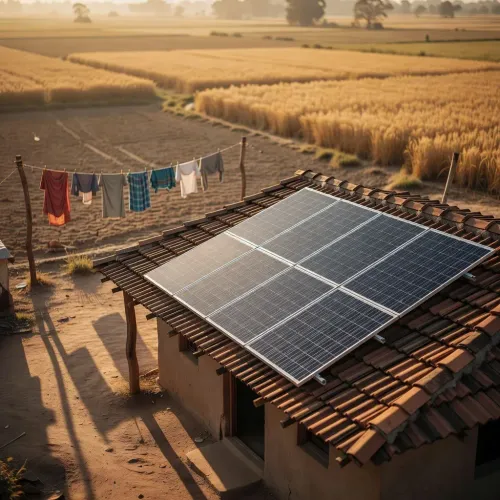
The PM Surya Ghar Muft Bijli Yojana, announced in the Union Budget 2024 by Prime Minister Narendra Modi, set an ambitious target: rooftop solar systems installed across one crore households nationwide, delivering up to 300 units of free electricity per month to each beneficiary family. Khaera's conversion, as described by CM Sai, represents the scheme reaching saturation point at the village level — every household covered, no grid dependency left.
Chhattisgarh's Push to Front-Run India's Solar Agenda
Chhattisgarh, a state historically associated with coal and thermal power — home to some of India's largest coal reserves — is leaning into a striking energy identity shift. The BJP-led state government is framing its implementation of centrally sponsored solar schemes as 'good governance in action', a deliberate political narrative that links state execution capability to Prime Minister Modi's clean energy vision. That framing is explicit in CM Sai's post, which opens by crediting the PM's 'vision of clean energy.'
The broader national context makes Khaera's significance sharper. India has aggressive renewable energy targets, and decentralised rooftop solar in rural areas is a critical piece of that puzzle — one that is harder to execute than large utility-scale solar farms. Village-level saturation demands household-by-household installation, subsidy disbursement, net-metering hookups, and ongoing maintenance. Achieving it in even one village demonstrates that the administrative machinery can work at the last mile.
A Model Other States Are Now Watching
The question the Khaera story immediately raises: can it be reproduced at scale? Rajnandgaon district sits in northern Chhattisgarh, with a largely agrarian population — precisely the demographic the Surya Ghar scheme targets. If state implementation teams can document exactly what worked in Khaera — the subsidy pipeline, the installer network, the community mobilisation — it becomes an operational blueprint. CM Sai is signalling that is exactly the intent, calling on other villages across India to draw inspiration.
The next milestones worth watching: how many more Chhattisgarh villages achieve full solar saturation in the months ahead, and whether the state carves out dedicated budget lines for solar infrastructure expansion to accelerate replication beyond Rajnandgaon.
One village. Every rooftop. No grid. The template is live — and a state that runs on coal just handed India's solar programme its most vivid rural proof of concept yet.
Point of View
With BJP-governed states keen to demonstrate implementation credibility ahead of future electoral cycles. If Khaera's model is genuinely replicable, it could accelerate India's push toward decentralised rural electrification — but the proof will lie in how quickly the next ten villages follow.
NationPress
2 Nov 2026
Frequently Asked Questions
What is PM Surya Ghar Muft Bijli Yojana?
PM Surya Ghar Muft Bijli Yojana is a central government scheme announced in the Union Budget 2024 that installs rooftop solar systems in households, providing up to 300 units of free electricity per month. It targets one crore households across India.
Which is Chhattisgarh's first fully solar-powered village?
Village Khaera in Rajnandgaon district has been declared Chhattisgarh's first village lit entirely by solar energy, as announced by Chief Minister Vishnu Deo Sai on 2 November 2026.
Where is Khaera village located?
Khaera village is located in Rajnandgaon district in northern Chhattisgarh, India.
How many free units of electricity does PM Surya Ghar scheme provide?
The PM Surya Ghar Muft Bijli Yojana provides up to 300 units of free electricity per month to each beneficiary household through rooftop solar installations.
What is Chhattisgarh doing for solar energy in rural areas?
The Chhattisgarh government, led by CM Vishnu Deo Sai, is implementing the PM Surya Ghar Muft Bijli Yojana to achieve village-level solar saturation. Khaera in Rajnandgaon is presented as the first fully solar-powered village and a replicable model for other villages in the state and country.