'Diplomatic Concessions': Kharge Critiques Modi's Foreign Policy
Synopsis
In a fierce critique of PM Modi's foreign policy, Congress President Mallikarjun Kharge asserts that India's diplomatic standing is eroding. Highlighting historical precedents, he argues that the current administration is compromising India's strategic autonomy.
Key Takeaways
India's strategic autonomy is perceived to be under threat.
Congress emphasizes the importance of historical diplomatic integrity.
Recent US actions highlight India's diminishing diplomatic influence.
Concerns over regional tensions and safety of expatriates are paramount.
The silence from the Indian government raises questions about its foreign policy effectiveness.
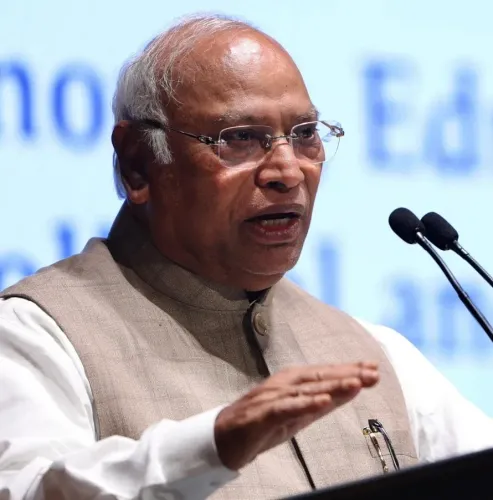
New Delhi, March 6 (NationPress) The Congress Party has sharply criticized the Narendra Modi administration for its ongoing pattern of ceding diplomatic influence, praising the adept foreign relations strategies of past Prime Ministers like Jawaharlal Nehru, Indira Gandhi, and Atal Bihari Vajpayee.
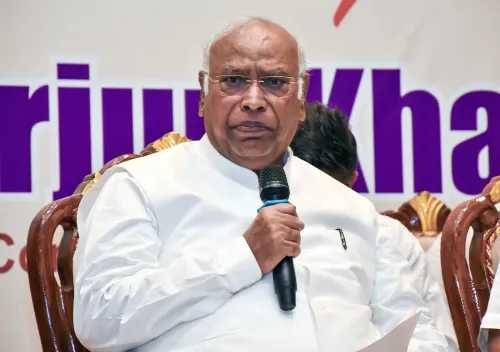
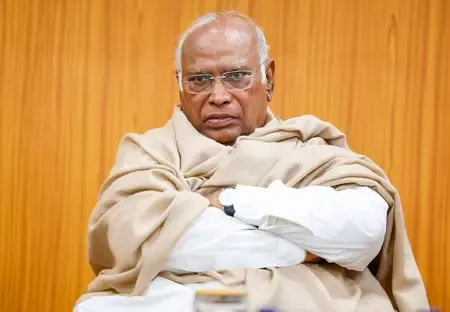
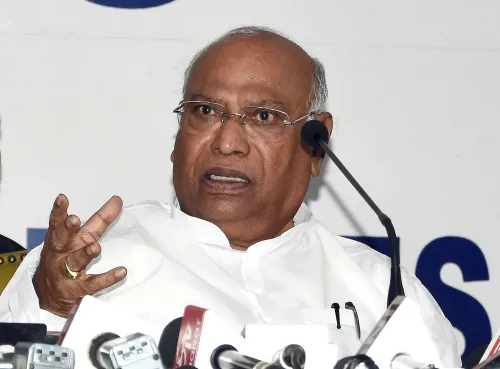
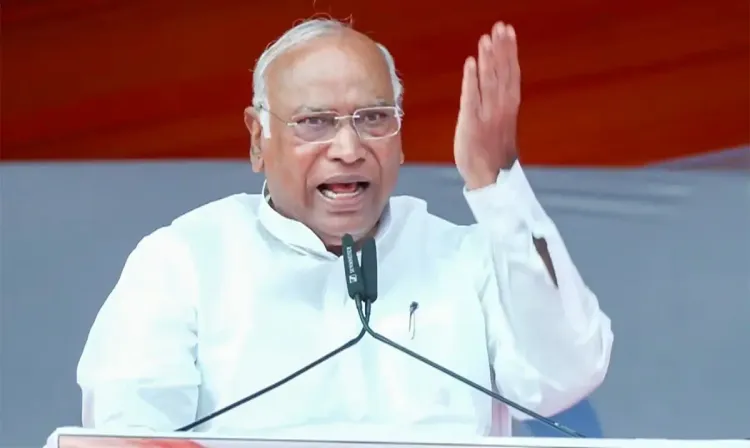
In a statement on social media, Congress President Mallikarjun Kharge emphasized that India's strategic independence and national integrity are seriously jeopardized due to PM Modi's perceived capitulation to external pressures.
Kharge asserted, "India has historically maintained a strong position in shaping its future. This integrity has been compromised under Modi's leadership, as no previous Prime Minister has allowed India to become a mere vassal state to foreign powers."
He further criticized Modi's dealings, stating, "From trade agreements to oil imports, from data management to long-standing alliances, Modi has relinquished it all."
Highlighting a recent instance, Kharge referred to the United States' announcement allowing India a '30-day waiver' for purchasing Russian oil, which he argued exemplifies the Modi government's ongoing diplomatic concession.
"This type of language is typically reserved for sanctioned nations, not for India, which has been a responsible member of the international community," he noted.
Kharge provided further examples to bolster his claims of ineffective diplomacy, recalling how former President Trump publicly declared a ceasefire during Operation Sindoor, overshadowing India’s role in the negotiations.
He remarked, "When the US instructs India against purchasing Iranian oil, the government complies. Similarly, after Trump advised against Russian oil imports, Modi's administration reduced its purchases, ultimately yielding to conditions set by the Indo-US Trade Deal."
Kharge pointed out that the US's recent waiver indicates India’s diminishing agency on the global stage.
In related developments, former Union Minister Jairam Ramesh criticized the government's foreign policy amid rising tensions in West Asia, asserting that the nation's diplomatic posture has been severely compromised.
Ramesh, currently the Congress General Secretary for Communications, urged the Indian government to take action following the US-Israel military strike on Iran, citing the safety of Indian expatriates as a pressing concern.
In a post on X, he stated, "The country is suffering from the repercussions of both the substance and strategies of PM Modi's foreign policy."
Congress leader Salman Khurshid, who leads the party's Foreign Affairs Department, also expressed concern over the administration's silence regarding the attack on the Iranian frigate IRIS Dena in international waters near Sri Lanka.
Khurshid warned that this incident has dangerously heightened regional tensions, risking further escalation close to India’s borders.
He added that the government's silence and willingness to compromise could undermine the trust built in India’s naval capabilities, as well as its participation in future collaborative efforts in areas such as intelligence sharing and humanitarian operations.
Frequently Asked Questions
What are the main criticisms of Modi's foreign policy?
Congress leaders criticize Modi for compromising India's diplomatic autonomy and yielding to external pressures, particularly regarding oil imports and trade agreements.
Who are some of the historical figures mentioned?
Former Prime Ministers Jawaharlal Nehru, Indira Gandhi, and Atal Bihari Vajpayee are highlighted for their adept diplomatic strategies.
What recent event did Kharge reference?
Kharge referenced the US granting India a '30-day waiver' to purchase Russian oil as an example of Modi's diplomatic concessions.
What was Jairam Ramesh's stance on the government's foreign policy?
Ramesh criticized the government's approach amid rising tensions in West Asia, calling for intervention to protect Indian expatriates.
What are the implications of the Iranian frigate incident?
The incident has raised concerns about escalating regional conflict and the impact on India's naval reputation and collaborative efforts.