Kharif sowing at 95% in Maharashtra; Marathwada drought fear grows
Synopsis
Maharashtra's kharif sowing has reached 95 per cent of its average — but that headline figure conceals a crisis. Marathwada's crops are withering in a dry August, Raigad has managed just 67 per cent coverage, and the state is eight lakh hectares below its five-year norm. Chief Minister Fadnavis will chair an emergency cabinet review on Tuesday as farmers warn of widespread crop loss within days.
Key Takeaways
Maharashtra kharif sowing reached 1.36 crore hectares as of 31 August 2026 , covering 95 per cent of the five-year average.
The state is approximately eight lakh hectares short of the five-year average of 1.44 crore hectares .
Konkan recorded the lowest regional coverage at 83 per cent ; Raigad district was worst-hit at 67 per cent .
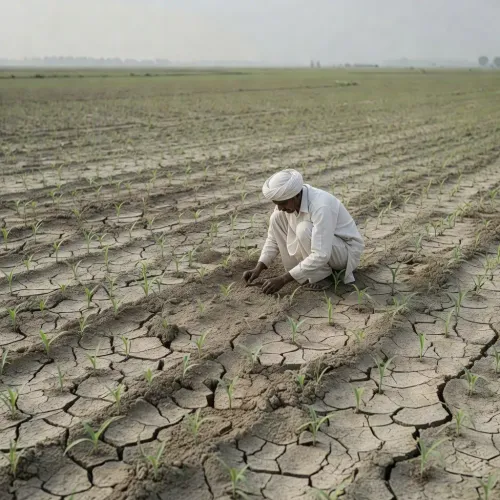
Marathwada crops are reportedly withering due to a dry August ; farmers fear widespread loss if rains do not return within a week.
Pune division led the state at 101 per cent ; Gondia district topped all at 113 per cent .
Chief Minister Devendra Fadnavis will chair a cabinet review of sowing, reservoir levels, drought conditions, and fodder relief on Tuesday .
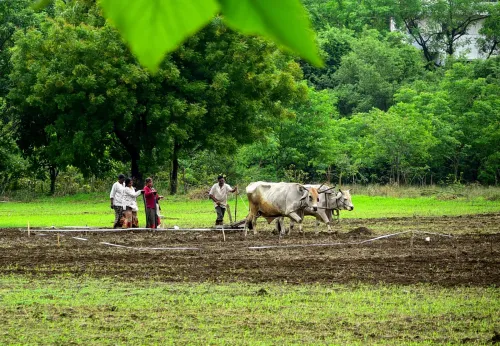
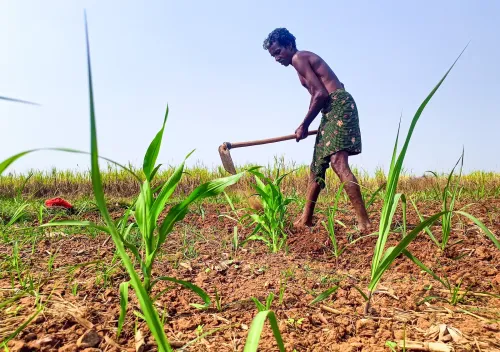
Maharashtra's kharif sowing for the 2026-27 season stood at 1.36 crore hectares as of 31 August, covering 95 per cent of the five-year average area, according to data from the State Agriculture Department. Deficit rainfall and prolonged dry spells across the monsoon season have left the state roughly eight lakh hectares short of its five-year average of 1.44 crore hectares, with sharp regional disparities widening the concern.
Where Sowing Fell Short
The Konkan coast recorded the state's lowest sowing turnout at just 83 per cent across 3.23 lakh hectares. Raigad was the worst-affected district at 67 per cent, followed by Ratnagiri at 71 per cent and Sindhudurg at 84 per cent. In Marathwada, Chhatrapati Sambhajinagar division reached 93 per cent and Latur division touched 94 per cent, but Hingoli lagged at 81 per cent. Western Maharashtra averaged 93 per cent, with Kolhapur at 87 per cent and Sangli at 89 per cent recording notable gaps.
Pockets of Strength
Pune division led the state at 101 per cent of its average sowing area, covering 12.66 lakh hectares. Within the division, Solapur hit 104 per cent, Pune district reached 100 per cent, and Ahilyanagar touched 99 per cent. Nashik division achieved 98 per cent across 19.85 lakh hectares, with Nashik district itself crossing the average at 101 per cent. In Vidarbha, Gondia district outperformed at 113 per cent, even as Chandrapur lagged at 88 per cent.
Marathwada's Drought Alarm
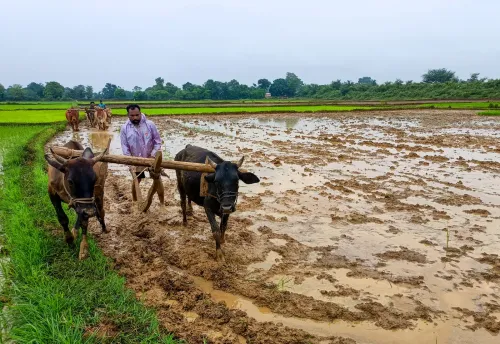
The dry spell in August has hit Marathwada particularly hard, with standing crops beginning to wither due to acute water scarcity. Farmers in the region reportedly fear widespread crop loss if rains do not resume within a week. This comes amid a pattern familiar to the region — a slow June, a recovery in early July, and then a dry August that erased momentum. Agriculture department officials have noted that kharif sowing typically concludes by end-August, making a recovery in overall figures unlikely.
Government Response
The weekly state cabinet meeting, chaired by Chief Minister Devendra Fadnavis on Tuesday, is set to review sowing operations, water levels across more than 3,000 irrigation reservoirs, the emerging drought-like situation in Marathwada, and relief measures including fodder availability for livestock. The review signals that the state administration is treating the situation with urgency, even as overall coverage at 95 per cent masks the severity of localised distress.
This year's coverage is lower than last year's 1.42 crore hectares recorded by 29 August, reinforcing concerns that the 2026-27 kharif season may deliver below-average agricultural output in several key districts. All eyes are now on the September monsoon revival and the cabinet's relief package.
Point of View
A Marathwada region watching crops wilt, and a Konkan belt where Raigad has sown barely two-thirds of its average area. Maharashtra has navigated kharif distress before — 2018 and 2023 both triggered drought declarations — but the combination of a slow June, a dry August, and reservoir stress across 3,000-plus bodies is a familiar precursor to a formal drought notification. The cabinet review on Tuesday will be the first real signal of whether the government intends to get ahead of the crisis or manage it after the fact.
NationPress
1 Sept 2026
Frequently Asked Questions
What is the kharif sowing status in Maharashtra for 2026-27?
Maharashtra's kharif sowing for the 2026-27 season reached 1.36 crore hectares as of 31 August 2026, covering 95 per cent of the five-year average area. This is approximately eight lakh hectares below the five-year average of 1.44 crore hectares and lower than last year's 1.42 crore hectares recorded by 29 August.
Why is Marathwada facing drought-like conditions?
A largely dry August followed an already slow June, leaving Marathwada's crops without adequate moisture at a critical growth stage. Farmers in the region reportedly fear widespread crop loss if rains do not resume within a week, as standing crops are beginning to wither due to water scarcity.
Which districts in Maharashtra have the lowest kharif sowing coverage?
Raigad district recorded the lowest coverage in the state at just 67 per cent, followed by Ratnagiri at 71 per cent and Sindhudurg at 84 per cent. Hingoli in Marathwada lagged at 81 per cent, and Chandrapur in Vidarbha registered 88 per cent.
Which regions performed well in kharif sowing this year?
Pune division led the state at 101 per cent of its average sowing area, with Solapur district hitting 104 per cent. Gondia in Vidarbha was the top-performing district statewide at 113 per cent, and Nashik division achieved 98 per cent across 19.85 lakh hectares.
What steps is the Maharashtra government taking to address the drought concern?
Chief Minister Devendra Fadnavis is set to chair a weekly cabinet meeting on Tuesday to review sowing operations, water levels in over 3,000 irrigation reservoirs, the emerging drought-like situation in Marathwada, and relief measures including fodder availability for livestock.