MP monsoon 2025: 15% rainfall deficit, dam storage at 49%
Synopsis
Madhya Pradesh is running 15% short on monsoon rainfall as of 10 August, with dam storage at just 49% against last year's 75% at the same point. Chief Minister Mohan Yadav has convened an emergency review and issued wide-ranging directives — from disaster relief to Rabi crop planning — signalling that the state is bracing for a prolonged water and agricultural stress period.
Key Takeaways
Madhya Pradesh received 483 mm of rainfall against a normal 571 mm between 1 June and 10 August — a 15 per cent deficit.
Dam storage stands at 49 per cent , below the five-year average of 59 per cent and last year's 75 per cent .
36 reservoirs have storage at 50 per cent or less ; 18 water bodies are between 50–90 per cent below capacity.
Paddy sowing completed on 84 per cent of targeted area despite the shortfall.
Chief Minister Mohan Yadav directed officials to prioritise farmer compensation, crop insurance enrolment, and Rabi season seed availability.
Health authorities told to stock medicines in all districts to counter monsoon-linked infectious diseases.
Madhya Pradesh recorded a 15 per cent rainfall deficit this monsoon season, having received 483 mm against the normal 571 mm between 1 June and 10 August, the state government confirmed on Monday. The shortfall has pushed dam storage levels to 49 per cent — well below the five-year average of 59 per cent and last year's 75 per cent — raising concerns over water availability and the upcoming Rabi crop season.
Rainfall Distribution Across the State
Eastern Madhya Pradesh received 513.20 mm of rainfall during the period, while western Madhya Pradesh recorded a lower 459.80 mm. Roughly half of the state's districts have received normal rainfall; others have logged deficient totals, though officials noted that some regions are expected to receive further rain in the coming days. The state's normal annual rainfall stands at 949.50 mm.
Despite the deficit, paddy sowing has been completed on 84 per cent of the targeted area, offering some relief to agricultural planners ahead of the harvest season.
Dam and Reservoir Storage at Critical Levels
Water storage figures reviewed at the meeting paint a more worrying picture. As of 10 August, 36 reservoirs had storage at 50 per cent or less of capacity, while 18 water bodies recorded levels between 50 and 90 per cent below their full capacity. The aggregate dam storage of 49 per cent marks a significant drop from 75 per cent recorded at the same point last year.
What the Government Has Directed
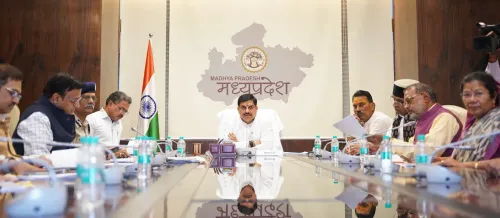
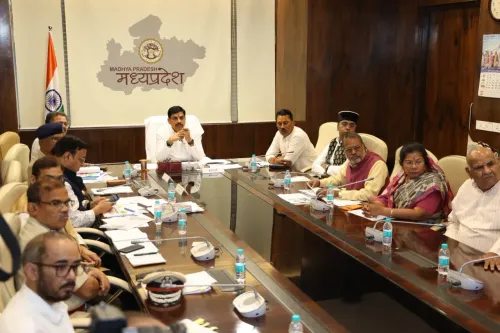
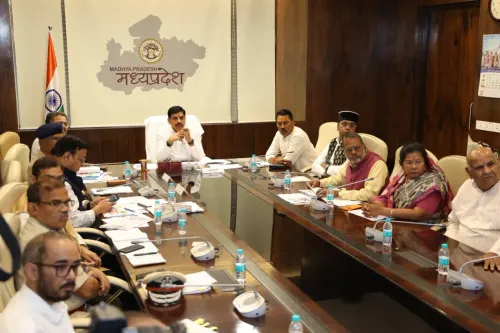
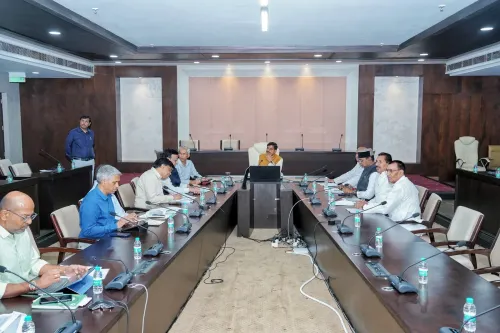
Chief Minister Mohan Yadav chaired a review meeting of ministers and senior officials at the Mantralaya in Bhopal to assess the situation across agriculture, water availability, and other sectors. He directed officials to continuously monitor rainfall and water levels in dams, reservoirs, and ponds.
'Measures must be taken to ensure that citizens, including farmers, do not face any hardship due to these unusual conditions,' Yadav said. He also called for timely warnings to residents in low-lying areas whenever water is released from dams, and for uninterrupted power supply to support irrigation.
State and district disaster control rooms were instructed to remain operational to log incidents of waterlogging and damage, and to assess the need to relocate people from vulnerable areas. Relief camps are to be arranged wherever required.
Rabi Season Preparations and Farmer Support
Looking ahead to the Rabi season, officials were directed to encourage farmers to cultivate crops with lower irrigation requirements and to ensure adequate availability of seeds — particularly gram. Departments were also asked to guarantee sufficient fertiliser stocks and to maximise farmer enrolment under crop insurance schemes.
The Revenue Department was directed to conduct transparent surveys of crops damaged by excessive rainfall or waterlogging and to expedite compensation from the Disaster Relief Fund. 'Timely assessment of crop damage and prompt action on compensation should be ensured so that affected farmers do not face further hardship,' Yadav said.
Health and Other Measures
The meeting additionally reviewed steps to prevent infectious diseases during the monsoon. Health authorities were directed to maintain adequate medicine stocks across all districts. Officials also addressed complaints related to moong procurement, with instructions to form special teams where work is delayed and to act against black marketing. Road maintenance post-rains was also flagged as a priority.
With the monsoon season still active, the state administration's response in the coming weeks will be critical in determining agricultural output and water security heading into winter.
Point of View
But the dam storage figure tells the harder story: at 49 per cent against last year's 75 per cent, Madhya Pradesh enters the second half of the monsoon with significantly less buffer. If September rains underperform — a real risk in a fragmented monsoon year — the Rabi season will face both water stress and seed-input pressure simultaneously. The government's directives are procedurally sound, but the emphasis on low-irrigation crops for Rabi implicitly concedes that storage recovery is not guaranteed. What is missing from the public communication is a clear threshold: at what storage level does the state move from advisory to rationing? That clarity would matter more to farmers than another review meeting.
NationPress
25 Sept 2026
Frequently Asked Questions
What is the current rainfall deficit in Madhya Pradesh this monsoon?
Madhya Pradesh has received 483 mm of rainfall against the normal 571 mm between 1 June and 10 August 2025, recording a 15 per cent deficit. Eastern MP received 513.20 mm while western MP received 459.80 mm during the same period.
How much water is stored in Madhya Pradesh dams as of 10 August?
Dam storage in Madhya Pradesh stood at 49 per cent as of 10 August, significantly below the five-year average of 59 per cent and last year's level of 75 per cent at the same date. Thirty-six reservoirs have storage at 50 per cent or less of capacity.
How has the monsoon deficit affected paddy sowing in MP?
Despite the rainfall shortfall, paddy sowing has been completed on 84 per cent of the targeted area in Madhya Pradesh. However, officials have cautioned that the Rabi season may face water stress if dam levels do not recover.
What steps has the Madhya Pradesh government announced to help farmers?
Chief Minister Mohan Yadav directed officials to ensure adequate seed and fertiliser availability, maximise crop insurance enrolment, conduct transparent crop-damage surveys, and expedite compensation from the Disaster Relief Fund for affected farmers.
What measures are in place for disaster preparedness amid the monsoon deficit?
State and district disaster control rooms have been kept operational to record waterlogging and damage incidents. Officials have been asked to assess relocation needs in vulnerable areas, set up relief camps where necessary, and issue timely warnings when water is released from dams.