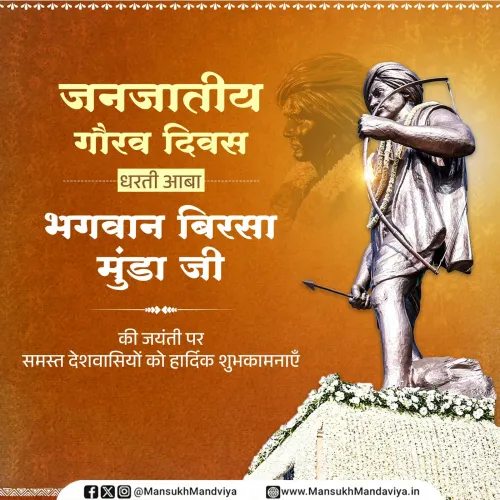
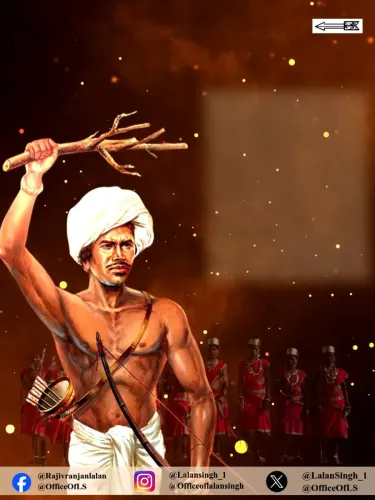
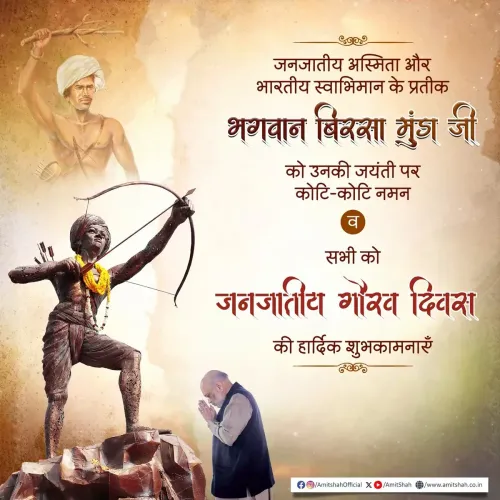
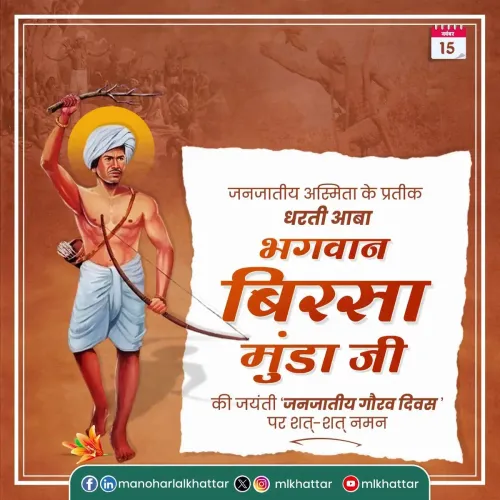
Khattar pays tribute to Birsa Munda on Janjatiya Gaurav Divas
Synopsis
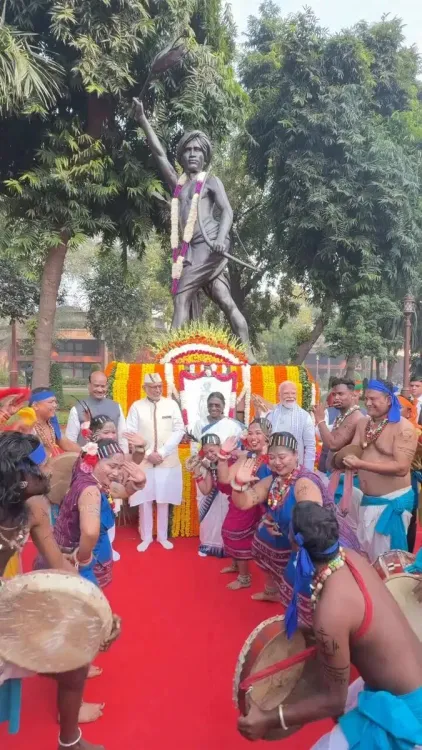
Union Power Minister Manohar Lal Khattar marked Janjatiya Gaurav Divas on 15 November 2026 with a tribute to Bhagwan Birsa Munda, calling his courage, sacrifice, and devotion to the motherland a timeless inspiration for tribal communities and the nation.
Key Takeaways
Janjatiya Gaurav Divas falls on 15 November — Birsa Munda's birth anniversary — and was formally instituted by the Government of India in 2021 .
Union Minister Manohar Lal Khattar posted a tribute on X honouring Birsa Munda's indomitable courage, sacrifice, and devotion to the motherland.
Birsa Munda led the Ulgulan movement against British colonial land-alienation policies in present-day Jharkhand and died in British custody in 1900 at the age of 25.
The observance is part of a broader BJP-era effort to place tribal leaders within India's mainstream freedom narrative.
Welfare schemes like the Vanbandhu Kalyan Yojana and the renaming of sites associated with tribal icons have accompanied these commemorations.
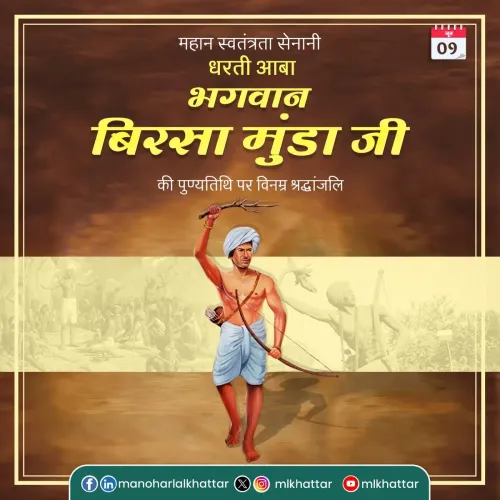
On Janjatiya Gaurav Divas, 15 November 2026, Union Power Minister Manohar Lal Khattar honoured the legacy of Bhagwan Birsa Munda, invoking the 19th-century tribal leader's indomitable courage, sacrifice, and unbreakable devotion to the motherland as an eternal source of inspiration for tribal communities and the national conscience.
Posting on X in Hindi, Khattar wrote: 'भगवान बिरसा मुंडा जी का अदम्य साहस, त्याग और मातृभूमि के प्रति अटूट समर्पण सदैव जनजातीय समाज के गौरव और राष्ट्र की चेतना को प्रेरित करता रहेगा..' — 'The indomitable courage, sacrifice, and unwavering dedication to the motherland of Bhagwan Birsa Munda will forever inspire the pride of the tribal community and the consciousness of the nation.'
Who was Birsa Munda — and why 15 November matters
Birsa Munda was born on 15 November 1875 in present-day Jharkhand and went on to lead the Ulgulan ('the great tumult') movement against British colonial land-grab policies that had displaced tribal communities from their forests. Revered as Dhara Abba — 'Father of the Earth' — he was barely 25 when he died in British custody in 1900, yet his resistance became a touchstone for tribal rights across the subcontinent.
In 2021, the Government of India formally instituted Janjatiya Gaurav Divas on 15 November to anchor his birth anniversary as an annual national observance — placing tribal contributions to India's freedom struggle at the centre of the official commemoration calendar.
A pattern of elevating tribal icons in national memory
Khattar's tribute is part of a consistent strand of central-government messaging that weaves tribal leaders into the mainstream freedom narrative. BJP-led administrations have tied such commemorations to welfare schemes like the Vanbandhu Kalyan Yojana and the renaming of public sites associated with tribal icons — a deliberate policy of cultural recognition alongside material programmes.
Every 15 November, state-level ceremonies and fresh tribal-welfare announcements tend to cluster around the day, making it a live policy moment as much as a solemn tribute. The resonance stretches well beyond Jharkhand: Scheduled Tribe communities across Odisha, Chhattisgarh, Madhya Pradesh, and the northeast watch the occasion closely for signals on forest rights, land titles, and welfare funding.
One hundred and fifty-one years after his birth, Birsa Munda's name still detonates into a live political and cultural conversation — and India's ruling establishment has made certain it will keep doing so.
Point of View
Honouring Birsa Munda is simultaneously an act of cultural reclamation and a political signal to Scheduled Tribe voters spread across electorally significant states like Jharkhand, Chhattisgarh, and Odisha. The annual drumbeat of ministerial tributes keeps the conversation alive but the sharper test remains whether policy delivery — on forest rights, land titles, and welfare funding — matches the commemorative energy.
NationPress
15 Nov 2026
Frequently Asked Questions
What is Janjatiya Gaurav Divas and when is it observed?
Janjatiya Gaurav Divas is an annual national observance held on 15 November to mark the birth anniversary of tribal leader Birsa Munda and honour the contributions of tribal communities to India's freedom struggle. The Government of India formally instituted it in 2021 .
Who was Birsa Munda?
Birsa Munda was a 19th-century tribal leader born on 15 November 1875 in present-day Jharkhand . He led the Ulgulan movement against British colonial land-alienation policies and died in British custody in 1900 , aged 25, becoming an enduring symbol of tribal resistance.
What did Manohar Lal Khattar say on Janjatiya Gaurav Divas 2026?
Union Power Minister Manohar Lal Khattar wrote on X that 'the indomitable courage, sacrifice, and unwavering dedication to the motherland of Bhagwan Birsa Munda will forever inspire the pride of the tribal community and the consciousness of the nation.'
What is the Ulgulan movement associated with Birsa Munda?
The Ulgulan — meaning 'the great tumult' — was a tribal uprising led by Birsa Munda in the late 1890s against British policies that dispossessed tribal communities of their ancestral forest lands in the Chota Nagpur plateau region of present-day Jharkhand .
How has the Indian government honoured Birsa Munda?
The Government of India declared 15 November as Janjatiya Gaurav Divas in 2021 , institutionalising annual commemorations. Successive BJP-led administrations have also linked the observance to tribal welfare schemes like the Vanbandhu Kalyan Yojana and renamed public sites in his honour.