Khattar joins Jal Jeevan Mission 2.0 review at Haryana Bhawan
Synopsis
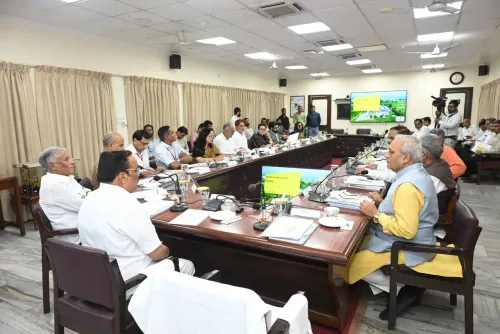
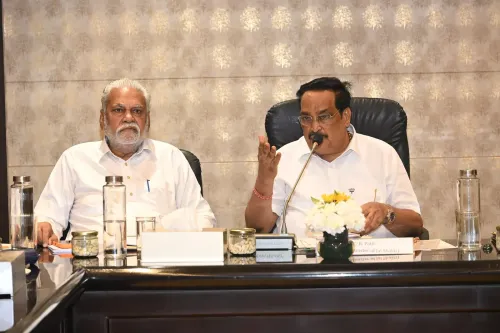
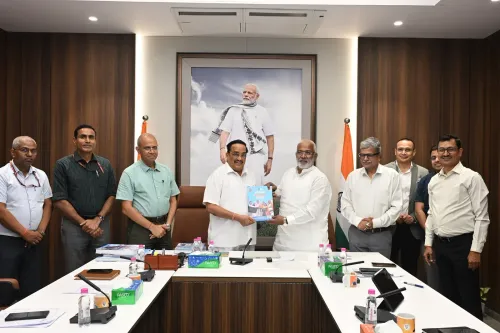
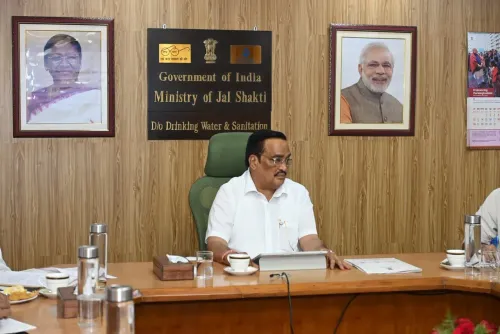
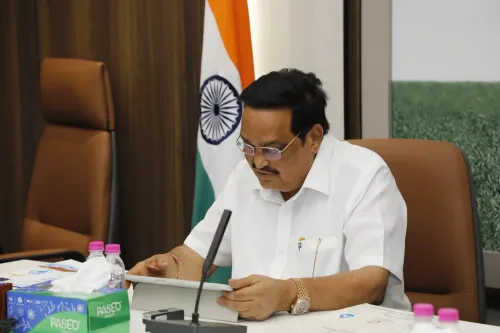
Union Power Minister Manohar Lal Khattar attended a Jal Jeevan Mission 2.0 review at Haryana Bhawan, New Delhi, chaired by Jal Shakti Minister C.R. Paatil. Haryana MPs shared field inputs on tap-water delivery, quality monitoring, and community participation to sharpen the mission's rollout.
Key Takeaways
Union Power Minister Manohar Lal Khattar attended a Jal Jeevan Mission 2.0 review meeting at Haryana Bhawan, New Delhi on 6 August 2026 .
The meeting was chaired by Union Jal Shakti Minister C.R.
Paatil and included Haryana's Members of Parliament .
Key agenda items: sustained quality tap-water supply, time-bound project execution, community participation, and quality-control monitoring.
Haryana MPs contributed ground-level experiences and suggestions to make implementation 'more effective, transparent and people-centric.' The Jal Jeevan Mission was launched in 2019 to provide functional household tap connections to all rural families across India.
Central and state governments reaffirmed full commitment to delivering safe, clean drinking water to rural households under PM Narendra Modi's leadership.
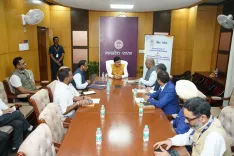
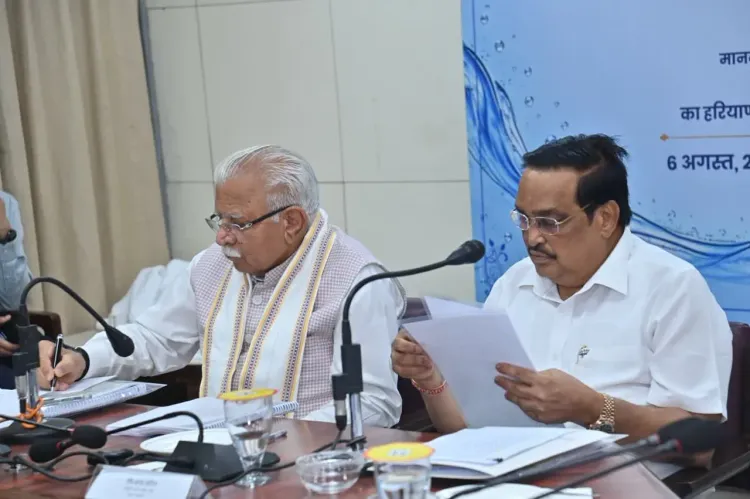
At Haryana Bhawan in New Delhi, a high-stakes review of one of India's most ambitious rural welfare programmes unfolded on Thursday, 6 August 2026. Union Power Minister Manohar Lal Khattar joined Union Jal Shakti Minister C.R. Paatil and Haryana's Members of Parliament to take stock of Jal Jeevan Mission 2.0 — the drive to put clean tap water in every rural home.
Khattar described the meeting as a wide-ranging deliberation on the mission's key pressure points: ensuring sustained, quality tap-water supply to every rural household, enforcing time-bound project completion, deepening community participation, and tightening quality-control and monitoring systems.
Haryana MPs bring ground-level feedback to the table
Elected representatives from Haryana shared field experiences and suggestions that, Khattar said, would help make the mission's rollout 'more effective, transparent and people-centric.' That phrase matters — it signals the centre is treating MP feedback not as ceremonial input but as operational intelligence for course-correction.
Such review meetings serve a dual purpose: they hold state-level implementation up to central scrutiny, and they give MPs political ownership of delivery timelines in their own constituencies. When a scheme stalls, it is the local MP who hears about it first.
Jal Jeevan Mission: from 2019 launch to the 2.0 push
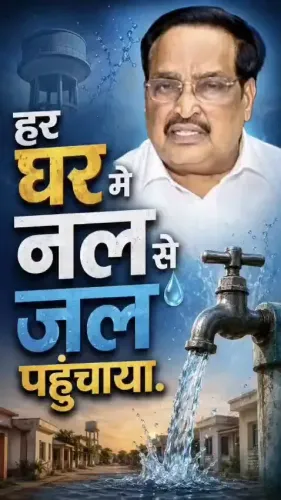
The Jal Jeevan Mission was launched in 2019 under Prime Minister Narendra Modi with a single measurable goal: a functional household tap connection (nal se jal) for every rural family in India. The programme marked a shift from community water points to in-home piped supply — a distinction that directly affects women and children who traditionally bear the burden of water collection.
The 2.0 iteration, as discussed at the Haryana Bhawan meeting, appears focused on consolidating gains and resolving the harder last-mile challenges: sustaining water pressure and quality after connections are installed, and ensuring village-level committees have the capacity to maintain infrastructure.
What the Haryana review signals
Haryana is a relatively urbanised state, but its rural pockets — particularly in the Mewat region and parts of south Haryana — have historically faced groundwater quality concerns, including high fluoride and salinity levels. Getting swachh aur surakshit peyjal (clean and safe drinking water) to these households is not just a pipeline problem; it is a water-treatment and sustainability challenge.
Khattar, as a former Chief Minister of Haryana, brings institutional memory of the state's water infrastructure gaps to a meeting room that now includes the national Jal Shakti ministry. That combination of local knowledge and central-level access could sharpen how implementation gaps are flagged and fixed.
The centre and states, Khattar affirmed, remain 'fully committed' to delivering safe, clean and adequate drinking water to rural families — a pledge that will be measured, ultimately, in pipes laid, taps running, and water tested.
Point of View
Not mere spectators. For Jal Jeevan Mission, which has staked enormous political capital on a measurable, household-level outcome, these reviews are where implementation gaps either get surfaced and fixed or quietly buried. Khattar's presence — a former Haryana CM now at the Union cabinet table — adds a layer of state-specific institutional credibility that a purely bureaucratic review would lack. The real test will come in subsequent progress data: whether Haryana's rural tap-water coverage numbers move meaningfully after this round of MP inputs.
NationPress
6 Aug 2026
Frequently Asked Questions
What is Jal Jeevan Mission 2.0?
Jal Jeevan Mission 2.0 is the continued phase of the central government's programme, launched originally in 2019, to provide functional household tap-water connections to every rural family in India, with renewed focus on quality, sustainability, and community participation.
What was discussed at the Haryana Bhawan Jal Jeevan Mission meeting?
The meeting on 6 August 2026 covered sustained tap-water supply quality, time-bound project completion, strengthening community participation, and improving quality-control and monitoring systems for the mission's implementation in Haryana.
Who chaired the Jal Jeevan Mission review meeting at Haryana Bhawan?
Union Jal Shakti Minister C.R. Paatil chaired the meeting, which was attended by Union Power Minister Manohar Lal Khattar and Haryana's Members of Parliament.
When was the Jal Jeevan Mission launched and what is its goal?
The Jal Jeevan Mission was launched in 2019 under Prime Minister Narendra Modi with the goal of providing a functional household tap connection — 'nal se jal' — to every rural household across India.
What role do MPs play in the Jal Jeevan Mission review process?
Members of Parliament share ground-level field experiences and suggestions from their constituencies, helping central authorities identify implementation gaps and make the programme more transparent and community-focused.