Khattar pays tribute on Partition Horrors Remembrance Day
Synopsis
On Partition Horrors Remembrance Day, Union Power Minister Manohar Lal Khattar paid tribute to victims of the 1947 Partition, called it a dark chapter in Indian history, and urged citizens to strengthen national unity and social harmony.
Key Takeaways
14 August 2026 : Union Power Minister Manohar Lal Khattar observed Partition Horrors Remembrance Day with a tribute post on X.
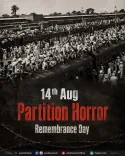
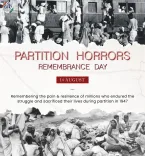
The day commemorates the 1947 Partition of India , which divided British India into India and Pakistan along religious lines, causing mass displacement and violence.
Prime Minister Narendra Modi declared 14 August as Partition Horrors Remembrance Day in 2021 .
Khattar described the Partition as 'a dark chapter of Indian history that can never be forgotten' and credited Modi's initiative as a step toward nation-building.
The minister called on citizens to pledge commitment to national unity and social harmony as the living lesson of the tragedy.
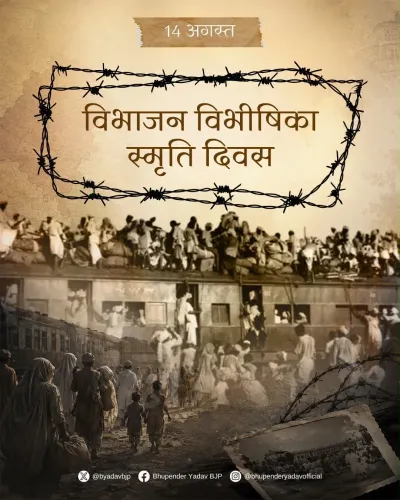
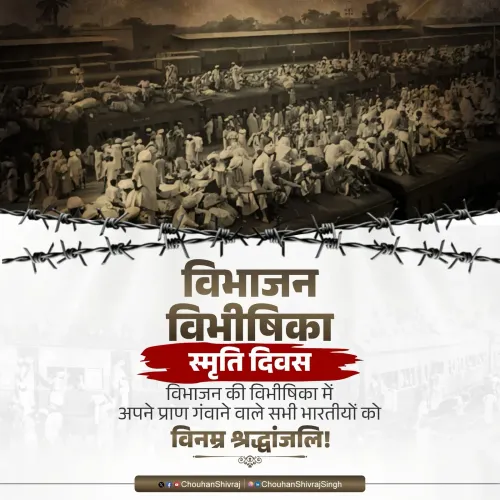
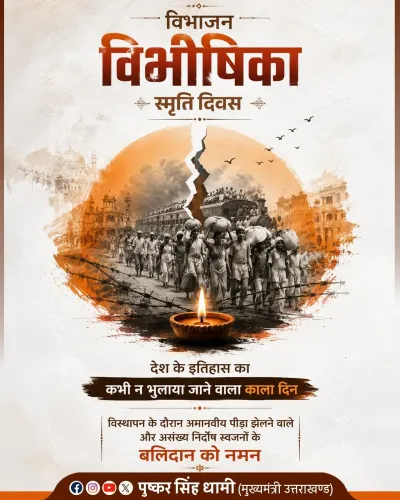
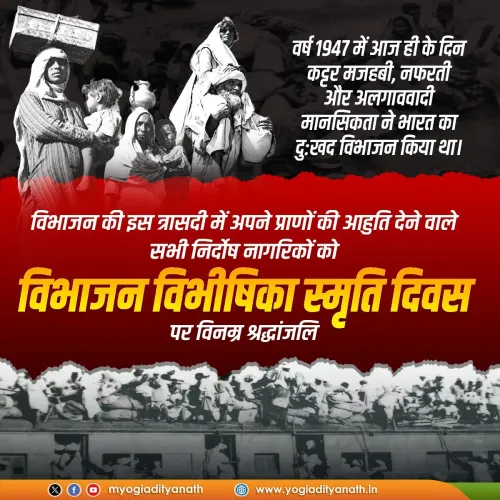
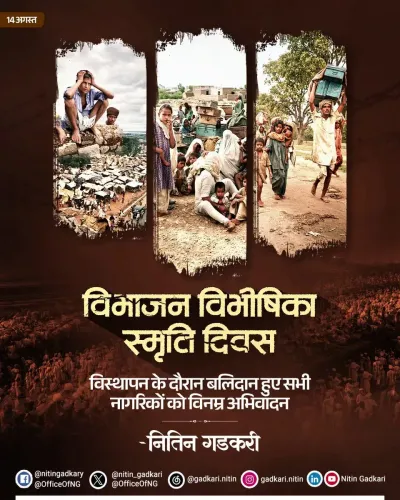
Seventy-nine years after one of history's most violent mass displacements, Union Power Minister Manohar Lal Khattar on 14 August 2026 paid solemn homage to the millions who suffered, were uprooted, or perished in the 1947 Partition of India — marking the occasion of Vibhajan Vibhishika Smriti Divas (Partition Horrors Remembrance Day).
Posting on the eve of Independence Day, Khattar wrote that the 1947 division of the subcontinent along religious lines remains 'that dark chapter of Indian history which can never be forgotten.' He called on citizens to draw lessons from the tragedy and 'pledge to keep love for the nation supreme, and to strengthen the unity and social harmony of the country.'
A day born from the silence around Partition's wounds
For decades, the sheer scale of Partition's human cost — mass killings, sexual violence, and the displacement of an estimated 10 to 20 million people across the new borders of India and Pakistan — was processed largely in private grief rather than public commemoration. That changed in 2021, when Prime Minister Narendra Modi declared 14 August as Partition Horrors Remembrance Day, institutionalising a national moment of reckoning with the catastrophe.
Khattar credited Modi's 'tireless efforts' for establishing the tradition, framing it as 'a strong step taken towards nation-building.' The date — the day before India's Independence Day on 15 August — is a deliberate choice: freedom and its terrible price, held in the same breath.
Remembrance as a call to unity
The annual observance carries a dual purpose that goes beyond mourning. By anchoring the memory of communal violence to the calendar, the government's stated aim is to reinforce social cohesion — a message Khattar echoed directly, urging that national unity and samajik sadbhav (social harmony) be the living legacy of those who suffered. For partition survivors and their descendants, the day offers formal acknowledgement of an ordeal that shaped millions of families across Punjab, Bengal, and beyond.
As India marks another year of independence, the remembrance is a reminder that the nation's birth was inseparable from one of the largest forced migrations in recorded history — and that the work of unity it demands is never quite finished.
Point of View
Now in its fifth year, reflects the BJP-led government's broader strategy of institutionalising historical memory as a pillar of national identity. By formally marking the human cost of religious partition, the administration frames social harmony as an earned, fragile achievement rather than a given. Khattar's post, amplifying Modi's role in establishing the day, also reinforces the party's positioning as custodian of a unified, post-Partition national consciousness. The timing — the eve of Independence Day — ensures the remembrance is embedded in the country's most visible patriotic moment.
NationPress
14 Aug 2026
Frequently Asked Questions
What is Partition Horrors Remembrance Day?
Partition Horrors Remembrance Day is observed every year on 14 August to commemorate the victims of the 1947 Partition of India , which divided British India into India and Pakistan along religious lines and caused mass displacement and violence. It was declared by Prime Minister Narendra Modi in 2021 .
Why is 14 August chosen for Partition Horrors Remembrance Day?
14 August falls the day before India's Independence Day on 15 August , placing the remembrance of Partition's immense human cost directly alongside the celebration of freedom — a deliberate pairing of the nation's birth with the tragedy that accompanied it.
Who declared Partition Horrors Remembrance Day in India?
Prime Minister Narendra Modi declared 14 August as Partition Horrors Remembrance Day in 2021 , institutionalising an annual national commemoration of the 1947 Partition victims.
What did Manohar Lal Khattar say on Partition Horrors Remembrance Day 2026?
Union Power Minister Manohar Lal Khattar paid tribute to all those who faced 'inhuman suffering,' were rendered homeless, or lost their lives during the 1947 Partition . He called it a 'dark chapter' of Indian history and urged citizens to pledge commitment to national unity and social harmony.
What was the human cost of the 1947 Partition of India?
The 1947 Partition of British India into India and Pakistan is considered one of the largest forced migrations in history, displacing an estimated 10 to 20 million people and causing widespread communal violence, mass killings, and immense loss of life across regions including Punjab and Bengal .