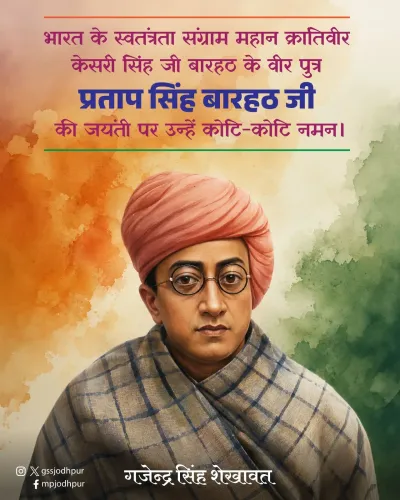
Shekhawat pays tribute to freedom fighter Kesari Singh Barahath
Synopsis
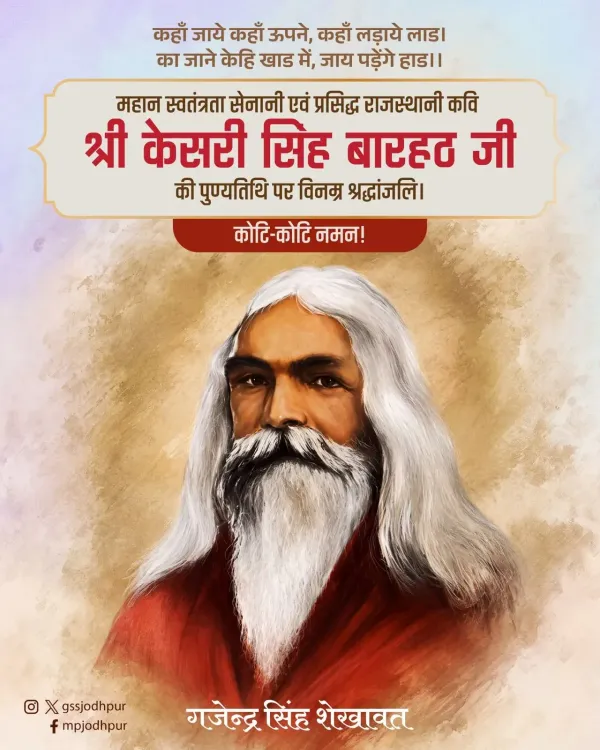
Union Culture and Tourism Minister Gajendra Singh Shekhawat marked the death anniversary of Rajasthani poet-patriot Kesari Singh Barahath on 14 August 2026, sharing a fatalistic verse by Barahath and offering a solemn tribute to the early-twentieth-century freedom fighter.
Key Takeaways
Gajendra Singh Shekhawat , Union Culture and Tourism Minister, paid tribute to Kesari Singh Barahath on his death anniversary, 14 August 2026 .
Shekhawat quoted a Rajasthani couplet by Barahath reflecting the poet's fatalistic courage in the face of British rule.
Kesari Singh Barahath was a Rajput poet and freedom fighter active in early-twentieth-century Rajputana, known for patriotic verse.
The tribute was posted on the eve of Independence Day , linking Barahath's sacrifice to India's broader freedom struggle.
The Culture Ministry has a pattern of publicly commemorating regional freedom fighters from princely states like Rajasthan to recover their place in national memory.
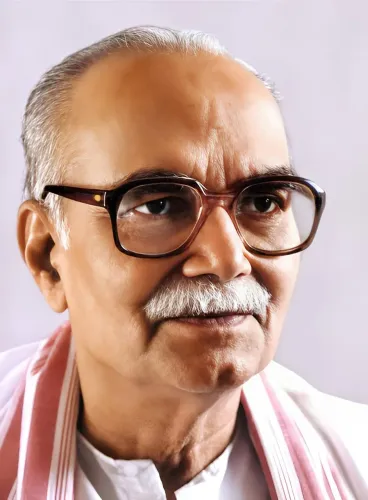
On the death anniversary of Kesari Singh Barahath — the Rajput poet-patriot who wielded verse as a weapon against British rule — Union Culture and Tourism Minister Gajendra Singh Shekhawat offered a solemn tribute on Friday, 14 August 2026, the eve of India's Independence Day.
Shekhawat opened his post with a couplet attributed to Barahath — 'कहाँ जाये कहाँ ऊपने, कहाँ लड़ाये लाड। का जाने केहि खाड में, जाय पड़ेंगे हाड।' — a verse that translates, roughly, as: 'Where shall we go, where shall we settle, where shall we fight with love? Who knows in which pit these bones will fall.' The lines carry the fatalistic courage of a man who understood that resistance against empire was a wager with life itself.
The poet who picked up arms in verse
Kesari Singh Barahath was a celebrated Rajasthani poet and freedom fighter active in the early twentieth century. Born into the Rajput tradition of martial honour, he channelled that spirit into patriotic literature at a time when the princely states of Rajputana existed in an uneasy compact with the British Crown. His compositions stirred nationalist sentiment in a region where the independence movement's reach was often filtered through local rulers and their courts.
Barahath belongs to a generation of regional freedom fighters whose contributions to the national movement remain less visible in mainstream historical memory than those of leaders from British India's directly administered provinces. His death anniversary, observed on the eve of Independence Day, carries a particular resonance — a reminder that the freedom won on 15 August 1947 was built on sacrifices scattered across every corner of the subcontinent.
Culture Ministry's quiet campaign to recover forgotten patriots
Shekhawat's tribute is part of a broader, ongoing pattern from the Union Ministry of Culture: using public platforms to spotlight freedom fighters from princely-state Rajasthan whose stories risk being lost to regional obscurity. For a ministry that oversees national memory — archives, museums, commemorative programmes — these digital tributes serve as low-cost, high-reach acts of historical reclamation.
The timing, a day before Independence Day, amplifies the message. It situates Barahath not as a footnote of Rajasthani literary history but as a thread in the larger fabric of India's freedom struggle.
Barahath's verses still circulate in Rajasthani literary circles, but a wider national reckoning with his legacy — through ministry-led publications or commemorative events — remains a watch point.
On the day India counts its decades of independence, it is worth pausing on the bones that fell in unnamed pits so the nation could stand.
Point of View
Spotlighting regional and princely-state contributors. For the Culture Ministry, such posts carry institutional weight — they signal whose memory the state considers worth preserving. The Independence Day eve timing sharpens that signal considerably, framing Barahath as a peer of better-known national heroes rather than a regional literary curiosity. Whether the tribute translates into substantive programmes — a publication, a national award, a museum exhibit — will determine if this is commemoration or performance.
NationPress
28 Sept 2026
Frequently Asked Questions
Who was Kesari Singh Barahath?
Kesari Singh Barahath was a celebrated Rajasthani poet and freedom fighter from the Rajput community who was active in the early twentieth century. He composed patriotic verses that stirred nationalist sentiment in Rajputana during the independence movement against British rule.
Why did Shekhawat pay tribute to Kesari Singh Barahath?
Union Culture and Tourism Minister Gajendra Singh Shekhawat paid tribute to Kesari Singh Barahath on his death anniversary, 14 August 2026, as part of the Culture Ministry's broader effort to honour regional freedom fighters from princely states like Rajasthan.
What is the meaning of the couplet Shekhawat quoted from Barahath?
The couplet — 'Where shall we go, where shall we settle, where shall we fight with love? Who knows in which pit these bones will fall' — reflects the fatalistic courage of a freedom fighter who accepted that resistance against British rule could cost him his life.
What is the significance of remembering Barahath on 14 August?
Paying tribute to Barahath on the eve of Independence Day, 14 August, places his sacrifice in direct connection with the freedom India celebrates on 15 August, highlighting that the national movement drew on contributions from every region, including the princely states of Rajputana.
What role does the Union Culture Ministry play in honouring freedom fighters?
The Union Ministry of Culture periodically issues public tributes and may organise commemorative programmes to document and publicise freedom fighters from regions like Rajasthan whose contributions are less visible in mainstream national history.