Pralhad Joshi Marks Partition Horrors Remembrance Day
Synopsis
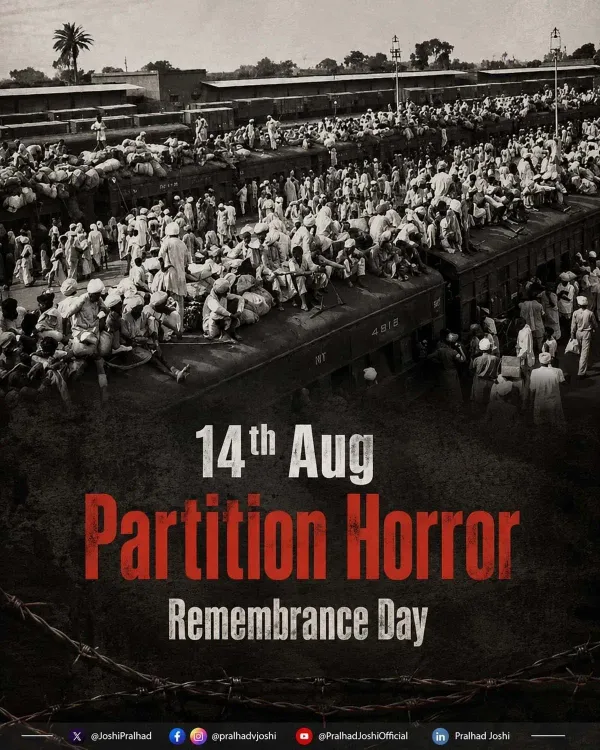
On Partition Horrors Remembrance Day, Union Minister Pralhad Joshi honoured the victims of the 1947 Partition in a bilingual English-Kannada tribute, calling for national unity, harmony, and solidarity as India approaches its Independence Day.
Key Takeaways
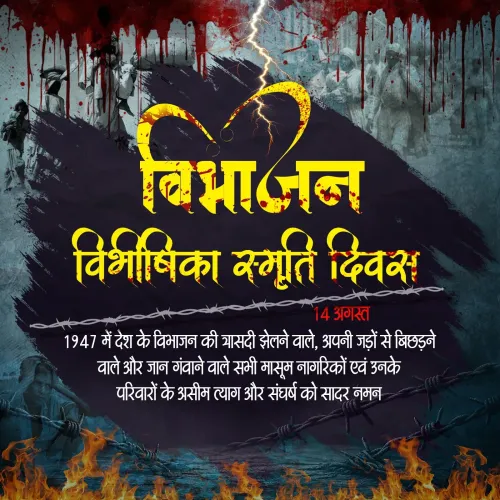
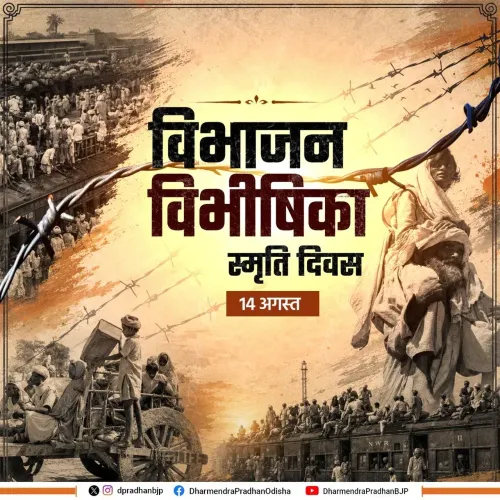
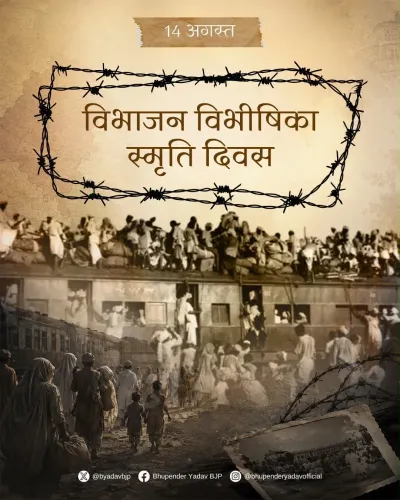
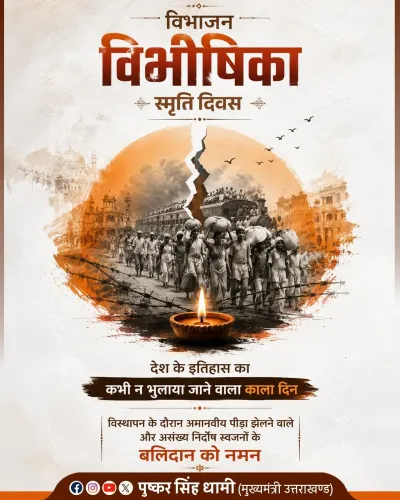
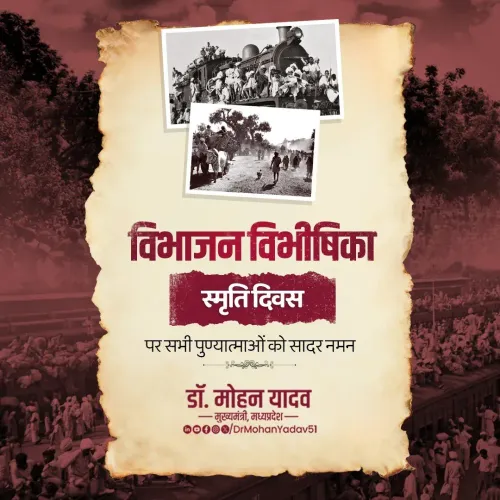
14 August is observed as Partition Horrors Remembrance Day , designated by the Government of India in 2021 .
Union Minister Pralhad Joshi posted a bilingual tribute in English and Kannada marking the day.
The 1947 Partition of British India caused one of the largest forced migrations in history, with immense loss of life.
Joshi called for honouring survivors' resilience through 'unity, harmony, brotherhood and national solidarity.' The day falls on the eve of Independence Day (15 August) , linking remembrance of partition's cost to the celebration of freedom.
Seventy-nine years after one of history's most violent mass displacements, the wounds of 1947 still demand remembrance. On Partition Horrors Remembrance Day, 14 August 2026, Union Consumer Affairs Minister Pralhad Joshi paid solemn tribute to the millions who lost their lives, their homes, and their worlds in the catastrophe that accompanied the birth of modern India.
Posting in both English and Kannada, Minister Joshi wrote: 'Behind every number was a story of loss, courage, and unimaginable pain.' His Kannada tribute — 'ಭಾರತದ ವಿಭಜನೆಯ ಸಂದರ್ಭದಲ್ಲಿ ಜೀವ ಕಳೆದುಕೊಂಡ ಎಲ್ಲ ಹುತಾತ್ಮರಿಗೆ ನನ್ನ ಗೌರವಪೂರ್ವಕ ಶ್ರದ್ಧಾಂಜಲಿ' [My respectful homage to all martyrs who lost their lives during the partition of India] — extended the remembrance to his home state of Karnataka, grounding a national moment in a regional voice.
A day carved from tragedy: how 14 August became a day of reckoning
The Government of India designated 14 August as Partition Horrors Remembrance Day in 2021, choosing the eve of Independence Day deliberately — a reminder that freedom and fracture arrived together. The Partition of British India in 1947 triggered one of the largest forced migrations in recorded history, with millions uprooted across what became India and Pakistan, and communal violence claiming lives on an enormous scale.
The observance is not merely archival. It is a standing instruction to a young republic: remember the cost of division so the conditions for it are never rebuilt. Minister Joshi's message leaned directly into that purpose, calling on citizens to honour the resilience of survivors by 'strengthening the values that bind us together — unity, harmony, brotherhood and national solidarity.'
The Kannada dimension: a senior BJP voice speaks to Karnataka
As a senior BJP leader from Karnataka and a Union Cabinet minister, Joshi carries weight in both national policy and regional politics. His bilingual tribute signals that Partition Remembrance Day is being observed not just as a Delhi-centric event but as a moment of shared national conscience across linguistic communities. The Kannada passage pledges to 'always protect national unity, harmony, peace and human values' — a resolve, he wrote, that this day must deepen.
Point of View
Used to frame national unity as an active, hard-won value rather than a passive assumption. Joshi's bilingual post reflects a deliberate outreach to Karnataka's electorate through the register of shared historical grief — a soft but consistent tool of political consolidation. The emphasis on 'healing wounds' and 'building a stronger, united India' tracks a broader governing narrative that positions the current administration as a custodian of post-Partition national integration. As India marks another Independence Day, such messaging simultaneously looks backward at tragedy and forward at a unity-as-policy agenda.
NationPress
14 Aug 2026
Frequently Asked Questions
What is Partition Horrors Remembrance Day?
Partition Horrors Remembrance Day is observed every year on 14 August to remember the victims of the 1947 Partition of British India. The Government of India designated this day in 2021 to honour those who lost their lives or were displaced during the violence that accompanied Partition.
Why is Partition Remembrance Day on 14 August?
14 August was chosen deliberately as it falls on the eve of India's Independence Day ( 15 August ), linking the memory of Partition's devastating human cost to the celebration of freedom — a reminder that independence and tragedy arrived together in 1947.
What did Pralhad Joshi say on Partition Horrors Remembrance Day?
Union Minister Pralhad Joshi posted a bilingual tribute in English and Kannada, calling Partition 'a story of loss, courage, and unimaginable pain' and urging citizens to honour survivors by strengthening 'unity, harmony, brotherhood and national solidarity.'
Who is Pralhad Joshi?
Pralhad Joshi is a senior BJP leader from Karnataka and serves as Union Minister of Consumer Affairs, Food and Public Distribution, and Minister of New and Renewable Energy in the Government of India.
How many people were affected by the 1947 Partition of India?
The 1947 Partition of British India into India and Pakistan triggered one of the largest forced migrations in recorded history, displacing millions of people and causing widespread communal violence with enormous loss of life across both nations.