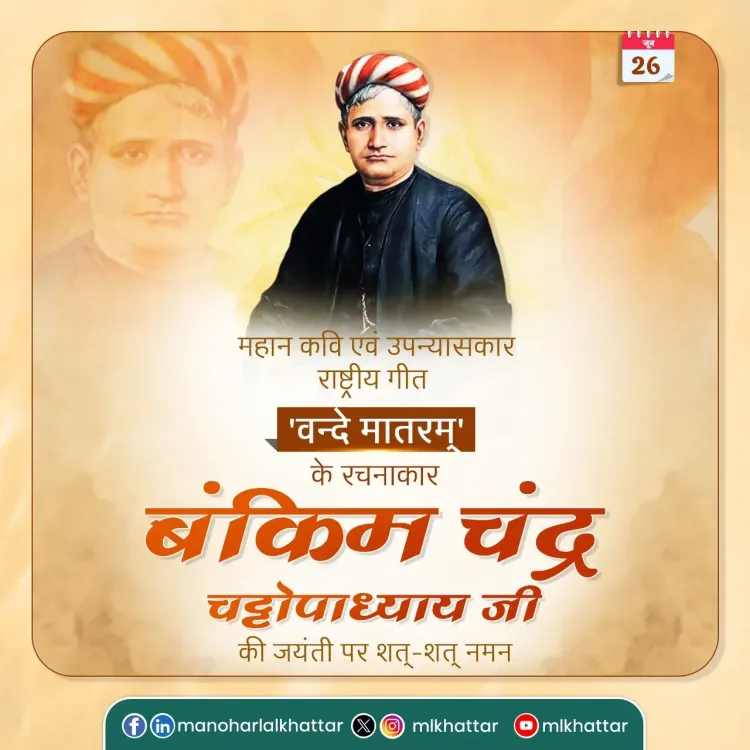
Khattar pays tribute to Bankim Chandra on birth anniversary
Synopsis
Union Power Minister Manohar Lal Khattar marked the birth anniversary of Bankim Chandra Chattopadhyay on 26 June 2026, honouring the 19th-century novelist whose works Anandamath and Vande Mataram became pillars of India's national identity and the independence movement.
Key Takeaways
Union Power Minister Manohar Lal Khattar paid tribute to Bankim Chandra Chattopadhyay on his birth anniversary on 26 June 2026 .
Bankim Chandra Chattopadhyay authored the novel Anandamath (1882) , which contained the song Vande Mataram .
Vande Mataram was adopted as India's national song by the Constituent Assembly in 1950 .
Khattar described Chattopadhyay as an unparalleled novelist and poet who 'lit the eternal flame of freedom in the hearts of the people.' The tribute is part of a consistent pattern of BJP leaders publicly honouring 19th-century cultural and nationalist figures.
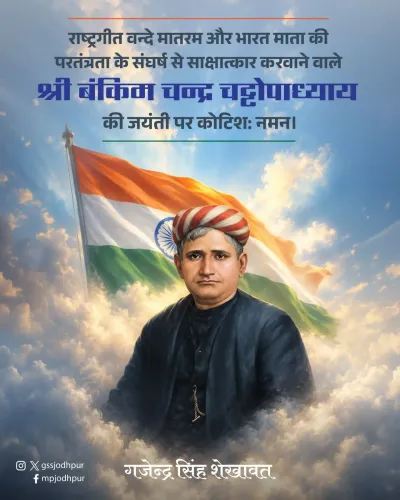
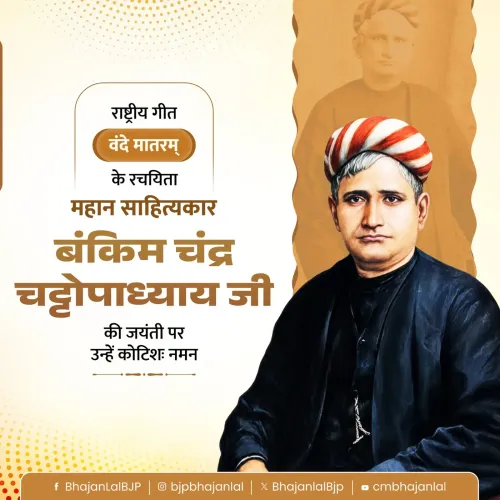
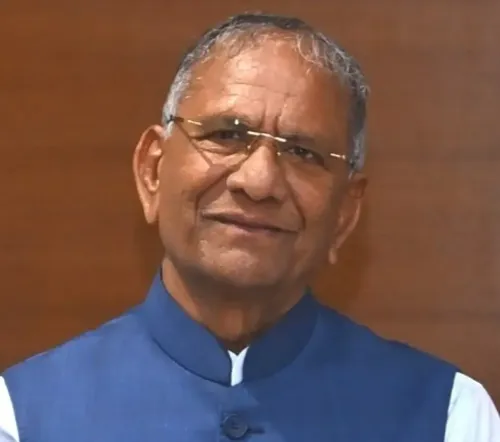
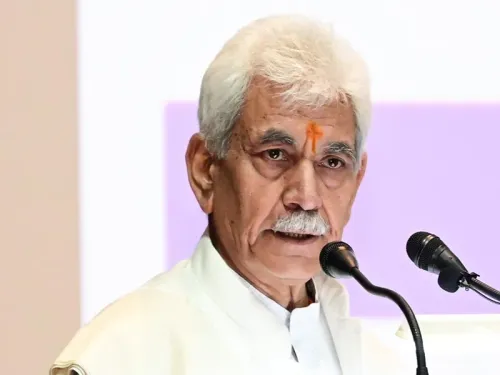
Union Power Minister Manohar Lal Khattar on Friday, 26 June 2026, paid tribute to Bankim Chandra Chattopadhyay, the 19th-century Bengali novelist and poet, on his birth anniversary, honouring the literary icon who gave India its national song, Vande Mataram.
Context
Khattar's post, written in Hindi, offered reverential homage to Chattopadhyay, describing him as an 'advitiya upanyasakar, kavi aur mahan rachanakar' (unparalleled novelist, poet and great creator) who, through timeless works such as Vande Mataram and the novel Anandamath, 'lit the eternal flame of freedom in the hearts of the people.' The minister concluded by expressing that 'the flame of national devotion kindled by you will continue to inspire all of us for ages to come.'
The tribute reflects a consistent practice among senior BJP leaders of publicly commemorating birth anniversaries of 19th-century writers and freedom-movement figures who are closely associated with cultural nationalism and anti-colonial resistance.
Policy Backdrop
Bankim Chandra Chattopadhyay, born in 1838 in Bengal, is regarded as one of the foundational figures of modern Bengali literature and Indian nationalist thought. His novel Anandamath, published in 1882, contained the song Vande Mataram, which became a rallying cry during the Indian independence movement.
Vande Mataram was formally adopted as India's national song by the Constituent Assembly in 1950, cementing Chattopadhyay's place in the country's constitutional and cultural identity. The song holds equal status with the national anthem in official protocol, and its origins in Chattopadhyay's literary work are frequently invoked in public discourse around cultural heritage.
Stakeholders and Impact
Tributes of this nature resonate with cultural organisations, literary institutions, and citizens who regard Chattopadhyay's contributions as foundational to India's national identity. For BJP, honouring such figures publicly serves to foreground the party's emphasis on pre-independence literary and cultural contributions to nation-building.
The post, shared from Khattar's official X account, draws attention to the literary lineage behind one of India's most recognised national symbols, reinforcing the broader political and cultural messaging around Vande Mataram ahead of the Independence Day season.
What's Next
With Independence Day approaching in August, commemorative events honouring nationalist icons from the 19th and early 20th centuries are likely to increase across political and cultural platforms. Parliamentary references to national symbols and the literary heritage of the freedom movement may also feature in the coming weeks as the national mood turns towards patriotic observance.
Point of View
The post draws a direct line between 19th-century cultural nationalism and contemporary political identity. With Independence Day approaching, such commemorations serve a dual purpose: honouring genuine historical legacy while reinforcing the party's self-positioning as the custodian of that legacy. The timing and regularity of these tributes suggest they are as much strategic communication as they are cultural observance.
NationPress
26 Jun 2026
Frequently Asked Questions
Who is Bankim Chandra Chattopadhyay and why is he famous?
Bankim Chandra Chattopadhyay was a 19th-century Bengali novelist, poet and journalist, best known for authoring the novel Anandamath (1882), which contained the song Vande Mataram that became India's national song.
What is Vande Mataram and where did it come from?
Vande Mataram is India's national song, originally written by Bankim Chandra Chattopadhyay and published in his 1882 novel Anandamath. It was adopted as the national song by the Constituent Assembly in 1950.
Why did Manohar Lal Khattar pay tribute to Bankim Chandra Chattopadhyay?
Khattar paid tribute on Bankim Chandra Chattopadhyay's birth anniversary, honouring his contributions to Indian literature and the freedom movement through works like Vande Mataram and Anandamath.
What is the significance of Anandamath in India's freedom movement?
Anandamath, published in 1882, was a nationalist novel set against colonial rule. It contained the song Vande Mataram, which became one of the most powerful rallying cries of the Indian independence movement.
When was Vande Mataram declared India's national song?
Vande Mataram was declared India's national song by the Constituent Assembly in 1950, the same year the Constitution came into effect.