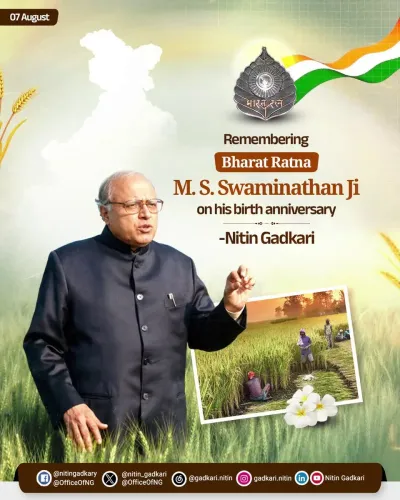
Khattar pays tribute to Dr. Swaminathan on birth anniversary
Synopsis
Union Power Minister Manohar Lal Khattar honoured Dr. M. S. Swaminathan on his birth anniversary, calling the Bharat Ratna laureate and Green Revolution architect's contribution to Indian agriculture and farmer prosperity 'unforgettable'.
Key Takeaways
Union Minister Manohar Lal Khattar paid homage to Dr.
Swaminathan on his birth anniversary, 7 August 2026 .
Swaminathan is credited as the father of India's Green Revolution , which introduced high-yielding wheat and rice varieties in the mid-1960s and helped avert famine.
He was awarded the Bharat Ratna , India's highest civilian honour, for his contributions to agricultural science and food security.
Khattar, a former Chief Minister of Haryana , represents a state whose agrarian economy was directly transformed by the Green Revolution.
Swaminathan's legacy extends to farmer welfare policy, including a landmark commission whose minimum support price recommendations remain a live political issue.
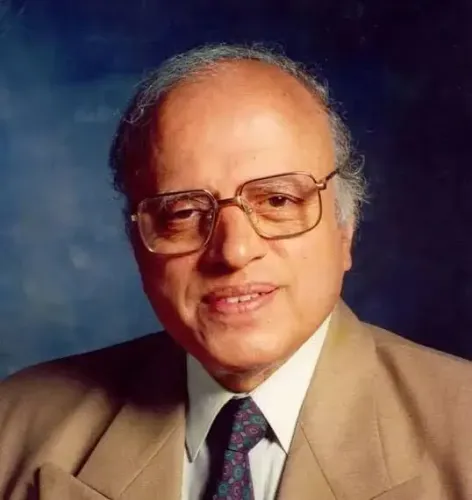
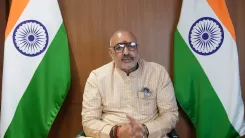
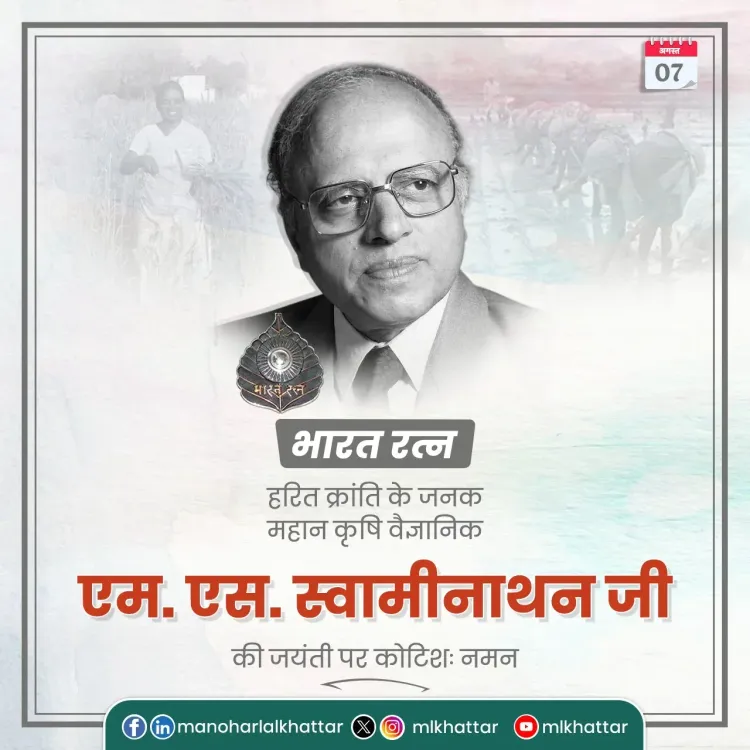
The man who helped India feed itself was remembered on Friday by Union Power Minister Manohar Lal Khattar, who offered homage to Dr. M. S. Swaminathan — agricultural scientist, Bharat Ratna laureate, and the father of India's Green Revolution — on his birth anniversary, 7 August 2026.
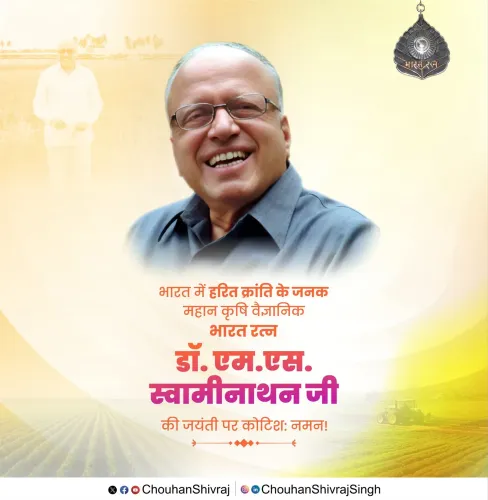
Posting in Hindi, Khattar wrote: 'महान कृषि वैज्ञानिक, हरित क्रांति के जनक, भारत रत्न डॉ. एम. एस. स्वामीनाथन जी की जयंती पर कोटिशः नमन अर्पित करता हूँ।' — 'I offer countless salutations to the great agricultural scientist, father of the Green Revolution, Bharat Ratna Dr. M. S. Swaminathan on his birth anniversary.' He added that Swaminathan's contribution to the upliftment of Indian agriculture and the prosperity of farmers, driven by 'firm commitment and foresight', is 'unforgettable'.
The scientist who turned the tide on famine
Dr. Mankombu Sambasivan Swaminathan stands as one of independent India's most consequential scientists. In the mid-1960s, when the country teetered on the edge of catastrophic food shortages, he championed the introduction of semi-dwarf, high-yielding varieties of wheat and rice — a move that detonated into what the world came to call the Green Revolution. India went from importing grain to achieving self-sufficiency within a decade. The 'annadata' — the farmer — was the quiet engine of that transformation, and Swaminathan spent a lifetime insisting that science must serve them first.Bharat Ratna and a legacy still shaping policy
Swaminathan was awarded the Bharat Ratna, India's highest civilian honour, in recognition of that enduring contribution. His influence did not end with the Green Revolution; he remained a vocal advocate for sustainable agriculture and farmer welfare well into the twenty-first century, lending his name to a landmark commission whose recommendations on minimum support prices for farmers continue to animate political debate across party lines. For a senior BJP leader and former Chief Minister of Haryana — a state whose agrarian identity is inseparable from the Green Revolution's gains — the tribute carries a particular resonance. Haryana's golden wheat fields were among the first to be transformed by the high-yielding varieties Swaminathan helped introduce. India's political class has long treated the birth anniversaries of figures like Swaminathan as moments to reaffirm the nation's commitment to its farmers. The gesture is ceremonial, but the name invoked is anything but small.Point of View
Invoking Swaminathan connects the party to a legacy of agrarian transformation at a time when farmer welfare remains one of India's most charged political fault lines. The Green Revolution's benefits and its long-term ecological costs are both part of Swaminathan's complex inheritance — and political leaders who claim that legacy implicitly accept the unfinished business of sustainable agriculture. Routine as such anniversary posts are, they also signal which scientific figures the ruling establishment chooses to centre in its development narrative.
NationPress
7 Aug 2026
Frequently Asked Questions
Who is Dr. M. S. Swaminathan and why is he famous?
Dr. Mankombu Sambasivan Swaminathan was an Indian agricultural scientist widely regarded as the father of India's Green Revolution. He championed high-yielding varieties of wheat and rice in the mid-1960s that transformed India from a food-deficit nation into one achieving self-sufficiency in grain production. He was awarded the Bharat Ratna, India's highest civilian honour.
What is the Green Revolution in India?
India's Green Revolution refers to the agricultural transformation of the mid-1960s, when the introduction of semi-dwarf, high-yielding wheat and rice varieties — developed with Dr. Swaminathan's involvement — dramatically increased food production and helped avert famine.
Why did Manohar Lal Khattar pay tribute to Swaminathan?
Khattar paid tribute on Dr. Swaminathan's birth anniversary, 7 August, describing his contributions to Indian agriculture and farmer prosperity as 'unforgettable'. As a senior BJP leader and former Chief Minister of Haryana — a state central to the Green Revolution — the tribute carries particular significance.
What is the Swaminathan Commission?
The Swaminathan Commission was a government-appointed body whose recommendations on minimum support prices for farmers became a landmark reference point in Indian agricultural policy. Its findings on farmer welfare continue to be cited in political debates across party lines.
What is Manohar Lal Khattar's current role?
Manohar Lal Khattar is the Union Minister of Power and Housing and Urban Affairs in the Government of India. He is a senior BJP leader and served as Chief Minister of Haryana before taking up his current cabinet portfolio.