Khattar Signals Bhalswa Landfill Nearing Full Closure
Synopsis
Union Minister Manohar Lal Khattar has signalled that the complete closure of Delhi's Bhalswa landfill — one of the capital's three major legacy waste dumpsites — is now within reach, marking a potential milestone in India's urban waste remediation drive under Swachh Bharat Mission.
Key Takeaways
Manohar Lal Khattar , Union Minister of Housing and Urban Affairs, announced on 2 August 2026 that closure of the Bhalswa landfill is progressing rapidly.
Bhalswa is one of Delhi's three major legacy waste dumpsites , alongside Ghazipur and Okhla, long associated with methane emissions, fires, and groundwater contamination.
Remediation involves biomining — mechanically sifting decades of compacted waste to recover recyclables and inert material before capping or repurposing the land.
Delhi's landfills were prioritised under central action plans from 2019 onward, driven by NGT orders and air-quality mandates.
The Swachh Bharat Mission (2014) set scientific processing of legacy waste as an explicit national target for Indian cities.
Post-closure land-use decisions at Bhalswa — green space, housing, or infrastructure — remain to be determined and will attract significant civic and political scrutiny.
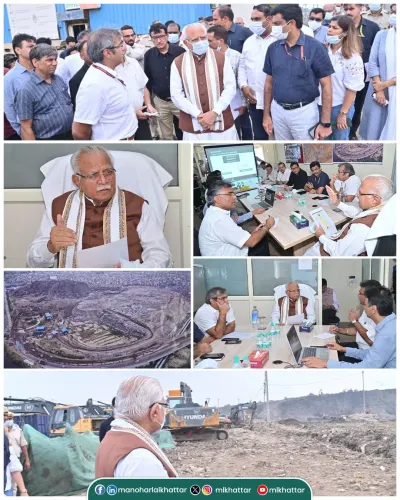
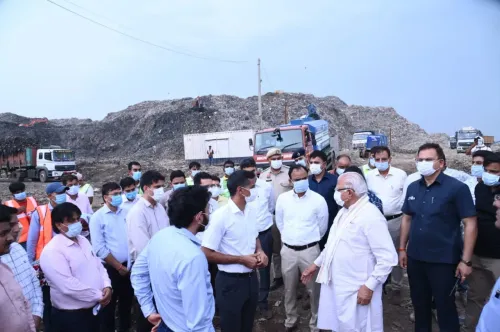
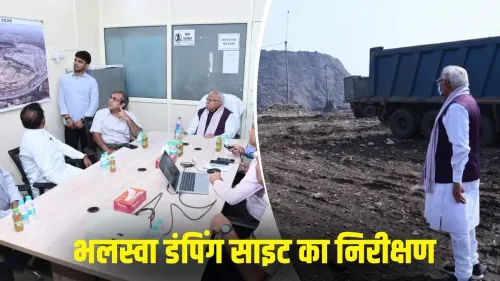
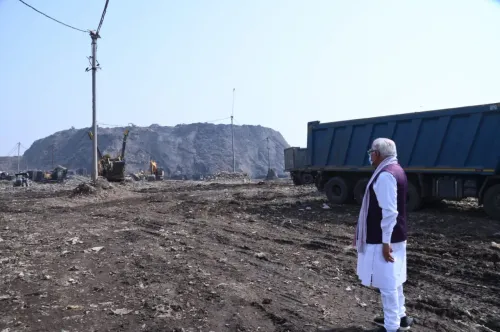
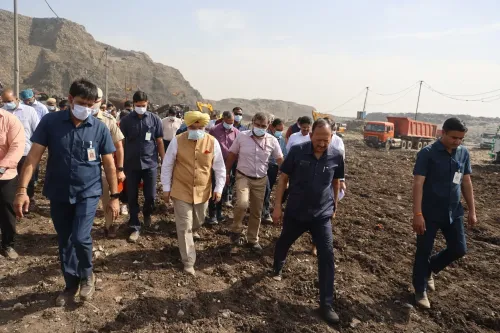
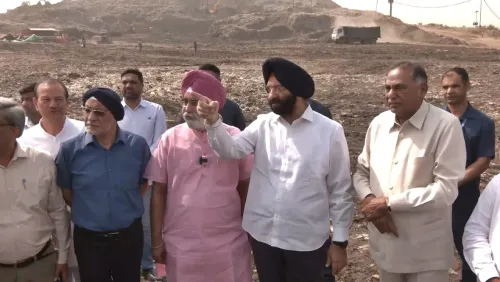
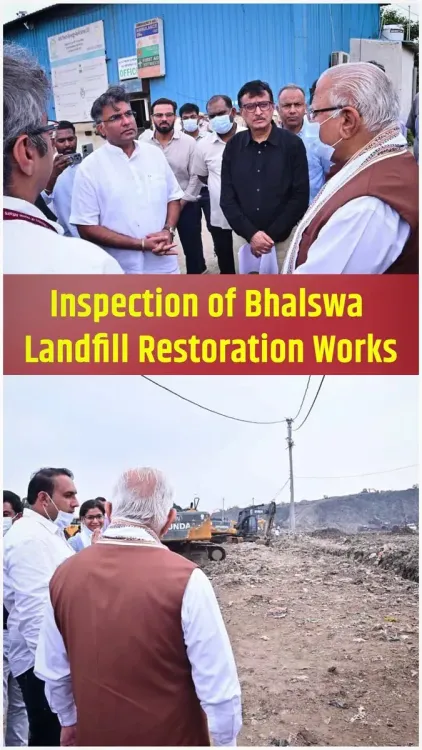
Delhi's most notorious mountain of garbage may finally be running out of time. Union Minister of Housing and Urban Affairs Manohar Lal Khattar on Sunday, 2 August 2026, declared that work toward the complete closure of the Bhalswa landfill site in north Delhi is advancing rapidly — a signal that one of the capital's most persistent environmental wounds is approaching its end.
Posting on X, Khattar wrote: 'Bhalswa landfill site ke poorn samaapan ki or hum tezi se aage badh rahe hain..' — 'We are moving rapidly towards the complete closure of the Bhalswa landfill site.' The brevity of the statement carries weight: it comes from the minister who directly oversees central urban waste-management programmes.
Why Bhalswa Has Haunted Delhi for Decades
Bhalswa is one of Delhi's three legacy waste dumpsites — alongside Ghazipur and Okhla — that have towered over surrounding neighbourhoods for decades, leaching methane, contaminating groundwater, and igniting fires that choke the city's already-burdened air. The site sits in north-west Delhi, close to residential colonies, and has been the subject of repeated National Green Tribunal orders demanding remediation.
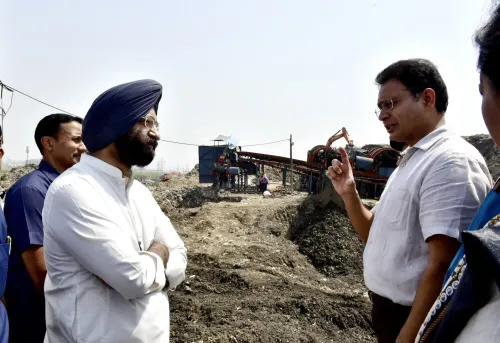
The scale of the problem is structural. These are not ordinary dumps — they are decades-old compacted waste mountains that require a process called biomining: mechanically sifting legacy waste to recover recyclables, compostables, and inert material, and then either capping or repurposing the cleared land. It is slow, expensive, and logistically complex work.
Swachh Bharat's Unfinished Business
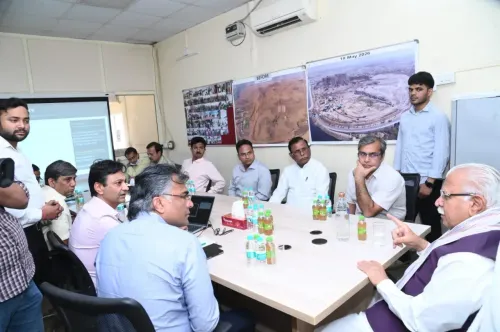
The Swachh Bharat Mission, launched in 2014, set scientific processing of legacy waste and landfill remediation as explicit targets for Indian cities. Delhi's three sites were formally prioritised under successive action plans from 2019 onward, with the Ministry of Housing and Urban Affairs periodically reviewing progress reports. Khattar, as the minister holding that portfolio, is the political face of that accountability.
Central and state agencies have pursued biomining and capping across major metros in response to both NGT directives and air-quality mandates. Bhalswa has consistently been among the most urgent cases — its proximity to dense habitation makes every month of delay a public-health cost borne by ordinary Delhiites.
What Closure Would Actually Mean
A fully remediated Bhalswa site would remove a chronic source of methane emissions and fire risk from north Delhi's air shed, free up significant urban land, and stand as a flagship proof-of-concept for India's landfill-remediation push in other cities. What happens to that land after closure — green space, housing, infrastructure — remains an open question that will draw intense political and civic attention.
Official timelines for full biomining completion and any subsequent land-use decisions at Bhalswa are what to watch next. If the minister's confidence is matched by on-ground delivery, Delhi could close a chapter that has been decades in the making.
Point of View
Air quality, and BJP's Swachh Bharat political brand. Closing Bhalswa would hand the Centre a tangible, visible win in a city governed by a rival party, making the optics as significant as the environmental outcome. The statement also reflects growing pressure from the National Green Tribunal, whose repeated orders on Delhi's legacy dumps have made inaction politically and legally untenable. Whether the 'rapidly advancing' claim translates into a firm closure date will determine whether this is a genuine milestone or a preview of one.
NationPress
2 Aug 2026
Frequently Asked Questions
What is the Bhalswa landfill site in Delhi?
The Bhalswa landfill is one of Delhi's three major legacy waste dumpsites, located in north-west Delhi. It has been operational for decades and is associated with methane emissions, recurring fires, and groundwater pollution affecting nearby residential areas.
What does 'complete closure' of a landfill mean?
Complete closure involves biomining — mechanically processing decades of accumulated waste to separate recyclables, compostables, and inert material — followed by capping or repurposing the cleared land. It eliminates ongoing pollution and fire risk from the site.
What is Manohar Lal Khattar's role in landfill remediation?
As Union Minister of Housing and Urban Affairs, Khattar oversees central urban waste-management programmes, including the Swachh Bharat Mission's legacy landfill remediation targets, and is responsible for reviewing progress at sites like Bhalswa.
What is biomining and how is it used at Delhi landfills?
Biomining is a mechanical process that sifts through old compacted waste to recover recyclable and inert material, reducing the volume of the dumpsite. It has been the primary remediation method deployed at Delhi's three legacy landfills since action plans were formalised from 2019 onward.
What happens to the Bhalswa land after the landfill is closed?
No official decision on post-closure land use at Bhalswa has been announced. Possibilities include green space, housing, or public infrastructure, and any such decision is expected to attract significant civic and political attention.