Rashtriya Paryavaran Baal Sansad: Children debate climate, pollution at Delhi Assembly
Synopsis
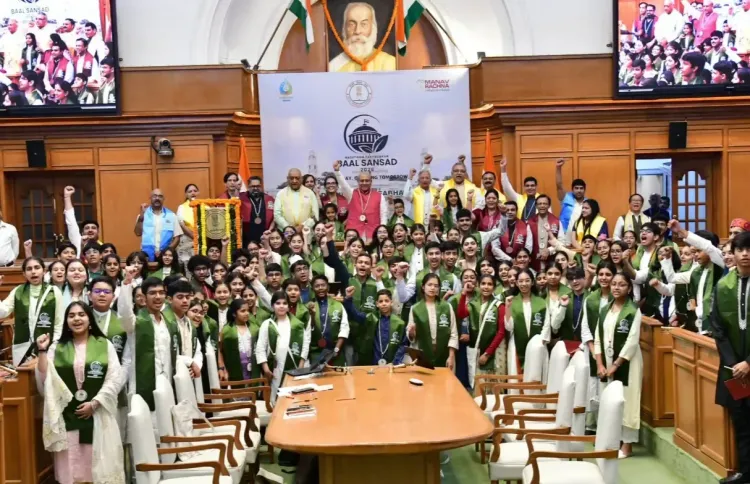
Children as young as seven took over the Delhi Assembly on 7 October, debating pollution, water conservation and climate change in the Rashtriya Paryavaran Baal Sansad — a live parliamentary simulation where a girl student presided over the House and peers played Cabinet Ministers and Opposition leaders.
Key Takeaways
The Rashtriya Paryavaran Baal Sansad was held inside the Delhi Assembly on 7 October 2026 .
Children aged 7 to 17 from multiple states debated pollution, water conservation, climate change, and shrinking green spaces.
A girl student presided over the House; others played Cabinet Ministers and Opposition leaders.
Delhi Assembly Speaker Vijender Gupta praised participants for fact-based, disciplined debate and stressed that today's decisions shape future generations' world.
Deputy Speaker Mohan Singh Bisht and several MLAs attended the session.
Winners were recognised in categories including Best Orator , Best Parliamentarian , Baal Sansad Change Maker , and Baal Sansad Icon .
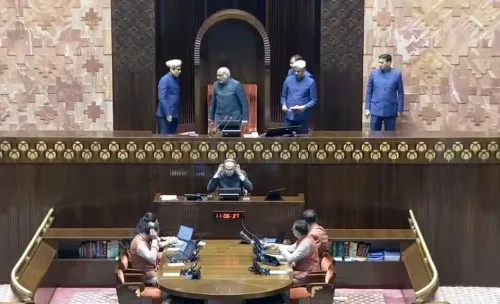
The Delhi Assembly hosted an extraordinary session on Wednesday, 7 October 2026, as children aged between 7 and 17 years occupied the legislators' seats and debated urgent environmental challenges — from air pollution and water conservation to shrinking green spaces and climate change. The event, organised under the banner of the Rashtriya Paryavaran Baal Sansad, brought together young participants from across multiple states for a live exercise in parliamentary democracy.
How the Session Unfolded
A girl student assumed the chair as Presiding Officer, conducting the proceedings of the House in a structured and disciplined manner. Other participants took on the roles of Cabinet Ministers, ruling-party members, and Opposition leaders, recreating the full arc of a legislative debate. The young representatives put forward several concrete ideas and suggestions to address the country's mounting environmental challenges.
One participant, playing the role of a ruling-bench member, highlighted the Pradhan Mantri Krishi Sinchayee Yojana, noting that the scheme supports both farm irrigation and the efficient conservation of water. A student representing the Opposition stressed the importance of inclusive development. 'We are not here to oppose development, but we want development that is inclusive and benefits all sections of society,' the student said.
What Delhi Assembly Speaker Vijender Gupta Said
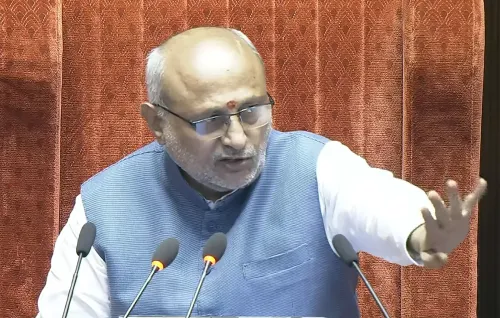
Delhi Assembly Speaker Vijender Gupta praised the children for their fact-based, disciplined, and peaceful discussions. He said the Assembly is a platform for dialogue, reasoning, and deliberation — qualities the young participants demonstrated convincingly. Gupta underlined that democracy is not merely about voicing one's views but also about understanding disagreement and working towards solutions through reasoned debate.
He further emphasised that environmental protection is directly linked to human life, stressing that preserving tree cover is essential for clean air, while water availability and declining green spaces remain major challenges for future generations. 'Decisions taken today will determine the kind of world future generations inherit,' Gupta said. He added that the decision to hold the Baal Sansad inside the Assembly chamber was deliberately aimed at giving children practical exposure to democratic processes — recognising that real-life experience complements classroom learning.
Awards and Recognition
The programme was attended by Deputy Speaker Mohan Singh Bisht, several Members of the Legislative Assembly, and other public representatives. All participants received mementoes, while winners were recognised across categories including Harit Navankur, Baal Sansad Change Maker, Best Orator, Best Parliamentarian, Baal Researcher, Best Journalist, and Baal Sansad Icon.
Broader Significance
The initiative is notable for placing environmental discourse at the centre of civic education. This comes amid growing concern over Delhi's air quality index, which routinely breaches hazardous thresholds in winter months, and a wider national conversation about the pace of urban green-cover loss. By inviting children from different states, the Baal Sansad also signalled that environmental accountability is a pan-India conversation — not a Delhi-specific one.
Speaker Gupta, in his closing interaction with participants, encouraged them to continue asking questions and actively contribute to nation-building, saying that an aware and responsible younger generation is a strong foundation for a cleaner, greener, and sustainable future.
Point of View
The urgency children articulated in the chamber stands in sharp contrast to the pace of adult policymaking. Notably, a student praising the Pradhan Mantri Krishi Sinchayee Yojana from the ruling benches reflects how quickly children absorb the political grammar of the spaces they occupy. The more durable outcome would be a structured feedback mechanism that routes children's recommendations to actual legislative committees — something the current format does not appear to include.
NationPress
7 Oct 2026
Frequently Asked Questions
What is the Rashtriya Paryavaran Baal Sansad?
The Rashtriya Paryavaran Baal Sansad is a children's parliamentary initiative focused on environmental themes, where young participants from different states simulate a full legislative session debating issues such as pollution, water conservation, and climate change. The 2026 edition was held inside the Delhi Assembly chamber on 7 October, with children aged 7 to 17 taking on the roles of legislators, Cabinet Ministers, and Opposition leaders.
What did Delhi Assembly Speaker Vijender Gupta say at the event?
Speaker Vijender Gupta praised the children for their fact-based and disciplined discussions, saying the young participants demonstrated the ability to ask questions, listen to differing viewpoints, and argue logically. He also stressed that environmental protection is directly linked to human life and that 'decisions taken today will determine the kind of world future generations inherit.'
Who attended the Baal Sansad session at the Delhi Assembly?
Deputy Speaker Mohan Singh Bisht, several Members of the Legislative Assembly, and other public representatives attended the session alongside the young participants, who came from multiple states across India.
What awards were given at the Rashtriya Paryavaran Baal Sansad?
Winners were recognised in categories including Harit Navankur, Baal Sansad Change Maker, Best Orator, Best Parliamentarian, Baal Researcher, Best Journalist, and Baal Sansad Icon. All participants also received mementoes.
Why does the Baal Sansad matter for environmental awareness in India?
The initiative gives children direct exposure to democratic processes and places environmental issues — pollution, water scarcity, green-cover loss — at the centre of civic education. It draws young voices from multiple states, signalling that environmental accountability is a national concern rather than a local one, and comes at a time when India faces intensifying pressure on air quality and urban green spaces.