Kishan Reddy arrives in Sydney for IMARC 2026 mining meet
Synopsis
Union Coal and Mines Minister G. Kishan Reddy has arrived in Sydney for the five-day IMARC 2026 conference, where he will engage global industry leaders to strengthen India-Australia cooperation in mining and critical minerals vital to India's clean-energy ambitions.
Key Takeaways
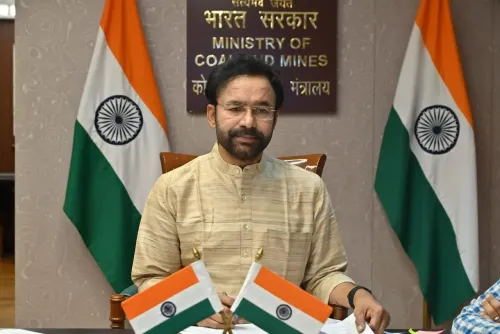
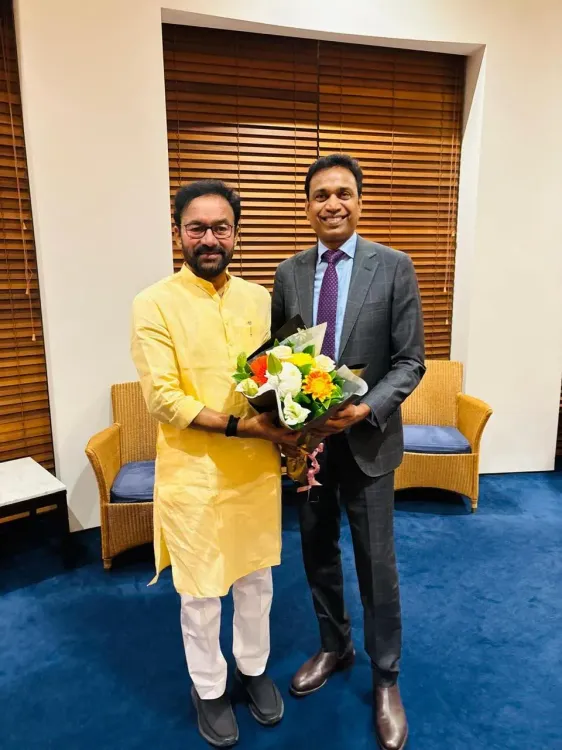
Kishan Reddy , Union Minister of Coal and Mines, has arrived in Sydney, Australia for IMARC 2026.
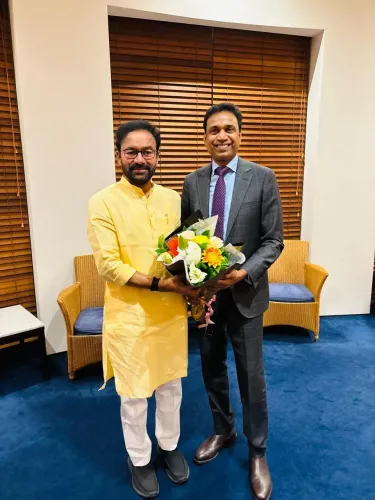
He was received by Indian Consul General Dr.
Janakiraman and the local Telugu community.
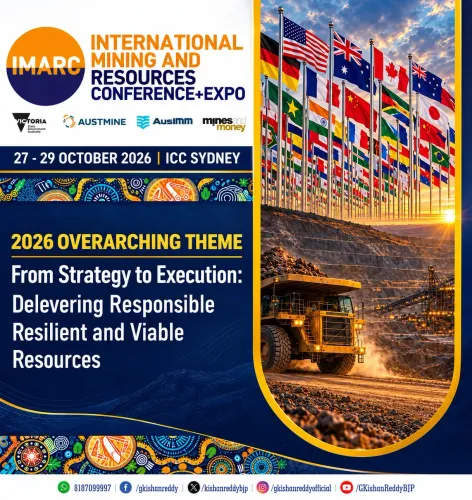
The minister will attend the International Mining and Resources Conference (IMARC) for five days , meeting global industry leaders.
Focus of talks: strengthening cooperation in mining and critical minerals , including lithium and rare earths.
The visit builds on the India-Australia ECTA (2022) and multiple bilateral MoUs on mining signed since 2020 .
Australia is a strategic partner for India's critical minerals supply chain, supporting the country's EV and clean-energy goals.
Union Coal and Mines Minister G. Kishan Reddy has landed in Sydney, Australia, kicking off a five-day engagement at the International Mining and Resources Conference (IMARC) 2026 — one of the world's premier platforms for mining investment and technology, where India's critical-minerals diplomacy will take centre stage.
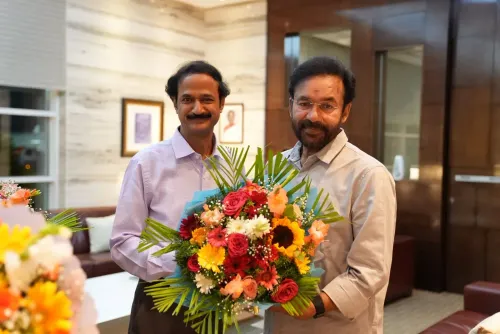
The minister was received by Indian Consul General Dr. S. Janakiraman and members of Sydney's Telugu-speaking community, lending a warm bilateral note to what is essentially a high-stakes industrial mission. Reddy confirmed he will hold discussions with global industry leaders across the five-day conference, with a clear mandate: deepen cooperation in mining and critical minerals.
Why IMARC 2026 matters for India's minerals push
IMARC is not a side event. It draws mining executives, policy-makers, and investors from across the globe, making it a rare arena where bilateral deals and technology partnerships crystallise quickly. For India, which is racing to secure lithium, cobalt, and rare earth elements for its electric-vehicle and clean-energy build-out, a seat at this table is strategic, not ceremonial.
Australia holds some of the world's largest deposits of lithium, rare earths, and other critical minerals, and is widely regarded in New Delhi as a stable, like-minded supplier. Since 2020, the two countries have signed multiple memoranda of understanding on mining cooperation. The India-Australia Economic Cooperation and Trade Agreement (ECTA), inked in 2022, built a formal trade-and-investment bridge that specifically supports the minerals sector.
India's resource diplomacy in higher gear
Kishan Reddy's Sydney visit is part of a broader, deliberate pattern. New Delhi has intensified its resource diplomacy — dispatching ministerial-level delegations to mining hubs and international forums — as it seeks to insulate India's clean-energy supply chain from single-source dependencies. The Ministry of Mines has been at the forefront, negotiating exploration and offtake frameworks with countries that hold the geology India lacks domestically.
Australia fits that brief almost perfectly: politically stable, geologically rich, and already a partner under ECTA. Any joint statements, technology-transfer agreements, or investment commitments that emerge from the IMARC sessions could meaningfully advance India's critical-minerals security roadmap — and the minister will have five days to make that case in one of the industry's most influential rooms.
When the conference ends, what India brings back from Sydney will matter far more than the welcome it received there.
Point of View
Not merely a procurement problem. By deploying a Cabinet minister to an industry-facing international conference, New Delhi is signalling to global miners and investors that India is a serious, government-backed partner — not just a buyer. The visit sits squarely within India's broader resource-diplomacy offensive, which has accelerated since the ECTA gave the India-Australia minerals relationship a legal framework. The real test will be whether IMARC 2026 yields concrete commitments — technology transfer, joint exploration, or offtake agreements — that move the needle beyond bilateral goodwill.
NationPress
24 Oct 2026
Frequently Asked Questions
What is IMARC 2026 and why is India participating?
IMARC — the International Mining and Resources Conference — is a major global event held in Sydney that brings together mining investors, executives and policy-makers. India is participating through Union Minister G. Kishan Reddy to advance partnerships in critical minerals such as lithium and rare earths, which are essential for its clean-energy and electric-vehicle programmes.
Why is Australia important for India's critical minerals strategy?
Australia holds large deposits of lithium, rare earths and other critical minerals, and is considered a politically stable, like-minded supplier. The two countries signed the India-Australia ECTA in 2022 and multiple mining cooperation MoUs since 2020, making Australia a cornerstone of India's effort to diversify its critical-minerals supply chain.
Who received Kishan Reddy in Sydney?
Union Minister G. Kishan Reddy was received by Indian Consul General Dr. S. Janakiraman and members of Sydney's Telugu-speaking community on his arrival in Australia.
What will Kishan Reddy discuss at IMARC 2026?
The minister has stated he will engage with global industry leaders over five days to strengthen mutual cooperation in mining and critical minerals. Any joint statements, technology partnerships or investment announcements from these discussions will be closely watched.
What is the India-Australia ECTA and how does it relate to mining?
The Economic Cooperation and Trade Agreement (ECTA) was signed between India and Australia in 2022. It includes provisions to facilitate trade and investment in minerals and resources, providing a formal framework for the mining cooperation that ministerial visits like Kishan Reddy's seek to deepen.