Kishan Reddy chairs 4th Mining Ministers' Confab in Goa

Synopsis
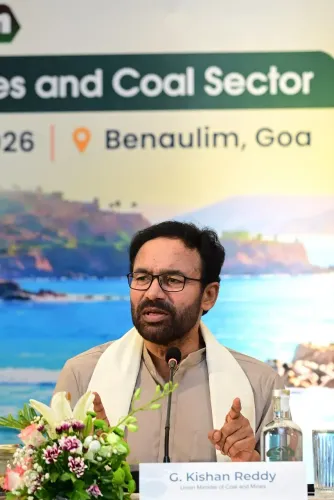
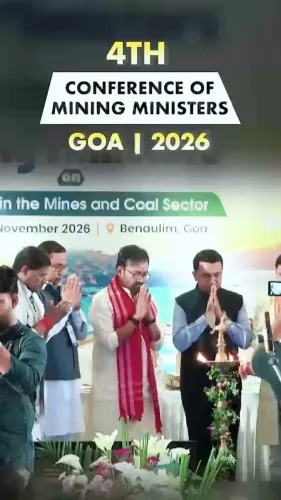
The 4th National Conference of Mining Ministers concluded in Goa on 7 November 2026, with Union Minister G. Kishan Reddy calling it a success. The event focused on cooperative federalism, transparency, and technology-led modernisation of India's coal and mining sectors.
Key Takeaways
The 4th National Conference of Mining Ministers concluded in Goa on 7 November 2026 .
Union Coal and Mines Minister G.
Kishan Reddy presided and declared the conference successful.
Wide-ranging discussions were held on centre-state partnership in mining and coal sector reforms.
The stated goal is to make the mining sector 'future ready' through transparency and modern technology.
The conference builds on the MMDR Amendment Act 2021 and the 2020 commercial coal mining liberalisation under Atmanirbhar Bharat.
Cooperative federalism was highlighted as the guiding spirit for resolving centre-state frictions over clearances and mineral revenue.
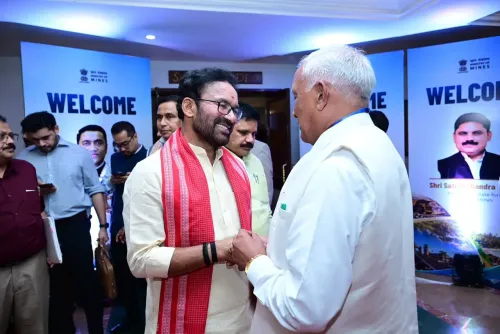
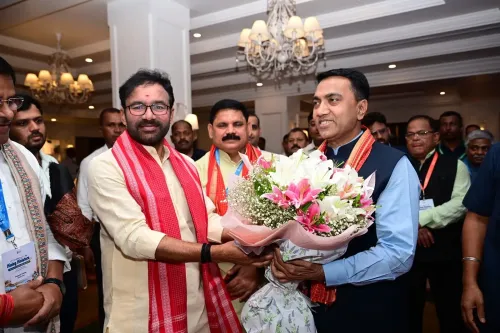
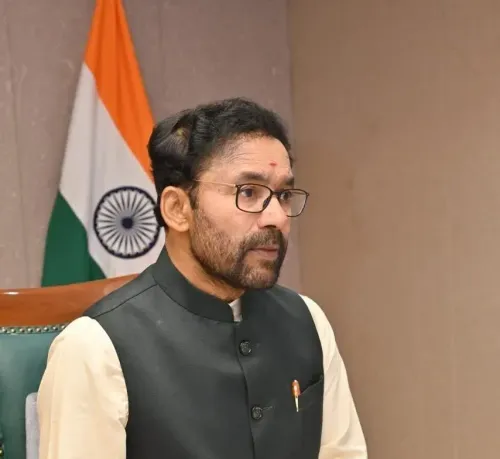
Goa hosted India's most consequential annual gathering of mining policymakers on Saturday, 7 November 2026, as the 4th National Conference of Mining Ministers concluded with a clear mandate: transform the country's coal and mining sectors through transparency, modern technology, and tighter centre-state coordination. Union Coal and Mines Minister G. Kishan Reddy declared the conference a success, framing its outcomes around the spirit of cooperative federalism.
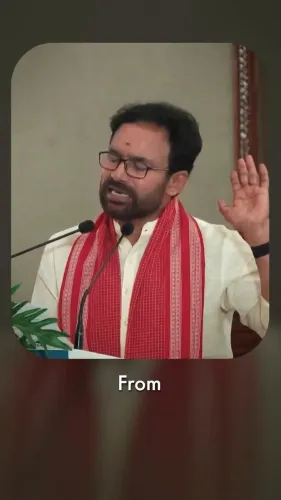
Posting on X in Telugu, the minister wrote: 'దేశ మైనింగ్, బొగ్గు రంగాల్లో సంస్కరణలే లక్ష్యంగా గోవాలో 4వ మైనింగ్ మంత్రుల జాతీయ సదస్సు విజయవంతంగా ముగిసింది' — 'The 4th National Conference of Mining Ministers in Goa, aimed at reforms in the country's mining and coal sectors, has concluded successfully.' He added that wide-ranging discussions were held on centre-state partnership, with the goal of making the sector 'future ready' through transparent governance and advanced technology.Why Goa, Why Now
These national conferences have served as the central government's principal platform for aligning state-level execution with New Delhi's reform agenda on mineral auctions, technology adoption, and revenue-sharing arrangements. State governments are the first movers on clearances and lease management — without their buy-in, national targets stall. Goa, itself a historically significant mining state, lent symbolic weight to the gathering.
Reform Lineage Behind the Agenda
The conference did not emerge in a vacuum. The Mines and Minerals (Development and Regulation) Amendment Act, 2021 overhauled auction processes and extended lease periods to accelerate mineral output. Before that, the landmark 2020 opening of commercial coal mining to private players — a cornerstone of the Atmanirbhar Bharat push — set the stage for the structural overhaul the ministry is now trying to consolidate. Each national conference has been a checkpoint: how far have states moved, and what frictions remain on clearances, revenue splits, and digitisation?
Cooperative Federalism Under the Microscope
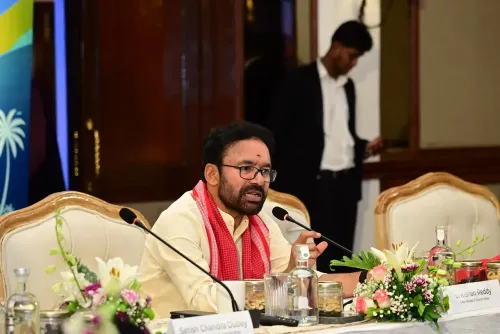
Centre-state frictions over mineral royalties and environmental clearances have long slowed India's mining ambitions. The minister's explicit invocation of 'సహకార సమాఖ్య స్ఫూర్తి' — 'the spirit of cooperative federalism' — signals that this edition directly confronted those fault lines. Getting state mining ministers in one room, with the coal ministry and industry stakeholders, is precisely how policy alignment gets operationalised beyond the gazette notification.
The push for 'future-ready' mining also points toward technology-led modernisation: digital auction platforms, satellite-based monitoring of mine leases, and mechanisation of coal operations — all themes the Ministry of Coal has been advancing since the commercial mining reforms took hold.
India's mineral wealth is not in question. What comes next — state-level policy changes, any new technology pilots, and whether this edition's discussions translate into actionable reform timelines — will define whether the 4th conference joins the list of milestones or of missed opportunities.
Point of View
Digitisation, and environmental clearances. Kishan Reddy's emphasis on cooperative federalism is a deliberate political signal: the Centre is framing mineral development as a shared national project, not a top-down imposition, which matters enormously when several mineral-rich states are governed by opposition parties. The 'future ready' technology pitch also tracks with a broader pattern of deploying modernisation language to build cross-party consensus on otherwise contentious resource-revenue questions. Whether this edition's declarations crystallise into binding state-level commitments will be the real measure of its success.
NationPress
7 Nov 2026
Frequently Asked Questions
What is the National Conference of Mining Ministers in India?
It is an annual gathering convened by the Union Ministry of Coal and Mines where state mining ministers, central officials, and industry stakeholders align on national policy, reform targets, and technology adoption across India's coal and mineral sectors.
What was decided at the 4th National Conference of Mining Ministers in Goa?
The conference focused on centre-state partnership in mining reforms, adopting transparent governance frameworks, and leveraging modern technology to make the sector future-ready, according to Union Minister G. Kishan Reddy's post on 7 November 2026.
What is cooperative federalism in the context of Indian mining policy?
Cooperative federalism in mining refers to the collaborative framework through which the central government and state governments jointly manage mineral auctions, revenue sharing, clearance timelines, and technology upgrades, reducing friction over jurisdiction.
What are the key mining reforms introduced by India since 2020?
India opened commercial coal mining to private players in 2020 under Atmanirbhar Bharat, and the Mines and Minerals (Development and Regulation) Amendment Act 2021 revamped auction rules and extended lease periods to boost mineral production.
Who is G. Kishan Reddy?
G. Kishan Reddy is India's Union Minister of Coal and Mines and the BJP's Telangana state president. He has been a key face of the central government's efforts to reform and modernise the country's mining and coal sectors.