Kishan Reddy Chairs Coal Ministry Review on Key Projects
Synopsis
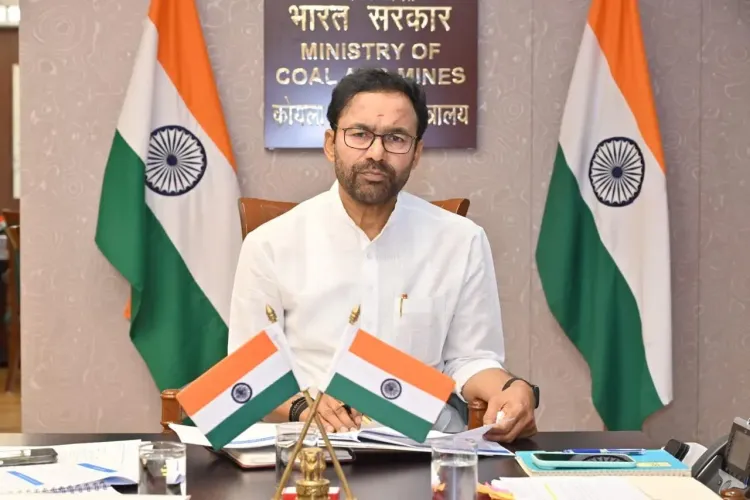
Union Coal and Mines Minister G. Kishan Reddy on 3 July 2026 chaired a review meeting with senior ministry officials in New Delhi to assess progress on key coal projects and identify measures to speed up implementation and raise domestic coal production.
Key Takeaways
Kishan Reddy , Union Minister of Coal and Mines, chaired a review meeting at the Ministry of Coal in New Delhi on 3 July 2026 .
The meeting focused on assessing progress of key coal sector projects and expediting their implementation.
Enhancing domestic coal production was a central agenda item, consistent with the government's target of over one billion tonnes annual output.
Coal India Limited and power utilities are the primary stakeholders affected by project timelines discussed at such reviews.
The government opened commercial coal mining to private players in 2020 under the amended Coal Mines (Special Provisions) Act , expanding the production base.
Fresh commercial mining block auctions are expected later in 2026 , with monthly production data serving as the near-term performance benchmark.
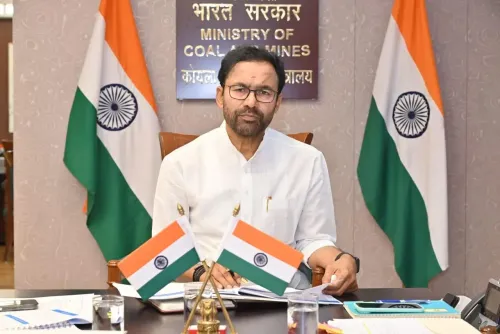
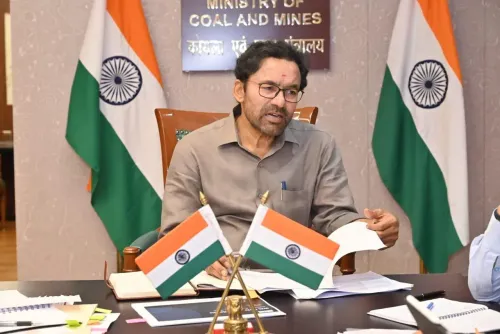
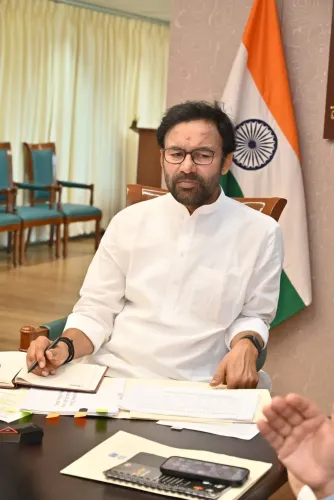
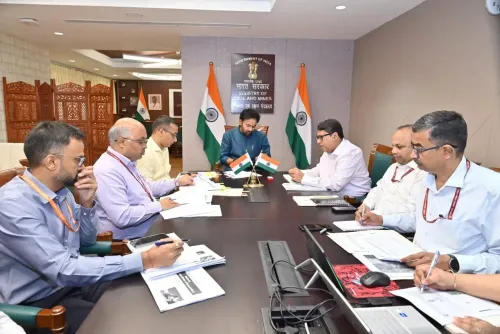
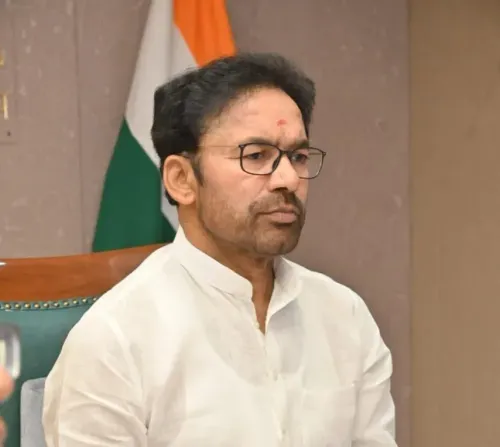
Union Coal and Mines Minister G. Kishan Reddy chaired a high-level review meeting with senior officials of the Ministry of Coal in New Delhi on Friday, 3 July 2026, to assess the progress of key projects, discuss measures to expedite their implementation, and enhance domestic coal production.
Context
The meeting, convened at the ministry headquarters, brought together senior bureaucrats and officials to take stock of ongoing coal sector projects. Minister Reddy, who also serves as BJP Telangana state president, has been actively engaged in steering the ministry's operational agenda since assuming charge. The review underscores the government's continued emphasis on tracking project timelines at the highest level.
Posting on X, Reddy said he 'chaired a review meeting with senior officials of the Ministry of Coal in New Delhi today to assess the progress of key projects, discuss measures to expedite their implementation, and enhance coal production.'
Policy Backdrop
The meeting fits into a long-running policy push to scale up domestic coal output and reduce dependence on thermal coal imports. In 2020, the government opened commercial coal mining to private players through auctions under the amended Coal Mines (Special Provisions) Act, marking a structural shift in the sector.
Subsequent budget cycles and Ministry of Coal action plans have set targets exceeding one billion tonnes of annual coal output, with regular high-level reviews used to monitor land acquisition progress, evacuation infrastructure, and project commissioning timelines. Coal India Limited, the state-owned mining giant, remains the dominant production vehicle under the ministry's oversight.
Stakeholders and Impact
Coal India Limited and the country's power utilities are the primary stakeholders in any acceleration of coal project timelines. Power generators, which rely on domestic coal for base-load thermal generation, have periodically flagged supply constraints that drive up import bills and put pressure on electricity tariffs.
Expediting stalled or delayed coal projects directly affects fuel security for the power sector, which in turn has downstream consequences for industrial output and household electricity supply. The ministry's review mechanism is designed to surface and resolve bottlenecks before they compound into supply shortfalls.
What's Next
Attention will now turn to the release of monthly coal production statistics that track whether output targets are being met on a rolling basis. A fresh round of commercial mining block auctions is also expected later in 2026, which could bring additional private capacity into the sector.
Any specific directives or decisions emerging from the 3 July review are likely to be communicated through official ministry channels in the coming days, with project-level implementation updates expected to follow.
Point of View
Who straddles both the national coal portfolio and the BJP's Telangana political operations, visible administrative activity in New Delhi reinforces his ministerial credentials. The broader arc here is a government that continues to treat coal as a non-negotiable pillar of energy security even as it simultaneously scales renewable capacity.
NationPress
3 Jul 2026
Frequently Asked Questions
Why did Kishan Reddy hold a coal ministry review meeting on 3 July 2026?
Minister G. Kishan Reddy convened the meeting to assess the progress of key coal sector projects, identify ways to speed up their implementation, and discuss steps to enhance domestic coal production.
What is the Ministry of Coal responsible for in India?
The Ministry of Coal formulates policies for the exploration, development and regulation of India's coal resources and oversees public sector undertakings including Coal India Limited.
What is India's coal production target?
Ministry of Coal action plans have set a target of over one billion tonnes of annual coal output, aimed at reducing dependence on thermal coal imports and supporting base-load power generation.
When did India open commercial coal mining to private players?
In 2020, the government opened commercial coal mining to private companies through auctions under the amended Coal Mines (Special Provisions) Act.
What comes next after the 3 July coal ministry review?
Monthly coal production statistics will indicate near-term progress, and a fresh round of commercial mining block auctions is expected later in 2026, which could add new private-sector capacity to the sector.