Kishan Reddy Maps India's Generational Leap Since 2014

Synopsis
Union Minister G. Kishan Reddy used the 13-year GTA VI development cycle as a rhetorical yardstick to highlight India's claimed generational shift — from economic fragility to rapid growth, poverty reduction, a space start-up boom, rising defence exports, and near-elimination of Naxal-affected districts.
Key Takeaways
Kishan Reddy posted on November 19, 2026 , cataloguing India's transformation across five domains since 2014 .
India's extreme poverty rate is claimed to have fallen from 27% to 2.6% , based on NITI Aayog's multidimensional poverty methodology.
IN-SPACe , established in 2020 , opened the space sector to private players, spawning a cluster of domestic start-ups.
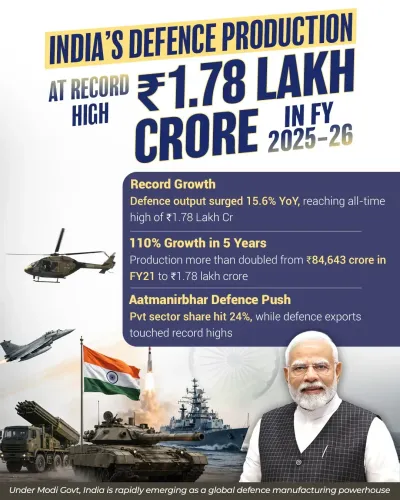
The government claims defence exports now reach more than 80 countries , a reversal of India's historic position as one of the world's largest importers.
Left Wing Extremism-affected districts, once numbering 182 , are cited as having been reduced to zero through security and development operations.
The post uses the 13-year GTA VI development timeline as a cultural reference point to frame India's progress for a digitally-native audience.
While the world counted down to a video game, Union Coal and Mines Minister G. Kishan Reddy pointed to something far larger: a country that spent those same years rewriting its economic, strategic, and social foundations. In a post on X on Thursday, November 19, 2026, the BJP Telangana state president catalogued India's claimed transformation across five distinct arenas — poverty, growth, space, defence, and internal security — using the thirteen-year development cycle of GTA VI as an unlikely but pointed yardstick.
From 'Fragile Five' to fastest-growing major economy
Reddy's post opens with the economic reframing that has anchored BJP messaging since 2014: India's exit from the 'Fragile Five' — the group of emerging-market economies flagged for current-account vulnerabilities in 2013 — and its repositioning as the world's fastest-growing major economy. The contrast is a staple of government narratives, grounded in sustained GDP growth rates that have outpaced other large economies through much of the past decade.
On poverty, Reddy cites a dramatic drop — from 27% extreme poverty to 2.6% — a figure rooted in NITI Aayog's multidimensional poverty index methodology, which tracks deprivation across health, education, and living standards rather than income alone. The precise sourcing and methodology behind that specific figure warrants scrutiny, and future NITI Aayog reports will be watched for updated numbers.
Space start-ups and the IN-SPACe opening
The space sector reference carries a specific policy anchor. The establishment of IN-SPACe in 2020 unlocked private-sector participation in an arena previously monopolised by ISRO. Since then, a cluster of Indian space start-ups has emerged in launch vehicles, satellite services, and propulsion — a structural shift the minister frames as a move from 'nascent ecosystem' to 'booming sector.' The arc is real, even if the pace of commercialisation is still early-stage by global standards.
Defence exports crossing 80 countries — and the Atmanirbhar pivot
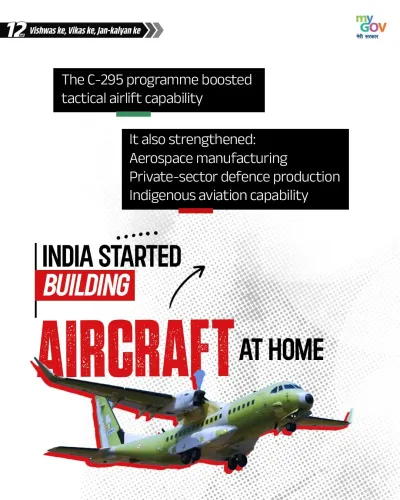
Make in India, launched in 2014, placed defence indigenisation at its centre. Reddy claims India now exports defence equipment to more than 80 countries, a figure the government has cited in parliamentary and official communications, though independent verification of the full country list remains limited. The directional shift — from being one of the world's largest defence importers to a credible exporter — is widely acknowledged; the precise scale continues to be debated. The broader Atmanirbhar Bharat framework formalised this self-reliance doctrine across sectors.
182 Naxal-affected districts to zero
Perhaps the starkest claim in the post: Left Wing Extremism, which once spread across 182 districts, has been reduced to zero affected districts. The Ministry of Home Affairs has tracked a sustained decline in Naxal-related violence and geographic spread through a combination of security operations and development initiatives over more than a decade. Whether the count has formally reached zero — or whether residual presence persists in some pockets — is a distinction that parliamentary oversight and security analysts will continue to examine.
The GTA VI frame — and what it signals
'GTA VI took 13 years. India didn't stand still.' The closing line of the post is its sharpest rhetorical device — using a globally anticipated cultural event as a neutral clock, then arguing that India's transformation over the same window was not incremental but generational. It is a messaging choice calibrated for a younger, digitally-native audience, translating governance achievements into a cultural register that standard policy communication rarely reaches.
The post arrives as the government's development narrative heads into a phase where the metrics it has championed — poverty indices, defence export figures, internal security maps — will face scrutiny in upcoming Economic Surveys, NITI Aayog reports, and parliamentary budget debates. The numbers Reddy invokes are the government's own benchmarks; independent audits of each will determine how durably the story holds.
Point of View
Not merely incremental improvement. The GTA VI framing is a deliberate pivot away from policy jargon toward cultural fluency, suggesting the government is recalibrating how it communicates achievements to younger voters. The simultaneous invocation of poverty data, space policy, defence indigenisation, and internal security signals an attempt to present a unified 'transformation' thesis rather than siloed departmental wins. The durability of this narrative will depend heavily on how independent institutions — NITI Aayog, parliamentary committees, and security analysts — assess the specific metrics when next formally reported.
NationPress
19 Nov 2026
Frequently Asked Questions
What is the 'Fragile Five' that Kishan Reddy referenced?
The 'Fragile Five' was a term coined in 2013 for emerging-market economies — including India — considered vulnerable due to current-account deficits and dependence on foreign capital. India has since been repositioned in government and international assessments as the world's fastest-growing major economy.
How did India's extreme poverty rate fall from 27% to 2.6%?
NITI Aayog's Multidimensional Poverty Index tracks deprivation across health, education, and living standards rather than income alone. Government reports have cited a sharp reduction in multidimensional poverty since 2015-16, though the specific figures cited by Reddy require cross-referencing with the latest official NITI Aayog release for precise methodology.
What is IN-SPACe and how did it change India's space sector?
IN-SPACe (Indian National Space Promotion and Authorisation Centre) was established in 2020 to allow private companies to design, build, and launch satellites and rockets using ISRO infrastructure. It catalysed a wave of Indian space start-ups in launch vehicles, propulsion, and satellite services.
Has India really eliminated Naxal-affected districts?
The Ministry of Home Affairs has documented a sustained decline in Left Wing Extremism-affected districts over more than a decade, from a peak of 182 to a significantly reduced number. Whether the count has formally reached zero or whether residual presence remains in certain areas is subject to ongoing parliamentary and security scrutiny.
What is Atmanirbhar Bharat and how does it relate to defence exports?
Atmanirbhar Bharat, or 'Self-Reliant India,' is a policy framework announced in 2020 emphasising domestic production across sectors. In defence, it built on the Make in India initiative launched in 2014, promoting indigenous manufacturing and reducing import dependence — with the government claiming exports now reach more than 80 countries.