Giriraj Singh lauds jute skill training for 35 women in Bhairunda
Synopsis
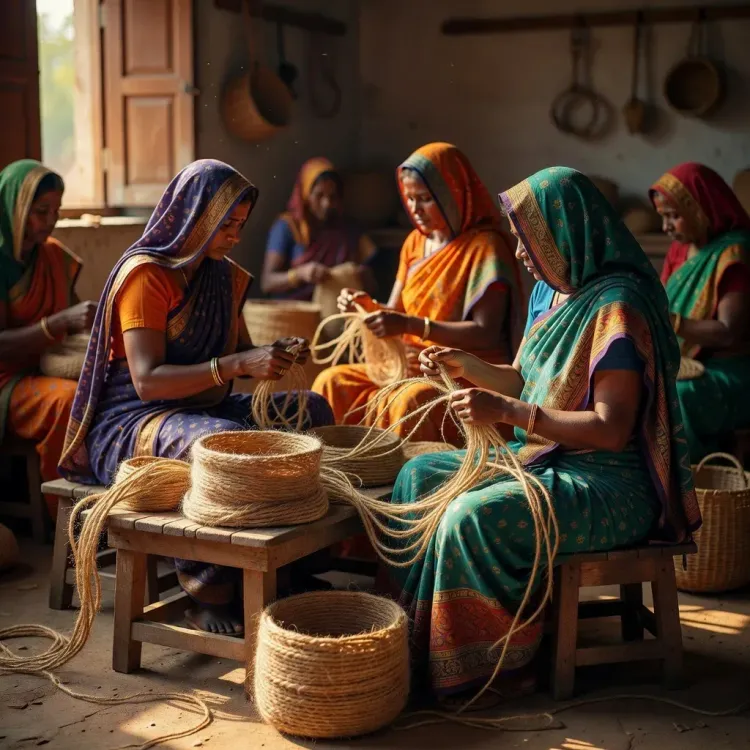
Union Textiles Minister Giriraj Singh praised the Siddhpur Seva Bharati Samiti for training 35 women and girls in jute product-making in Bhairunda, calling it a commendable step toward skill-based self-employment and female self-reliance under India's broader textiles and skilling agenda.
Key Takeaways
Union Textiles Minister Giriraj Singh publicly praised a grassroots jute-craft training drive on 19 November 2026 .
The Siddhpur Seva Bharati Samiti in Bhairunda is training 35 women and girls in making jute products.
Singh described the initiative as crucial for making women 'skilled, self-employed, and self-reliant' ( aatmanirbhar ).
Seva Bharati is a voluntary organisation active in community welfare and social service across India.
The initiative aligns with the Skill India Mission (launched 2015 ), which targets textiles and handicrafts for rural self-employment.
India is the world's largest jute producer, making jute-craft a viable, low-capital livelihood option for rural women.
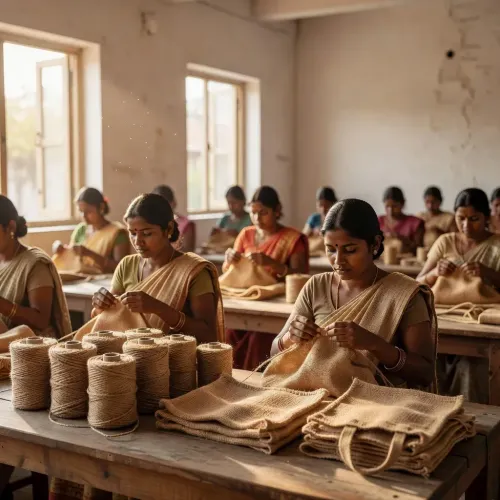
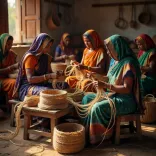
Thirty-five women and young girls in Bhairunda are learning to craft jute products — and Union Textiles Minister Giriraj Singh wants the country to take note. On Thursday, 19 November 2026, the minister took to X to applaud the Siddhpur Seva Bharati Samiti's grassroots training initiative, calling it a praiseworthy step toward female self-reliance.
Posting in Hindi, Singh wrote: 'भैरूंदा में सिद्धपुर सेवा भारती समिति द्वारा 35 महिलाओं और बच्चियों को जूट उत्पाद बनाने का प्रशिक्षण देना सराहनीय पहल है।' ('The training given to 35 women and girls in jute product-making by the Siddhpur Seva Bharati Samiti in Bhairunda is a commendable initiative.') He added that such efforts play a vital role in making women and daughters 'skilled and self-employed, and in making them self-reliant' — the word he chose, aatmanirbhar, carrying the full weight of a national ambition.
Jute, skill, and the self-employment link
Jute is not a random choice for a grassroots training programme. India is the world's largest jute producer, and the sector — woven into the economy of West Bengal, Bihar, and Odisha — has long been a focus of the Ministry of Textiles for rural livelihood creation. For women in smaller towns and villages, jute-craft training offers a low-barrier, low-capital route to income: raw material is local, the market for eco-friendly jute bags and handicrafts is growing, and the skill set is teachable in short cycles.
Seva Bharati, the voluntary organisation behind the initiative, has a track record of community welfare and social service work across India. Its local chapter's decision to channel that energy into vocational skill-building aligns squarely with what the central government has been trying to incentivise through the Skill India Mission, launched in 2015, which specifically targets textiles and handicrafts as pathways to self-employment for rural populations.
A minister's signal from the textiles portfolio
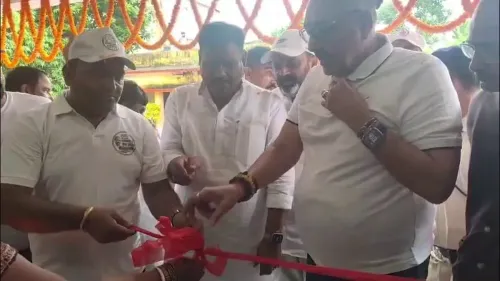
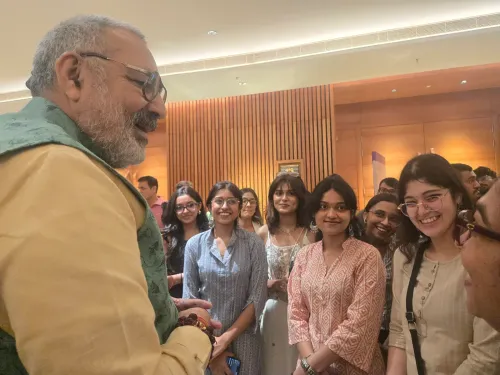
When a Union Textiles Minister publicly endorses a local NGO's skilling drive, it is rarely accidental. Singh's amplification of this initiative — with an attached image — signals the ministry's comfort with non-governmental actors doing the last-mile work that government schemes design but cannot always deliver door to door. It also frames women's economic empowerment not as a welfare handout but as a productive-capacity argument: skilled women, employable women, self-sustaining households.
The broader pattern is consistent. Central schemes under the Textiles Ministry have increasingly pushed for convergence with organisations already embedded in communities — especially in states like Bihar, where female workforce participation in formal sectors remains low and cottage-industry skilling offers a realistic on-ramp. Whether the Bhairunda model scales, or whether the Ministry follows up with structured support, will be the real test of whether this applause translates into policy momentum.
Point of View
Spotlighting jute specifically connects grassroots activity to a sector where India holds a global production advantage, making the optics doubly useful. The move fits a wider BJP governance pattern of amplifying community-level initiatives to demonstrate that central schemes have reach beyond official channels. The key question is whether ministerial applause is followed by structured convergence funding or remains an isolated social-media moment.
NationPress
19 Nov 2026
Frequently Asked Questions
What did Giriraj Singh say about the Bhairunda jute training programme?
Union Textiles Minister Giriraj Singh called the Siddhpur Seva Bharati Samiti's initiative to train 35 women and girls in jute product-making in Bhairunda a 'commendable' step, saying such efforts are vital for making women skilled, self-employed, and self-reliant.
What is Seva Bharati and what does it do?
Seva Bharati is a voluntary organisation known for social service and community welfare activities across India. Its local chapter in Bhairunda is running this jute-craft skill training for women and girls.
How does jute skill training connect to government policy?
The initiative aligns with the Skill India Mission, launched in 2015, which promotes vocational training in textiles and handicrafts as pathways to self-employment, particularly for rural women.
Why is jute a focus area for women's skilling in India?
India is the world's largest jute producer, making raw material locally accessible and affordable. The growing market for eco-friendly jute products makes it a practical, low-capital route to income for rural women.
Who is Giriraj Singh?
Giriraj Singh is India's Union Minister of Textiles, a senior BJP leader, and a Lok Sabha MP from Begusarai, Bihar.