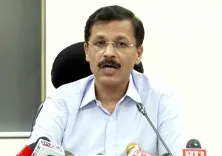
Kishan Reddy frames MMDR 2026 as engine of self-reliant India
Synopsis
Union Mines Minister G. Kishan Reddy on 19 August 2026 defended the Mines and Minerals (Amendment) Act, 2026, arguing it creates a chain from regulatory certainty to investor confidence, domestic production, and reduced import dependence — advancing India's self-reliance goals.
Key Takeaways
Kishan Reddy , Union Coal and Mines Minister, publicly endorsed the Mines and Minerals (Amendment) Act, 2026 on 19 August 2026 .
He outlined a four-step economic chain: certainty → confidence → investment → production, with import reduction as the outcome.
The 2026 amendment follows a decade of MMDR reforms — the 2015 amendment introduced auction-based lease allocation; the 2021 amendment removed end-use restrictions.
The stated goal aligns with the Aatmanirbhar Bharat framework, targeting mineral and energy security alongside job creation and infrastructure growth.
Implementing notifications from the Ministry of Mines and subsequent production and import data will be the key indicators of real-world impact.
A new law, a bold claim, and a four-step economic chain reaction. Union Coal and Mines Minister G. Kishan Reddy on Wednesday, 19 August 2026 laid out the government's case for the Mines and Minerals (Amendment) Act, 2026 — arguing that the legislation sets off a virtuous cycle that ends with India weaning itself off mineral imports and powering its own industrial future.
The four-link chain Reddy is betting on
The minister's framing was deliberate and sequential. 'Certainty creates confidence, confidence brings investment, investment drives production, and production builds strength by reducing import dependence,' he wrote, tying each link directly to the next. It is a classic supply-side argument: fix the regulatory environment first, and capital — domestic and foreign — will follow.
The end goal he named is explicit: 'securing India's mineral and energy future' and 'powering the journey towards a self-reliant India.' Both phrases land squarely inside the broader Aatmanirbhar Bharat [self-reliant India] framework that has anchored government economic messaging since 2020.
A decade of MMDR rewrites — and why 2026 is different in pitch
The Mines and Minerals (Development and Regulation) framework has been amended repeatedly over the past decade. The 2015 amendment introduced auction-based allocation of mining leases, replacing discretionary allotments and targeting transparency. The 2021 amendment went further — removing end-use restrictions on minerals and enabling lease transfers, moves aimed squarely at ease of doing business.
Each round tightened the link between regulatory clarity and investor appetite. The 2026 amendment, as Reddy frames it, is the next step in that arc — one that the Ministry of Mines is positioning not merely as a housekeeping update but as a structural catalyst for jobs, infrastructure, and industrial output.
What mining companies and investors are watching next
The minister's post is a statement of intent, not a rulebook. The real test arrives with the Ministry of Mines' implementing notifications — the granular rules that will tell mining companies and private investors exactly what the new certainty looks like on the ground. Quarterly mineral production data and import figures will then become the scoreboard: if domestic output rises and import bills fall, the cycle Reddy described will have measurable evidence behind it.
India's dependence on imported critical minerals — from lithium to cobalt — has made resource security an urgent national priority as the country scales up its electric-vehicle and clean-energy ambitions. A mining law that genuinely unlocks domestic production would carry consequences well beyond the sector itself.
The minister has drawn the map. The numbers will decide whether the destination is reachable.
Point of View
2026 is the latest chapter in a decade-long effort to transform India's mining sector from a discretionary, opaque system into an auction-driven, investor-friendly one. Reddy's framing — certainty before capital — signals that the government sees regulatory predictability, not just incentives, as the primary lever for unlocking domestic mineral output. With critical-mineral import dependence increasingly framed as a strategic vulnerability alongside an economic one, this amendment sits at the intersection of industrial policy and national security. Whether the 2026 law delivers on that promise will be visible in production data and import bills within the next few fiscal quarters.
NationPress
20 Aug 2026
Frequently Asked Questions
What is the Mines and Minerals Amendment Act 2026?
The Mines and Minerals (Amendment) Act, 2026 is the latest reform to India's MMDR framework, aimed at creating regulatory certainty to attract investment, boost domestic mineral production, and reduce the country's dependence on imported minerals and energy resources.
What did Kishan Reddy say about MMDR 2026?
Union Coal and Mines Minister G. Kishan Reddy said the 2026 amendment builds a cycle where certainty creates confidence, confidence brings investment, investment drives production, and production reduces import dependence — ultimately securing India's mineral and energy future.
How does MMDR 2026 differ from earlier MMDR amendments?
The 2015 MMDR amendment introduced auction-based mining lease allocation for transparency, and the 2021 amendment removed end-use restrictions and enabled lease transfers. The 2026 amendment is positioned as the next step, focusing on investment certainty and self-reliance in mineral supply.
How will India's mineral import dependence be reduced under MMDR 2026?
The government's argument is that clearer rules will attract private investment into domestic mining, increasing production of minerals currently imported. Quarterly mineral production and import data will be the key measures of whether that goal is being met.
What is Aatmanirbhar Bharat's connection to mining reform?
The Aatmanirbhar Bharat (self-reliant India) policy framework, launched in 2020, prioritises reducing dependence on imports across strategic sectors. Mining reform under MMDR 2026 directly supports that goal by targeting domestic production of critical minerals for energy, infrastructure, and industry.