Kishan Reddy Hails DRDO BMD, NASM-MR Flight Tests
Synopsis
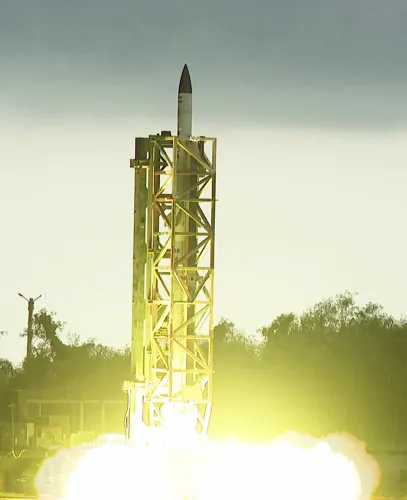
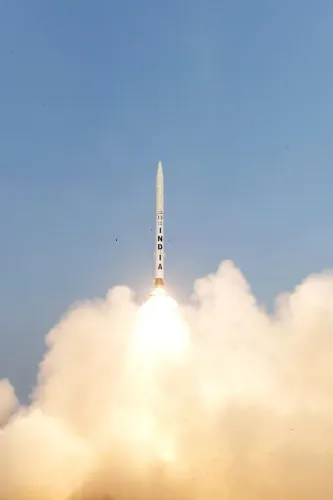
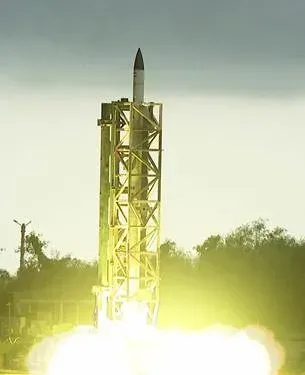
Union Minister G. Kishan Reddy on 13 June 2026 hailed DRDO's successful demonstration of a multi-layered Ballistic Missile Defence system and the maiden flight test of the NASM-MR, saying India has joined an elite group of nations with advanced BMD capabilities under PM Modi's leadership.
Key Takeaways
Union Coal and Mines Minister G.
Kishan Reddy congratulated DRDO on 13 June 2026 for two landmark defence technology demonstrations.
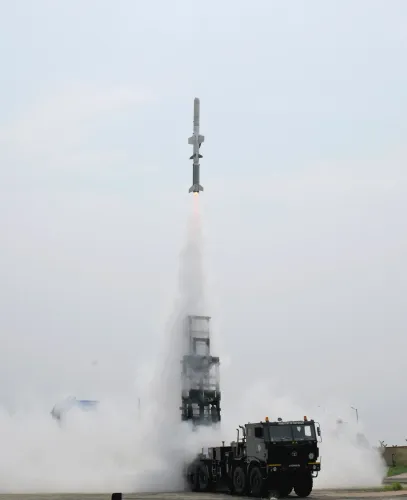
The multi-layered Ballistic Missile Defence (BMD) system was successfully flight-tested, with claims of capability against threats up to Intercontinental Ballistic Missiles (ICBMs) .
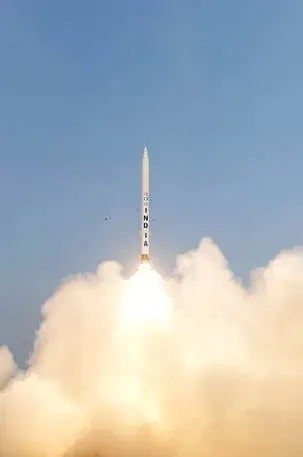
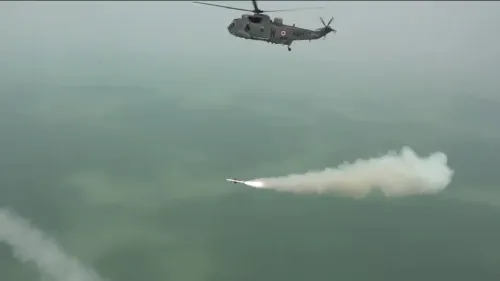
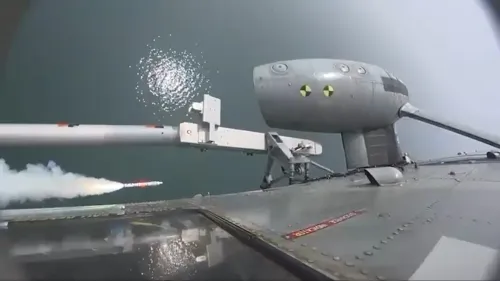
The Naval Anti-Ship Missile–Medium Range (NASM-MR) completed its maiden flight test, marking a new milestone for indigenous naval strike capability.
India's BMD programme dates to 1999 and has progressed through multiple interceptor trials under DRDO .
Both systems align with the Atmanirbhar Bharat Abhiyan mandate for greater indigenous content in defence platforms.
Induction timelines and user-trial schedules for both systems are yet to be officially announced.
Union Coal and Mines Minister G. Kishan Reddy on Saturday, 13 June 2026, congratulated DRDO for the successful demonstration of next-generation defence technologies, including a multi-layered Ballistic Missile Defence (BMD) system and the maiden flight test of the Naval Anti-Ship Missile–Medium Range (NASM-MR). The minister described the achievements as a significant milestone in strengthening India's strategic and defence capabilities.
Context
Kishan Reddy, posting on X, stated that the successful flight tests 'mark a significant milestone in enhancing India's strategic and defence capabilities.' He added that with this achievement, India joins 'an elite group of nations possessing advanced Ballistic Missile Defence capabilities capable of engaging threats up to Intercontinental Ballistic Missiles (ICBMs).' The minister credited the progress to the leadership of Prime Minister Narendra Modi and framed it within the broader goal of building a 'strong, secure, and self-reliant defence ecosystem.'
Policy Backdrop
DRDO formally launched its Ballistic Missile Defence programme in 1999, following the Kargil conflict and India's nuclear tests. The programme has since developed endo- and exo-atmospheric interceptors, with key trials of the Prithvi Air Defence and Advanced Air Defence systems conducted between 2006 and 2011. In 2019, India demonstrated anti-satellite capability under Mission Shakti, marking a further leap in the country's high-technology strategic domain.
The Atmanirbhar Bharat Abhiyan, launched in 2020, explicitly mandated greater indigenous content in missiles and naval systems. The NASM-MR — an indigenous naval anti-ship missile designed for medium-range strikes from aircraft or ships — is a direct product of this indigenisation push. Both programmes sit alongside established platforms such as the Agni, Akash, and BrahMos missile families.
Stakeholders and Impact
The primary beneficiaries of these advances are the Indian Armed Forces, particularly the Indian Navy, which stands to gain a new class of indigenous anti-ship capability through the NASM-MR. DRDO scientists and defence public-sector undertakings involved in the programmes also stand to see increased funding and expanded mandates if the systems progress to user trials and induction.
Strategically, a credible multi-layered BMD capability changes the calculus for adversaries by complicating first-strike calculations. Nations including the United States, Russia, China, and Israel already field comparable systems; India's claimed progress narrows the technological gap that has historically shaped its strategic posture in the region.
What's Next
Attention will now turn to official DRDO communiqués detailing user trials and induction timelines for BMD squadrons, as well as potential integration of the NASM-MR with the Indian Navy's carrier battle groups. Parliamentary scrutiny of defence-budget allocations in the next session is expected to reflect the momentum generated by these demonstrations. The government's public messaging suggests further milestones in the indigenisation pipeline will be highlighted as part of the Atmanirbhar Bharat narrative ahead of upcoming legislative sessions.
Point of View
The messaging serves both a strategic-communication and an electoral-positioning function. The framing of India joining an 'elite group of nations' with ICBM-range interception capability is a significant claim that will require corroboration through official DRDO documentation and independent analysis. Nonetheless, the dual demonstration — covering both missile defence and offensive naval strike — signals a maturing of India's integrated deterrence architecture that carries genuine strategic weight beyond political optics.
NationPress
13 Sept 2026
Frequently Asked Questions
What is India's Ballistic Missile Defence (BMD) system?
India's BMD system is a DRDO-developed multi-layered missile defence programme initiated in 1999, designed to intercept incoming ballistic missiles at both endo-atmospheric and exo-atmospheric altitudes using indigenously developed interceptors.
What is the NASM-MR missile?
The Naval Anti-Ship Missile–Medium Range (NASM-MR) is an indigenous Indian missile under development by DRDO for medium-range strikes against surface targets, launched from aircraft or naval vessels.
Can India's BMD system intercept ICBMs?
Union Minister Kishan Reddy's post claims the tested BMD system is capable of engaging threats up to Intercontinental Ballistic Missiles (ICBMs); however, specific performance parameters have not yet been confirmed through official DRDO communiqués.
What is Atmanirbhar Bharat in defence?
Atmanirbhar Bharat Abhiyan, launched in 2020, is the government's self-reliance initiative that mandates increased indigenous content in defence production, including missiles, aircraft, and naval systems developed by DRDO and defence PSUs.
Who is G. Kishan Reddy?
G. Kishan Reddy is a BJP leader serving as Union Minister of Coal and Mines and is also the BJP's Telangana state president; he frequently comments on national security and defence achievements on social media.