CM Fadnavis Hails DRDO's BMD, NASM-MR Test Success
Synopsis
Maharashtra CM Devendra Fadnavis on June 13, 2026, hailed DRDO's successful demonstration of India's multi-layered Ballistic Missile Defence system and the maiden flight-test of the Naval Anti-Ship Missile-Medium Range, calling them proud milestones in India's defence self-reliance journey.
Key Takeaways
CM Devendra Fadnavis congratulated DRDO , its scientists, engineers, and the defence forces on June 13, 2026 .
India successfully demonstrated a multi-layered Ballistic Missile Defence (BMD) capability, building on trials conducted since 2007 .
The Naval Anti-Ship Missile-Medium Range (NASM-MR) completed its maiden flight-test, expanding the Indian Navy 's indigenous strike options.
Both achievements align with the Aatmanirbhar Bharat initiative launched in May 2020 to reduce defence import dependence.
India's missile indigenisation programme dates to the Integrated Guided Missile Development Programme of 1983 .
Next milestones include formal induction timelines and follow-on user trials by the Indian Navy .
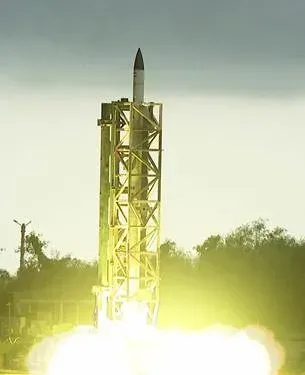
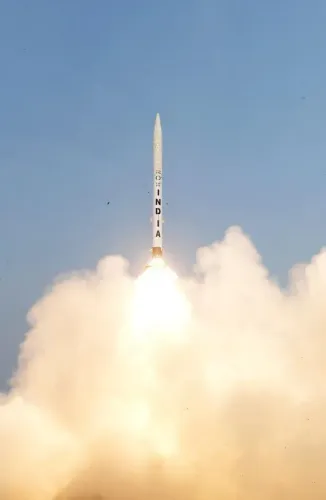
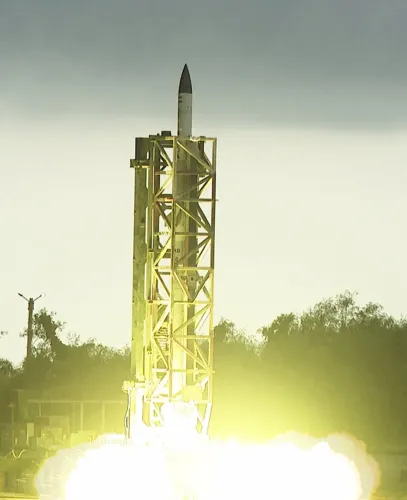
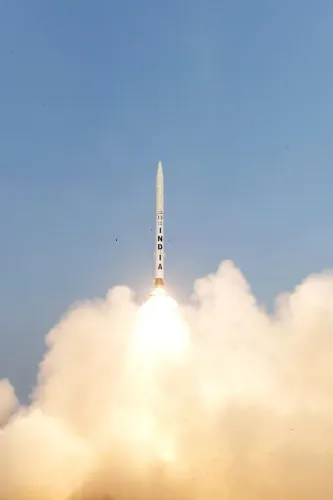
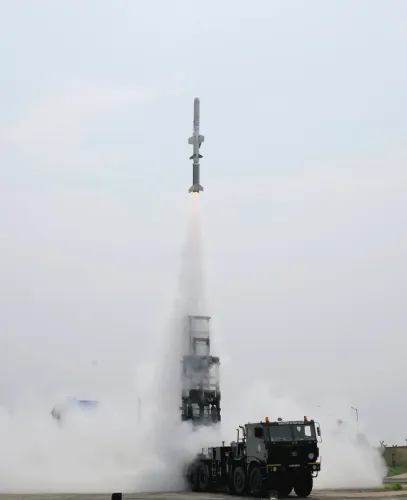
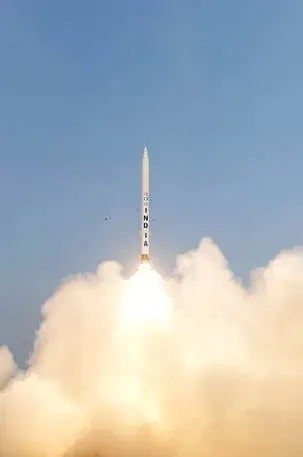
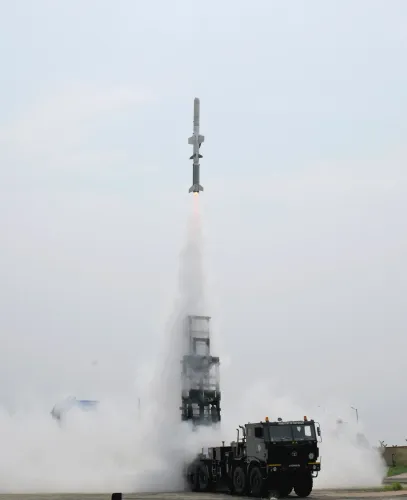
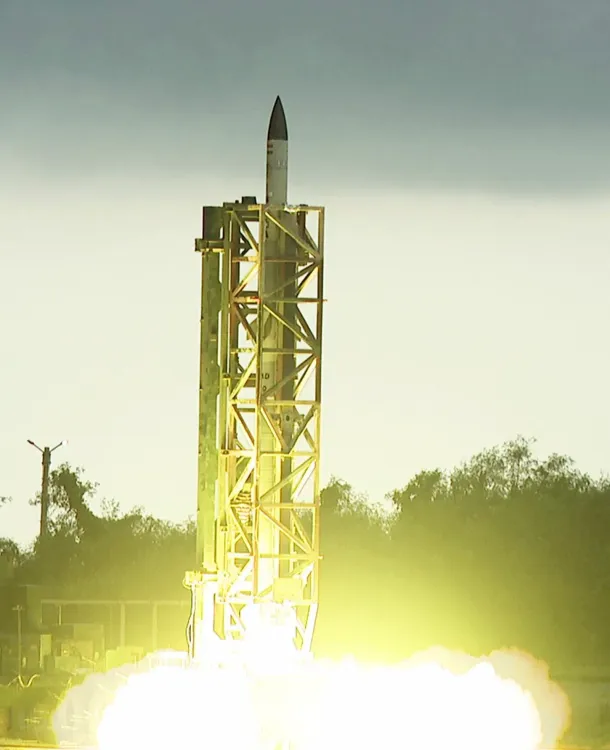
Maharashtra Chief Minister Devendra Fadnavis on Saturday, June 13, 2026, congratulated DRDO and India's defence forces on the successful demonstration of the country's multi-layered Ballistic Missile Defence (BMD) capability and the maiden flight-test of the Naval Anti-Ship Missile-Medium Range (NASM-MR), calling it 'a proud milestone in India's journey towards defence self-reliance.'
Context
Fadnavis extended his congratulations to DRDO's scientists, engineers, and the armed forces, stating that the achievement 'reflects the dedication, innovation and commitment of DRDO towards building a stronger, safer and self-reliant India.' The post, shared with three images, was tagged @DRDO_India and carried the hashtags #AatmanirbharBharat and #NationalSecurity.
The two milestones — a multi-layered BMD system demonstration and the NASM-MR's maiden flight-test — mark significant steps in India's bid to field homegrown strategic and tactical weapons systems. The NASM-MR is designed for deployment on Indian Navy platforms and expands the service's anti-ship strike options.
Policy Backdrop
India's missile self-reliance drive traces its roots to the Integrated Guided Missile Development Programme launched in 1983, which produced the Prithvi and Akash families. DRDO conducted its first BMD interception trial in 2007 and has since carried out multiple endo- and exo-atmospheric intercept tests through Phase-I development, culminating in a growing multi-layer shield.
The broader policy umbrella is the Aatmanirbhar Bharat initiative, announced in May 2020, which set specific defence indigenisation targets and introduced negative import lists to push domestic production. These efforts sit alongside the Make in India framework and increased budgetary allocations for indigenous R&D, signalling a sustained cross-government commitment to reducing import dependence.
In March 2019, DRDO demonstrated kinetic interception capability through Mission Shakti, an anti-satellite test that underscored India's growing prowess in advanced aerospace and missile technologies. The latest BMD demonstration and the NASM-MR trial build on that trajectory.
Stakeholders and Impact
The primary beneficiaries are the Indian Army, Indian Navy, and Indian Air Force, which stand to gain operationally deployable systems that reduce dependence on foreign suppliers. DRDO's scientific community — engineers and researchers across its network of laboratories — receives institutional recognition for years of sustained development work.
For the Indian Navy in particular, a domestically developed medium-range anti-ship missile broadens its strike envelope and supports strategic autonomy in maritime domains. The BMD capability, meanwhile, addresses a longstanding requirement to protect high-value assets against ballistic threats in a region that includes two nuclear-armed neighbours.
What's Next
Attention will now turn to integration timelines: when the new BMD interceptors and the NASM-MR will move from successful trials into operational service with the armed forces. Follow-on user trials by the Navy and formal induction announcements by DRDO are the key milestones to watch.
Continued political endorsement from leaders across the spectrum — including state-level figures such as CM Fadnavis — signals that defence indigenisation retains strong bipartisan support, likely sustaining budgetary and policy momentum into the next planning cycle.
Point of View
Reinforcing the BJP's ownership of the Aatmanirbhar Bharat brand at the state level. The timing — immediately after two high-profile DRDO successes — allows a state-level leader to associate with national security achievements without overstepping executive remit. More broadly, the cross-party and cross-tier enthusiasm for DRDO milestones reflects how defence self-reliance has become a rare consensus issue in Indian politics, insulating it from legislative turbulence. The dual nature of the announcement — a strategic BMD shield and a tactical naval strike weapon — also signals that India's indigenisation push is maturing from single-platform demonstrations to integrated, multi-domain capability.
NationPress
27 Oct 2026
Frequently Asked Questions
What is India's Ballistic Missile Defence system?
India's Ballistic Missile Defence system is a DRDO-developed multi-layered programme designed to intercept incoming ballistic missiles at both endo-atmospheric and exo-atmospheric altitudes, with development and testing ongoing since 2007.
What is the NASM-MR missile?
The Naval Anti-Ship Missile-Medium Range (NASM-MR) is an indigenously developed missile designed for deployment on Indian Navy platforms; it completed its maiden flight-test in June 2026.
Why did CM Devendra Fadnavis congratulate DRDO?
CM Fadnavis congratulated DRDO to mark the successful demonstration of India's multi-layered BMD capability and the maiden flight-test of the NASM-MR, describing them as milestones in India's defence self-reliance journey under the Aatmanirbhar Bharat initiative.
What is Aatmanirbhar Bharat in defence?
Aatmanirbhar Bharat in the defence context is a policy initiative announced in May 2020 that sets indigenisation targets, introduces negative import lists for defence equipment, and encourages domestic R&D and manufacturing to reduce India's reliance on foreign weapons suppliers.
What was DRDO's Mission Shakti?
Mission Shakti was a March 2019 anti-satellite test conducted by DRDO in which India demonstrated the ability to destroy a satellite in low Earth orbit using a kinetic interceptor, establishing India as one of a small number of countries with that capability.