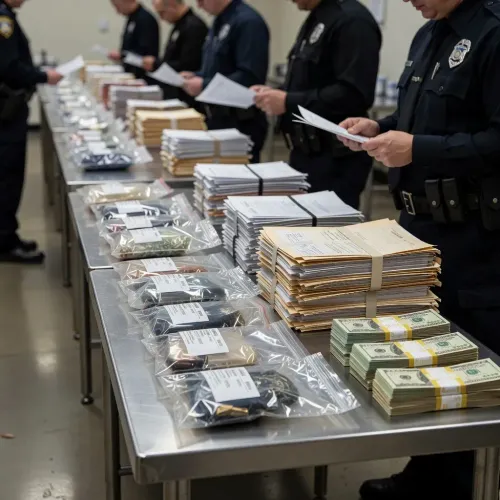
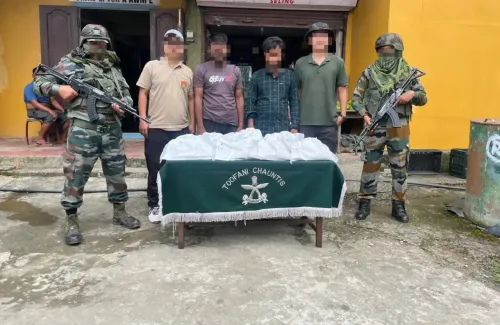
Kishan Reddy Hails Operation Trident Strike on Northeast Drug Corridor

Synopsis
Union Minister G. Kishan Reddy praised Operation Trident for dismantling a major narco-cartel spanning Assam, Mizoram, and Manipur, reaffirming the Modi government's pledge to eradicate drug networks by 2029 and crediting security forces for the decisive strike.
Key Takeaways
Operation Trident has reportedly dismantled a major narco-cartel across Assam , Mizoram , and Manipur , according to Union Minister G.
The operation targeted what Reddy called the 'Death Triangle Corridor' , a drug-trafficking artery along India's border with Myanmar.
The Modi government's 2029 deadline for complete eradication of drug networks was reaffirmed in the minister's statement.
The Nasha Mukt Bharat Abhiyaan , launched in 2020 , provides the national policy framework underpinning such enforcement operations.
The northeastern states border the Golden Triangle , the world's second-largest opium-producing zone, making them chronic pressure points for drug trafficking.
Drug-seizure statistics and the 2029 target are expected to face parliamentary scrutiny in upcoming sessions.
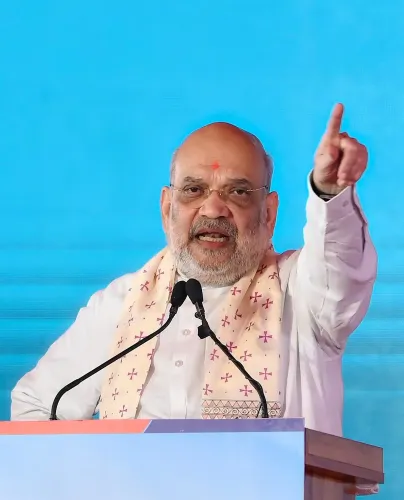
A major counter-narcotics operation spanning three northeastern states has drawn a sharp salute from Union Coal and Mines Minister G. Kishan Reddy, who on Sunday, October 25, 2026, credited the Modi government's security apparatus with delivering what he called a 'decisive strike' against a sprawling drug network embedded in the region's most porous frontier zones.
The Death Triangle Corridor — What Was Dismantled
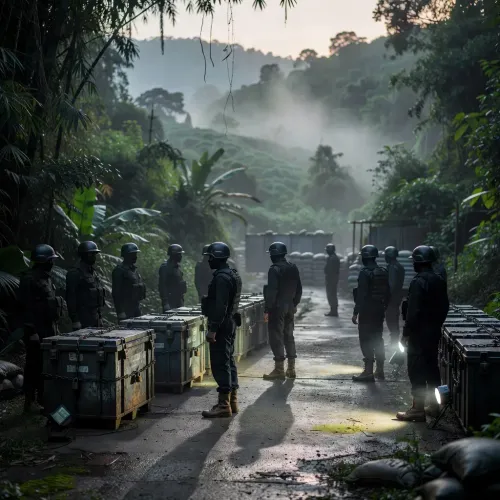
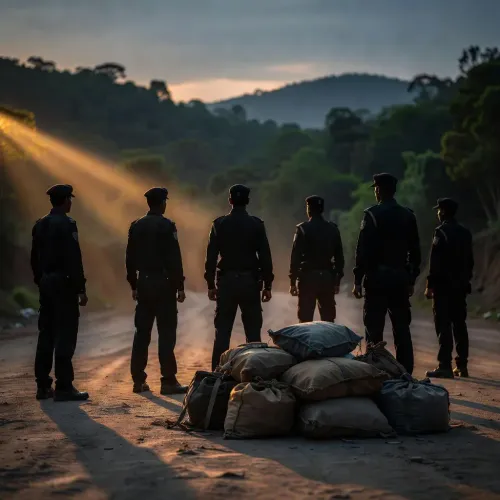
Operation Trident, as named in the minister's post, targeted the so-called 'Death Triangle Corridor' — a trafficking artery threading through Assam, Mizoram, and Manipur. The three states form a geographic arc along India's border with Myanmar, long identified as the entry point for narcotics flowing out of the Golden Triangle, the world's second-largest opium-producing zone. Reddy described the operation as dismantling 'a major narco-cartel' active across all three states — a sprawl that, if accurate, would mark one of the region's most significant anti-drug enforcement actions in recent memory.
Security forces drew the minister's 'heartiest congratulations,' framing the operation as a validation of the government's integrated border-security and law-enforcement strategy. Northeast border communities, long caught between cross-border trafficking routes and local insurgencies, stand as the most direct beneficiaries of any durable disruption to these networks.
Northeast Drug Routes and the Golden Triangle Shadow
The northeastern corridor has been a persistent pressure point for successive central governments. Mizoram shares a long and difficult-to-patrol border with Myanmar; Manipur has faced decades of overlap between insurgent activity and narcotics trafficking; and Assam serves as a transit hub feeding drugs deeper into the Indian heartland. The trafficking challenge is structural — geography, ethnicity, and economics all conspire to sustain the routes. Every major enforcement push has faced the same headwind: the supply chain simply reroutes.
The Nasha Mukt Bharat Abhiyaan, launched by the Modi government in 2020, set a national framework for tackling drug abuse across identified vulnerable districts, integrating awareness campaigns with enforcement action. The northeastern states figured prominently in that framework's early rollout.
The 2029 Eradication Pledge — A Clock Now Running Loudly
Reddy's post explicitly restates the government's resolve to 'completely eradicate drug networks by 2029' — a deadline that is now less than three years away. That target will face parliamentary scrutiny, with drug-seizure statistics and enforcement metrics expected to feature in upcoming sessions as opposition benches measure promise against delivery. Operation Trident, if its claims hold under independent verification, hands the government a tangible data point to anchor that argument. But in the Northeast, where networks have historically regenerated after enforcement blitzes, one operation is a battle won — not the war.
The minister's statement signals that the BJP intends to keep the anti-narcotics narrative front and centre ahead of the countdown to 2029 — turning a security operation into a political marker of governmental resolve.
Point of View
Creating a measurable accountability marker the BJP will either own as a triumph or be pressed to defend. The Northeast has historically been a difficult arena for durable anti-narcotics wins; by naming the corridor and the operation, the government raises the stakes of what 'success' actually means. The 2029 framing also intersects with the electoral calendar, ensuring drug policy stays a live governance issue rather than a bureaucratic footnote. Whether Operation Trident's gains prove structural or temporary will determine whether this post ages as a milestone or a liability.
NationPress
25 Oct 2026
Frequently Asked Questions
What is Operation Trident in the context of Northeast India?
Operation Trident is a counter-narcotics operation announced by Union Minister G. Kishan Reddy that reportedly dismantled a major narco-cartel operating across Assam, Mizoram, and Manipur, targeting what he called the 'Death Triangle Corridor.'
What is the Death Triangle Corridor?
The 'Death Triangle Corridor' is the term used by Minister Kishan Reddy to describe a drug-trafficking route spanning Assam, Mizoram, and Manipur — states that border Myanmar and are linked to the Golden Triangle narcotics supply chain.
What is India's 2029 drug eradication target?
The Modi government has stated a resolve to completely eradicate drug networks in India by 2029. Minister G. Kishan Reddy reaffirmed this target following Operation Trident's reported success in the Northeast.
What is the Nasha Mukt Bharat Abhiyaan?
Nasha Mukt Bharat Abhiyaan is a national anti-drug campaign launched by the Modi government in 2020, targeting vulnerable districts across India and integrating public awareness with law-enforcement action, with northeastern states as a key focus area.
Why are Assam, Manipur, and Mizoram key to India's drug problem?
These three northeastern states border Myanmar and sit on trafficking routes connected to the Golden Triangle, the world's second-largest opium-producing zone, making them chronic entry points for narcotics flowing into India.