Kishan Reddy Highlights 150 Cr FMD Vaccine Doses, Rising Milk Yield
Synopsis
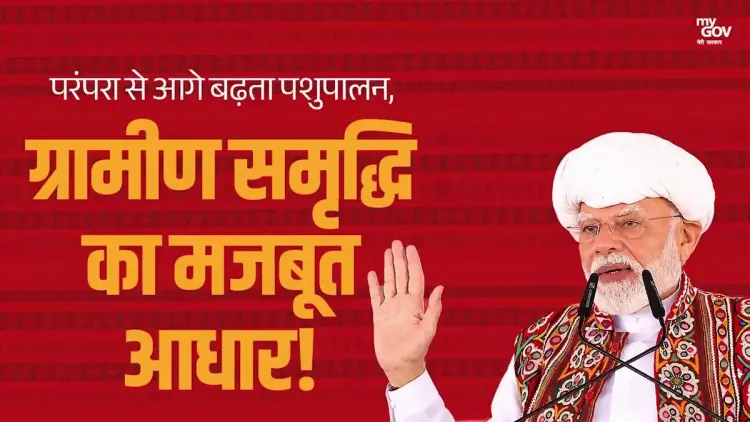
Union Minister G. Kishan Reddy shared PM Modi's data crediting 150 crore free FMD vaccine doses for protecting livestock of 8 crore farmers, while highlighting a jump in daily milk yield and the Gobar-Dhan scheme's push to monetise cow dung via biogas and organic fertilisers.
Key Takeaways
Nearly 150 crore free FMD vaccine doses have been administered, covering livestock of over 8 crore farmers across India.
India's average daily milk yield per animal has risen from under 5 litres in 2013–14 to nearly 8 litres as of 2026.
The National Animal Disease Control Programme , launched in September 2019 , underpins the mass FMD and Brucellosis vaccination drive.
The Gobar-Dhan scheme (2018) promotes biogas, Bio-CNG, and organic fertiliser production from cattle dung, creating an additional income stream for farmers.
The Rashtriya Gokul Mission (2014) focused on indigenous breed improvement and is linked to the per-animal productivity gains cited in the post.
When livestock fall sick, farmers lose income — and that equation has shaped one of the central government's most sweeping rural welfare pushes over the past decade. Union Coal and Mines Minister and BJP Telangana president G. Kishan Reddy amplified a key message from Prime Minister Narendra Modi on Friday, 30 October 2026, sharing data on free FMD vaccinations, rising milk productivity, and the growing dung-to-energy economy — tagging it #PMModiInGujarat.
150 Crore Doses, 8 Crore Farmers: The FMD Shield
The post cites nearly 150 crore free vaccine doses administered against Foot and Mouth Disease (FMD), covering livestock belonging to over 8 crore farmers and easing their financial exposure to disease-linked cattle losses. The vaccination drive draws from the National Animal Disease Control Programme (NADC), the central scheme launched in September 2019 for mass immunisation of cattle and buffaloes against FMD and Brucellosis — one of the largest state-backed livestock disease-control efforts in the world by scale.
Before the programme, a single FMD outbreak could devastate a smallholder's entire herd, wiping out both milk income and the asset value of the animal. Free, door-step vaccination changed that calculus fundamentally for rural households.
Milk Yield From Under 5 Litres to Nearly 8: What Shifted
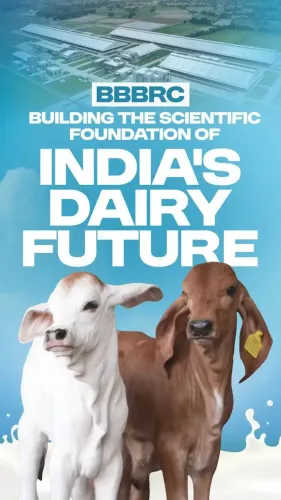
The post points to a striking productivity jump: India's average daily milk yield per animal has climbed from less than 5 litres in 2013–14 to nearly 8 litres today. That improvement is attributed in part to the Rashtriya Gokul Mission, announced in 2014 to improve indigenous cattle breeds and raise per-animal output through scientific breeding and extension support.
For a country that is the world's largest milk producer, even a marginal gain per animal — multiplied across hundreds of millions of bovines — translates into a substantial national output increase and, crucially, higher per-farmer realisation. More milk per animal means the same land and labour yields proportionally more income.
Gobar-Dhan: Turning Dung Into Dividends
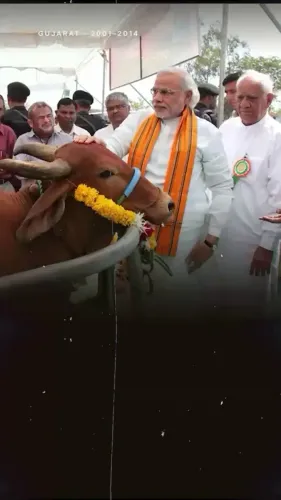
The post also spotlights the government's push to monetise cow dung through biogas, Bio-CNG, and organic fertilisers — the domain of the Gobar-Dhan scheme, introduced in 2018 under the Swachh Bharat Mission. What was once agricultural waste is now positioned as a supplementary revenue stream for livestock owners, feeding both clean energy pipelines and a growing market for certified organic farm inputs.
The logic is elegant: the same animal that produces milk also produces dung; capturing value from both ends of that chain meaningfully multiplies the effective income per head of cattle. The next watch-point is the pace of new Bio-CNG plant commissioning and dung-fertiliser unit roll-outs under existing rural infrastructure programmes.
Point of View
Framing cow dung not as waste but as a commercially valuable by-product. Whether the on-ground roll-out of Bio-CNG plants and fertiliser units keeps pace with the policy ambition will determine how durable this welfare framing proves beyond the communications cycle.
NationPress
31 Oct 2026
Frequently Asked Questions
What is the National Animal Disease Control Programme for FMD vaccination?
The National Animal Disease Control Programme (NADC) is a central government scheme launched in September 2019 to mass-vaccinate cattle and buffaloes across India against Foot and Mouth Disease and Brucellosis, with vaccines provided free of cost to farmers.
How many FMD vaccine doses have been given to Indian farmers' livestock?
According to the post shared by Union Minister G. Kishan Reddy, nearly 150 crore free vaccine doses against FMD have been administered, covering the livestock of over 8 crore farmers.
What is the Gobar-Dhan scheme and how does it benefit farmers?
The Gobar-Dhan scheme, introduced in 2018 under the Swachh Bharat Mission, promotes the conversion of cattle dung and agricultural waste into biogas, Bio-CNG, and organic fertilisers, giving farmers an additional income stream from what was previously considered waste.
How much has India's daily milk yield per animal increased since 2014?
The post cites an increase from less than 5 litres per animal per day in 2013–14 to nearly 8 litres today, a rise attributed in part to breed improvement programmes like the Rashtriya Gokul Mission launched in 2014.
What is the Rashtriya Gokul Mission?
The Rashtriya Gokul Mission is a central government programme announced in 2014 aimed at improving indigenous cattle breeds through scientific breeding and support services, with the goal of increasing per-animal milk productivity and supporting dairy farmers' incomes.