Kishan Reddy highlights Modi govt welfare gains since 2014
Synopsis
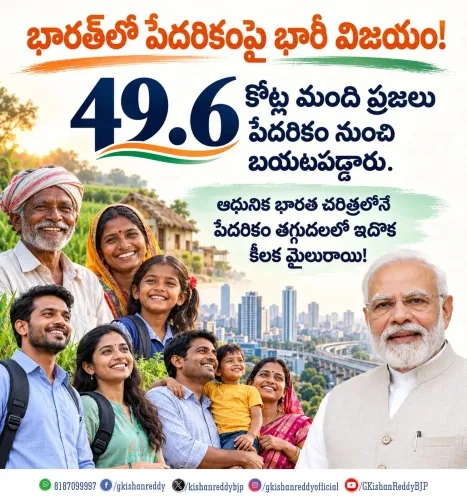
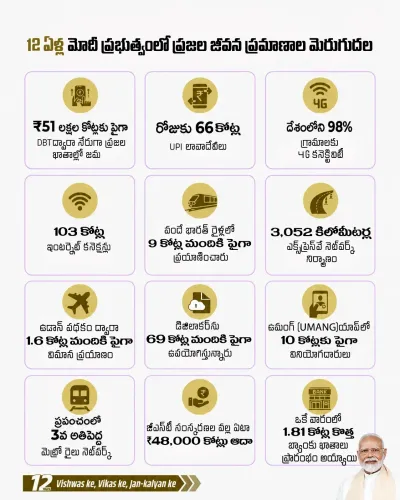
Union Coal and Mines Minister G. Kishan Reddy posted a Telugu-language summary of central welfare outcomes since 2014, citing 100% rural sanitation, near-universal electrification, 57% food security coverage, 13.4 crore new jobs, and up to 90% cuts in cancer drug prices.
Key Takeaways
Rural toilet coverage rose from 38.7% in 2014 to a claimed 100% by 2019 under the Swachh Bharat Mission.
99.9% of Indian homes now have electricity, attributed to the Saubhagya Yojana launched in September 2017.
The National Food Security Act provides subsidised food to approximately 57% of the population.
The post claims 13.4 crore jobs were created between 2017 and 2023 , with rural women cited as major beneficiaries — this figure is unverified.
Cancer and life-threatening disease drug prices have reportedly been cut by up to 90% through NPPA pricing controls and the Janaushadhi scheme — this figure is unverified.
The post is written in Telugu , signalling it is aimed at Reddy's BJP Telangana constituency.
From zero toilets to full electrification — Union Coal and Mines Minister G. Kishan Reddy on Sunday, 1 November 2026, laid out a sweeping account of welfare outcomes under central government schemes launched since 2014, pointing to gains in sanitation, electricity, food security, employment, women's empowerment, and healthcare affordability.
From 38.7% to 100%: the sanitation turnaround
The centrepiece of Reddy's post is the rural sanitation figure: toilet coverage in rural areas stood at just 38.7% in 2014 and was reported at 100% by 2019 — the headline outcome claimed under the Swachh Bharat Mission, launched on 2 October 2014 with an explicit target of making India open-defecation free. That shift, if sustained, would represent one of the largest sanitation infrastructure drives in modern Indian history.
Alongside it, Reddy cited near-universal household electrification — 99.9% of homes connected to the grid — attributed to the Saubhagya Yojana, which the central government introduced in September 2017 specifically to bring last-mile electricity connections to unelectrified households.
Food on the table for 57% of India
On food security, Reddy pointed to the National Food Security Act — enacted in 2013 and designed to reach roughly two-thirds of the population with subsidised grain through the targeted public distribution system. His post puts current coverage at approximately 57% of the population receiving food security benefits under the law.
The NFSA remains among the world's largest food entitlement programmes by population coverage, and its continued operation has been a consistent plank of the government's pro-poor welfare messaging.
Jobs and the women driving rural recovery
Reddy's post claims 13.4 crore jobs were created between 2017 and 2023, with particular emphasis on rural women entering the workforce and supporting their households. The framing centres women not merely as beneficiaries but as active economic contributors — a shift the government has repeatedly highlighted using Periodic Labour Force Survey trends showing rising female labour-force participation in rural India.
Note: The exact figure of 13.4 crore jobs and its precise methodology have not been independently verified from a single publicly available source.
Cancer drugs at a fraction of earlier costs
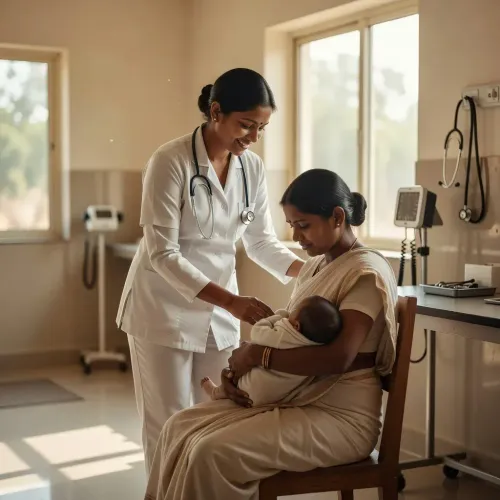
On healthcare, Reddy said prices of life-threatening disease medicines — specifically naming cancer drugs — have been cut by up to 90%, providing relief to poor families. This tracks with the work of the National Pharmaceutical Pricing Authority (NPPA), which has periodically capped essential and oncology drug prices since 2013, and the expansion of affordable generic medicine access through the Pradhan Mantri Bhartiya Janaushadhi Pariyojana.
Note: The specific claim of a 90% price reduction for cancer medicines could not be independently verified from a single unified source.
Why a Coal Minister is talking welfare
Reddy wears two hats: Union Minister of Coal and Mines and BJP Telangana state president. The welfare compilation is almost certainly aimed at a Telugu-speaking audience — the post is written entirely in Telugu — ahead of ongoing political positioning in Telangana, where the BJP is building a state-level narrative around central scheme delivery. Aggregating across sanitation, power, food, jobs, and health in one message is a well-worn but effective campaign architecture: it converts abstract policy into a list of felt household benefits.
The next hard data check on several of these indicators will come from updated Periodic Labour Force Survey reports and fresh NFSA coverage audits — numbers that will either reinforce or complicate the picture Reddy is painting.
Point of View
Making the choice of language and specificity of metrics as politically deliberate as the data itself. While the macro-level direction of the indicators — sanitation, electrification, food access — broadly aligns with documented government reporting, the unverified job-creation and drug-price figures reveal how welfare communication often blurs the line between verified outcome and rhetorical claim. The real test of these numbers will come when updated official surveys land and invite line-by-line scrutiny.
NationPress
1 Nov 2026
Frequently Asked Questions
What did Kishan Reddy post about welfare schemes?
G. Kishan Reddy posted in Telugu summarising central government welfare achievements since 2014, citing 100% rural sanitation coverage by 2019, 99.9% household electrification, 57% food security coverage under the NFSA, 13.4 crore jobs created between 2017 and 2023, and up to 90% reduction in cancer drug prices.
Did India really achieve 100% rural sanitation by 2019?
The Indian government officially declared the Swachh Bharat Mission target of open-defecation free status achieved in rural areas by October 2019, though subsequent studies have noted gaps in usage and maintenance in some regions.
What is the Saubhagya Yojana and how many homes did it electrify?
Saubhagya Yojana was launched in September 2017 to provide last-mile electricity connections to all unelectrified households. The government reported near-universal coverage, with 99.9% of homes connected, by the late 2010s.
How has India reduced cancer drug prices?
The National Pharmaceutical Pricing Authority has periodically capped prices of essential and oncology medicines since 2013. The Pradhan Mantri Bhartiya Janaushadhi Pariyojana also supplies affordable generic medicines, including cancer drugs, through dedicated stores.
Why is Kishan Reddy posting about welfare in Telugu?
G. Kishan Reddy is both Union Coal and Mines Minister and BJP Telangana state president. Posting in Telugu signals the message is aimed at a Telangana audience as part of the BJP's effort to build its political narrative around central scheme delivery in the state.