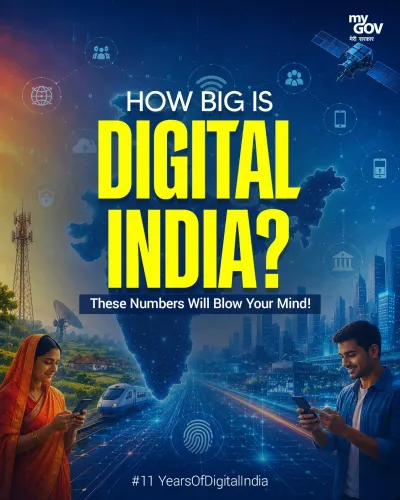
Kishan Reddy Marks 11 Years of Digital India
Synopsis
On the eleventh anniversary of Digital India, Union Minister G. Kishan Reddy praised the programme's impact on internet access, digital payments, and citizen-centric governance, attributing the transformation to Prime Minister Narendra Modi's leadership.
Key Takeaways
Kishan Reddy posted on 1 July 2026 to mark 11 years of the Digital India programme .
Digital India was launched on 1 July 2015 by Prime Minister Narendra Modi to expand broadband, e-governance, and digital literacy.
The minister highlighted India's emergence as one of the world's largest digital ecosystems and a global leader in real-time digital payments .
Key infrastructure milestones underpinning the programme include Aadhaar authentication and the Unified Payments Interface (UPI) , launched in 2016 .
Kishan Reddy's post — from outside the technology portfolio — reflects the central government's practice of whole-of-government messaging on flagship schemes.
The next phase of the digital agenda is expected to centre on data protection legislation , rural broadband targets, and cybersecurity frameworks.
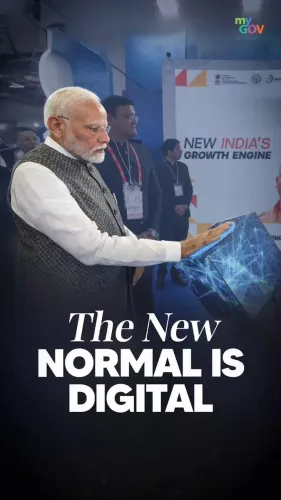
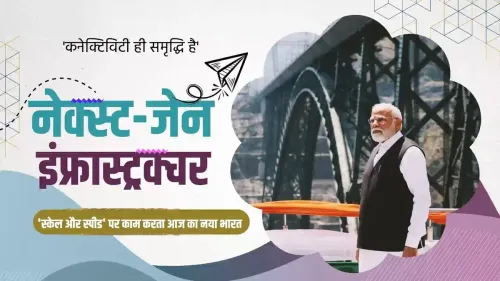
Union Coal and Mines Minister G. Kishan Reddy on Wednesday, 1 July 2026 marked the eleventh anniversary of the Digital India programme, sharing a video highlighting the country's digital transformation journey and crediting Prime Minister Narendra Modi for steering India into one of the world's largest digital ecosystems.
Context
In his post, Kishan Reddy wrote that the Digital India journey has 'transformed the way India lives, works, learns and connects,' pointing to expanded internet access and India's standing as a global leader in real-time digital payments. The minister described the programme as being 'powered by innovation, digital inclusion, and citizen-centric governance.' The post was accompanied by a video sharing what he called 'glimpses of India's remarkable digital transformation.'
The Digital India programme was formally launched on 1 July 2015 by Prime Minister Narendra Modi, making this its eleventh year. The initiative was conceived to build broadband infrastructure, expand e-governance services, and promote digital literacy across urban and rural India alike.
Policy Backdrop
The programme's decade-plus run has coincided with two landmark digital infrastructure rollouts: the Aadhaar biometric authentication system and the Unified Payments Interface (UPI), introduced in 2016. Together, these platforms underpinned a shift in how citizens access subsidies, file taxes, and transact money — moving large volumes of activity from physical counters to mobile screens.
UPI in particular has drawn international attention, with several countries exploring interoperability agreements with India's payments network. The scale of real-time digital transactions processed through the system has positioned India as a benchmark for developing economies building their own payment infrastructure.
Kishan Reddy's post is notable in that his portfolio covers Coal and Mines, not electronics or information technology. It reflects a broader practice within the central government of whole-of-government messaging on flagship schemes, where ministers across portfolios amplify shared milestones to project coordinated policy progress.
Stakeholders and Impact
The Digital India programme's primary beneficiaries are Indian citizens, with particular emphasis on rural and underserved communities that previously lacked reliable connectivity or access to government services. Expanding internet penetration has enabled remote delivery of healthcare information, agricultural advisories, and educational content in regional languages.
For the business ecosystem, the digital infrastructure has lowered barriers for fintech startups, small merchants adopting QR-code payments, and gig-economy platforms that depend on seamless digital onboarding. The government has also used the stack to streamline direct benefit transfers, reducing leakage in welfare delivery.
What's Next
The anniversary marks a symbolic milestone, but the policy conversation is expected to shift toward the next phase of digital governance. Upcoming discussions in Parliament on data protection rules will shape how the same digital ecosystem handles citizen data at scale. Budget allocations for rural broadband expansion and the next annual Digital India progress report will offer concrete indicators of where the programme heads in its twelfth year.
As India's digital economy deepens, questions around last-mile connectivity, digital literacy in vernacular languages, and cybersecurity frameworks will increasingly define the programme's second decade.
Point of View
Shifting the competitive debate to second-order questions: data sovereignty, AI governance, and the depth of rural digital literacy. The post's framing around 'citizen-centric governance' is deliberate electoral language, tying infrastructure delivery to the broader Modi-era narrative ahead of future electoral cycles. Analysts will watch whether the anniversary triggers fresh budget commitments or remains a commemorative exercise.
NationPress
1 Jul 2026
Frequently Asked Questions
What is Digital India and when was it launched?
Digital India is a flagship government programme launched on 1 July 2015 by Prime Minister Narendra Modi to expand broadband connectivity, promote e-governance, and improve digital literacy across India.
Why is G. Kishan Reddy posting about Digital India when his portfolio is Coal and Mines?
Ministers across portfolios routinely amplify the government's flagship schemes as part of coordinated messaging. Kishan Reddy's post reflects this whole-of-government communication practice, not a change in his portfolio.
What is the significance of 1 July 2026 for Digital India?
1 July 2026 marks the eleventh anniversary of the Digital India programme, which was formally launched on 1 July 2015 .
How has UPI contributed to India's digital transformation?
The Unified Payments Interface (UPI) , launched in 2016 , enabled real-time digital payments at massive scale, positioning India as a global benchmark for instant payment systems and drawing interest from countries seeking to build similar infrastructure.
What comes next for the Digital India programme?
The focus is expected to shift to data protection legislation , rural broadband expansion targets, and cybersecurity frameworks, with parliamentary discussions and upcoming budget announcements likely to set the direction for the programme's next phase.