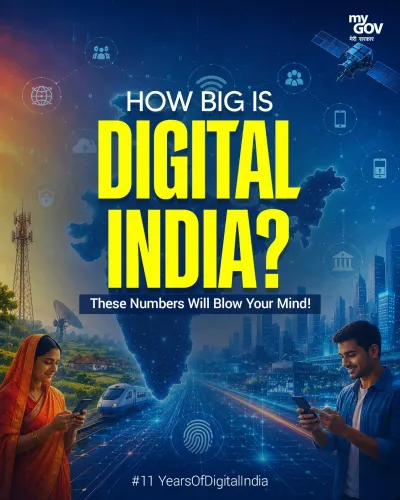
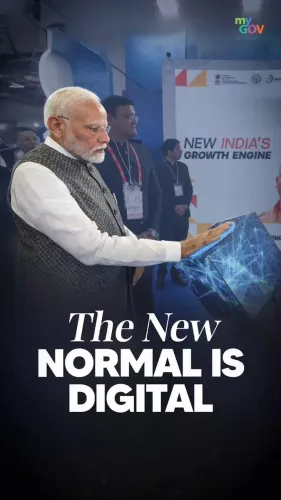
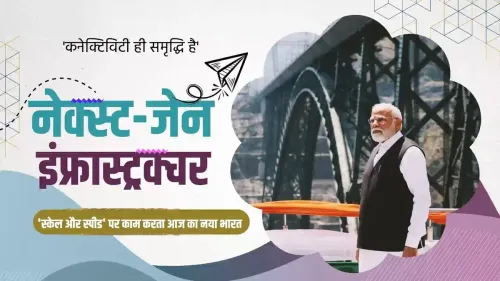
Kishan Reddy Marks 11 Years of Digital India Under PM Modi
Synopsis
Union Coal and Mines Minister G. Kishan Reddy marked the 11th anniversary of Digital India on 1 July 2026, crediting PM Modi's leadership for transforming governance and empowering millions through technology-driven public services over the past decade.
Key Takeaways
Union Coal and Mines Minister G.
Kishan Reddy posted on 1 July 2026 to mark 11 years of the Digital India programme .
The Digital India initiative was launched by PM Narendra Modi on 1 July 2015 with nine pillars covering infrastructure, e-governance, and digital literacy.
Key platforms scaled under the programme include Aadhaar (biometric identity) and UPI (launched 2016), which underpinned financial inclusion and welfare delivery.
The programme built on the earlier National e-Governance Plan of 2006 and has since been referenced as a model by other developing nations.
Upcoming policy milestones include Digital India Phase-II rollout and implementation of rules under the Digital Personal Data Protection Act .
Union Coal and Mines Minister G. Kishan Reddy on Wednesday, 1 July 2026, marked the 11th anniversary of the Digital India programme, crediting Prime Minister Narendra Modi's leadership for transforming governance and expanding technology-driven public services across the country. Reddy, who also serves as BJP's Telangana state president, highlighted a series of milestones he described as showcasing the scale of India's digital revolution.
Context
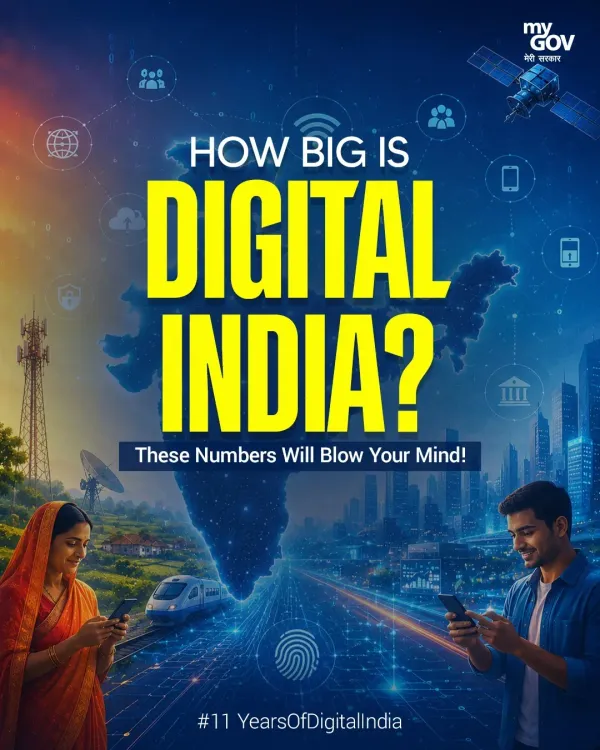
The Digital India programme was formally launched on 1 July 2015 by Prime Minister Narendra Modi, making this year its eleventh anniversary. The initiative was built around nine pillars covering broadband infrastructure, e-governance, and digital literacy, aiming to bring government services within reach of every citizen through technology. Minister Reddy's post, accompanied by an image, called the journey one of 'remarkable milestones' in digital governance.
In his post, Reddy stated that over the last 11 years, Digital India has 'transformed governance, expanded digital inclusion, and empowered millions with technology-driven public services.' The anniversary falls under the hashtag #11YearsOfDigitalIndia, which has been widely used by BJP leaders and government ministries to mark the occasion.
Policy Backdrop
The Digital India initiative built upon the earlier National e-Governance Plan of 2006, which had laid the groundwork for electronic delivery of government services. After 2014, the government scaled platforms such as Aadhaar — the biometric digital identity system — and the Unified Payments Interface (UPI), launched in 2016, which enabled real-time digital payments and accelerated financial inclusion at scale.
Together, these platforms formed what policy circles now describe as a unified digital public infrastructure stack, integrating identity, payments, and service delivery. The model has since drawn attention from other developing nations as a reference point for state-led digital transformation. The programme has coincided with a rapid expansion in mobile connectivity and data usage across India.
Stakeholders and Impact
The primary beneficiaries of the Digital India push have been citizens, particularly those in rural households and among small businesses, who gained access to government services, banking, and payments without requiring physical infrastructure. Aadhaar-linked welfare transfers reduced leakages in subsidy delivery, while UPI became one of the world's largest real-time payments networks by transaction volume.
Minister Reddy's post signals continued political emphasis on the programme's achievements as the ruling BJP heads into the second half of its current term. As a senior minister from Telangana — a state with a strong technology industry — Reddy's voice on digital governance carries added significance for the region's stakeholders.
What's Next
Looking ahead, the government is expected to push forward with Digital India Phase-II components, while implementation of the rules under the Digital Personal Data Protection Act remains a closely watched legislative milestone. Parliamentary scrutiny of digital infrastructure spending will also shape the programme's trajectory in the coming year.
The anniversary marks not just a symbolic moment but a policy inflection point — with the next phase of digital governance likely to focus on data protection, artificial intelligence integration, and deepening access in the last mile of connectivity.
Point of View
Reinforcing the BJP's narrative of governance transformation ahead of state and national electoral cycles. By anchoring the tribute to PM Modi's 'visionary leadership,' it aligns with a broader party strategy of converting policy anniversaries into electoral assets. The Digital India programme, having delivered measurable infrastructure gains through UPI and Aadhaar, gives the ruling party credible ground to stand on — though the next phase, involving data protection rules and AI integration, will test whether the momentum can be sustained. Reddy's dual role as a Union minister and Telangana BJP chief makes this messaging particularly pointed in a tech-forward southern state.
NationPress
1 Jul 2026
Frequently Asked Questions
When was Digital India launched and by whom?
Digital India was launched on 1 July 2015 by Prime Minister Narendra Modi, with nine pillars covering digital infrastructure, e-governance, and digital literacy.
What is G. Kishan Reddy's role in the government?
G. Kishan Reddy is the Union Minister of Coal and Mines in the Government of India and also serves as the BJP's Telangana state president.
What are the key achievements of Digital India in 11 years?
Key achievements include the scaling of Aadhaar for biometric identity, the launch and rapid growth of UPI for real-time digital payments, and the expansion of e-governance services to rural and underserved populations.
What is UPI and how does it relate to Digital India?
UPI, or Unified Payments Interface, was launched in 2016 as part of India's digital public infrastructure push under Digital India, enabling real-time digital payments and becoming one of the world's largest such networks.
What comes next for the Digital India programme?
The next phase is expected to focus on Digital India Phase-II components, implementation of the Digital Personal Data Protection Act rules, and increased parliamentary scrutiny of digital infrastructure spending.