Kishan Reddy Hails 12 Years of Digital Governance Reforms
Synopsis
Union Minister G. Kishan Reddy marked twelve years of central government governance reforms on June 15, 2026, spotlighting self-attestation, PAN-TAN integration, and e-Sign as pillars of faster, more transparent public service delivery for citizens and businesses.
Key Takeaways
Kishan Reddy , Union Coal and Mines Minister and BJP Telangana president, posted on June 15, 2026, marking 12 years of governance reforms.
Self-attestation, introduced in 2014 , ended mandatory gazetted-officer verification for most central government services.
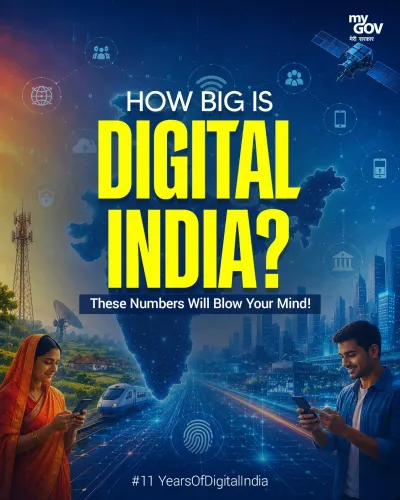
The Digital India programme launched in July 2015 underpins e-Sign and DigiLocker, enabling Aadhaar-linked digital service delivery.
PAN-TAN integration has streamlined tax compliance for businesses and individual taxpayers through online verification. e-Sign allows any Aadhaar-enrolled citizen to authenticate documents digitally, removing the cost and delay of physical signatures.
Further digital integration in the Coal and Mines sector — including lease and royalty approvals — is expected in upcoming parliamentary and budget cycles.
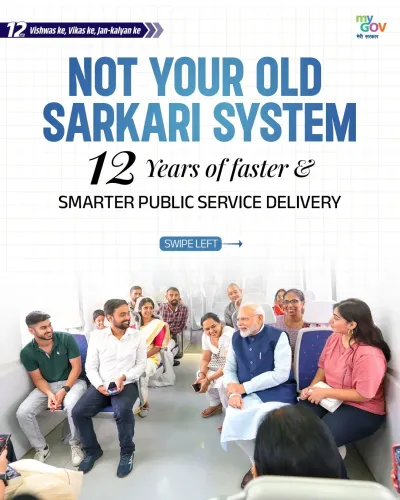
Union Coal and Mines Minister G. Kishan Reddy on Monday, June 15, 2026, marked twelve years of governance reforms under the BJP-led central government, highlighting how self-attestation, PAN-TAN integration, and e-Sign have transformed public service delivery for citizens and taxpayers across India.
Context
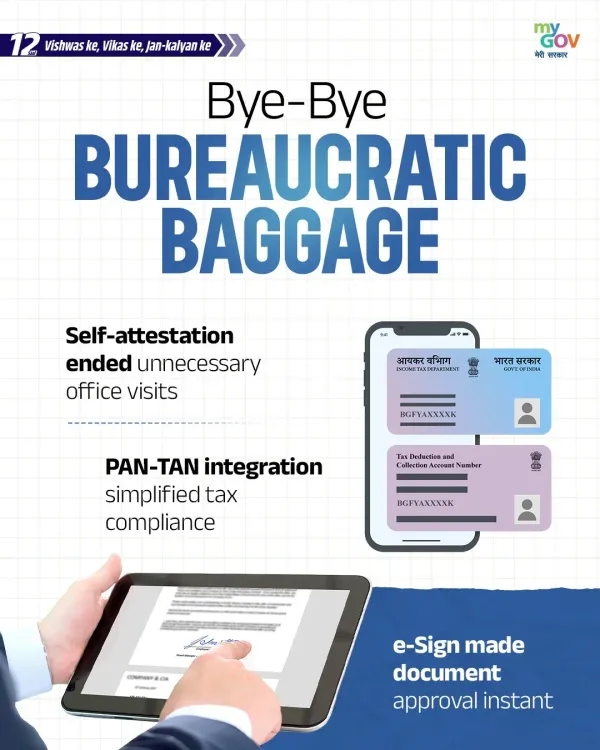
Reddy's post, shared under the hashtag #12YearsOfGoodGovernance, cited three specific administrative changes as markers of the decade-long shift: the replacement of cumbersome verification processes with self-attestation, the integration of Permanent Account Number (PAN) with Tax Deduction and Collection Account Number (TAN) to simplify compliance, and the introduction of e-Sign for instant, legally valid document approvals. 'The journey over the last 12 years has been one of convenience, inclusion, and empowerment, where public services are delivered faster, more transparently, and more efficiently,' the minister wrote.
The twelve-year reference aligns with the period since May 2014, when the current central government first came to power. Reddy, who also serves as BJP Telangana state president, framed the post as a broad salute to governance progress rather than a sectoral announcement.
Policy Backdrop
The three reforms cited by Reddy each have a distinct policy lineage. In 2014, the central government permitted self-attestation of documents for most central services, ending the long-standing requirement for mandatory gazetted-officer attestation — a change that reduced paperwork burdens for millions of applicants. The Digital India programme, launched in July 2015, provided the broader infrastructure for e-governance, encompassing e-Sign, DigiLocker, and a push toward Aadhaar-linked, API-driven service delivery.
Income-tax rules were progressively amended from 2015 onward to enable PAN-TAN integration and online verification, reducing the compliance load on businesses and individual taxpayers. Together, these measures have been cited by successive administrations as contributors to India's improvement in ease-of-doing-business metrics.
Stakeholders and Impact
The reforms touch a wide base of stakeholders — ordinary citizens applying for government services, taxpayers managing filings, and businesses navigating regulatory compliance. Self-attestation alone eliminated the need for millions of applicants to locate and approach a gazetted officer, a barrier that disproportionately affected those in rural or semi-urban areas.
e-Sign, built on the Aadhaar authentication framework, extended legally valid digital signatures to any enrolled citizen, removing the cost and delay associated with physical document signing. The same philosophy of reducing middle-layer verification has been applied sectorally to the Coal and Mines ministry, where digital clearances and compliance filings have been progressively introduced.
What's Next
The anniversary messaging is likely to be followed by further announcements in the Coal and Mines sector, where digital integration of lease approvals and royalty compliance remains a stated administrative priority. Upcoming parliamentary sessions and budget statements are expected to carry new modules for online processing in extractive industries.
As the government enters what it frames as its second decade of digital governance, the emphasis is expected to shift from foundational infrastructure — connectivity, e-Sign, DigiLocker — toward outcome measurement and deeper sectoral integration, including in natural-resource management.
Point of View
With the #12YearsOfGoodGovernance hashtag signalling a party-wide communications push timed to the BJP's twelve-year mark in central power. By anchoring the narrative to tangible, citizen-facing reforms — self-attestation, PAN-TAN integration, e-Sign — the party sidesteps abstract economic claims and grounds its governance record in everyday administrative experience. The choice of a technocratic framing is deliberate: it appeals to the urban middle class and small-business constituency that Digital India was designed to serve. For Reddy specifically, associating the Coal and Mines portfolio with a broader digital-governance success story positions the ministry as a beneficiary and driver of the same reform impulse, ahead of anticipated sector-specific announcements.
NationPress
13 Sept 2026
Frequently Asked Questions
What is the #12YearsOfGoodGovernance hashtag about?
The hashtag marks twelve years since the BJP-led central government came to power in May 2014, with ministers and party leaders posting about governance reforms achieved over that period. G. Kishan Reddy used it on June 15, 2026, to highlight digital reforms including self-attestation, PAN-TAN integration, and e-Sign.
What is self-attestation and when was it introduced in India?
Self-attestation allows citizens to self-certify copies of their own documents without requiring a gazetted officer's signature. The central government permitted it for most central services in 2014, significantly reducing paperwork burdens for applicants.
What is e-Sign and how does it work in India?
e-Sign is an Aadhaar-based electronic signature service that allows enrolled citizens to sign documents digitally with legal validity, without physical presence. It was introduced as part of the Digital India programme launched in July 2015.
What is PAN-TAN integration in Indian taxation?
PAN-TAN integration links a taxpayer's Permanent Account Number with the Tax Deduction and Collection Account Number, streamlining tax filings and compliance processes. Income-tax rules were amended from 2015 onward to enable this online verification.
What digital reforms has the Coal and Mines Ministry introduced?
The Coal and Mines Ministry has progressively introduced digital clearances and compliance filings as part of the broader Digital India push. Further integration of lease approvals and royalty compliance online is expected in upcoming parliamentary sessions and budget statements.