Kishan Reddy Marks Emergency Anniversary, Warns on Civil Liberties
Synopsis
Union Minister G. Kishan Reddy on 25 June 2026 marked the Emergency anniversary, recalling mass arrests, press censorship, and restrictions on civil liberties imposed in 1975, and stressing the importance of upholding constitutional freedoms.
Key Takeaways
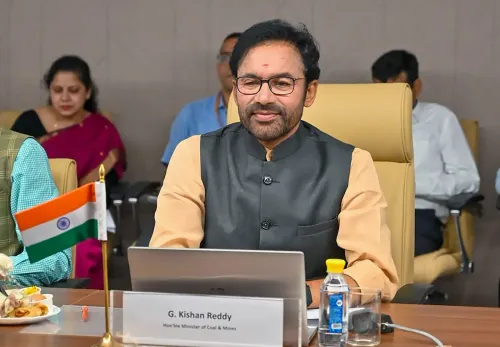
Kishan Reddy , Union Coal and Mines Minister and BJP Telangana president, posted a solemn tribute on the 51st anniversary of the Emergency , 25 June 2026.
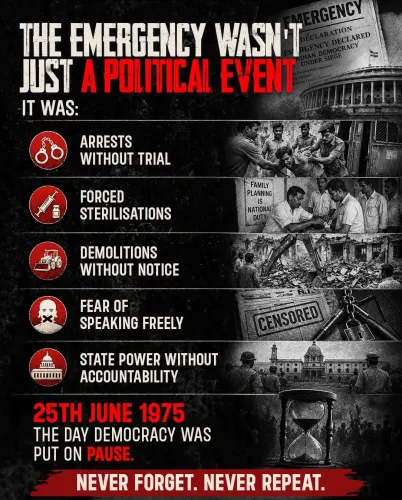
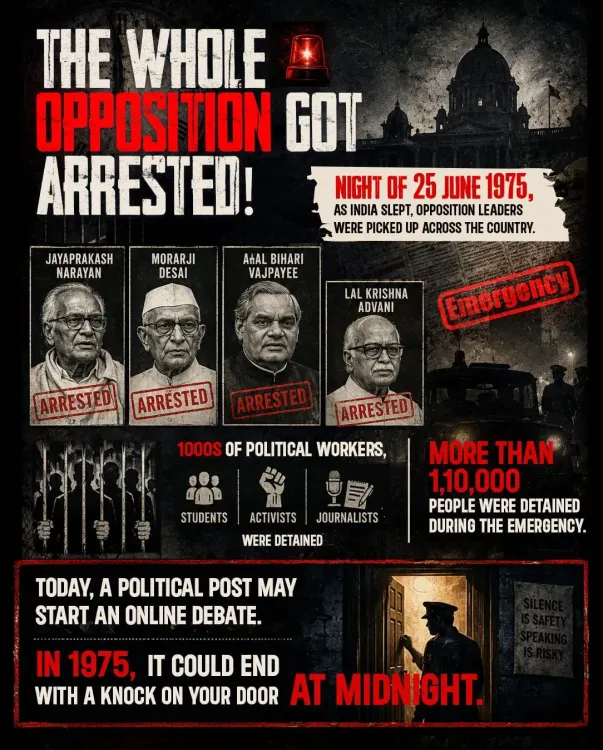
He recalled that the Emergency was marked by mass arrests , press censorship , and restrictions on civil liberties lasting 21 months from June 1975 to March 1977.
Political leaders, activists, students, and journalists were detained, and newspapers faced unprecedented controls during the period.
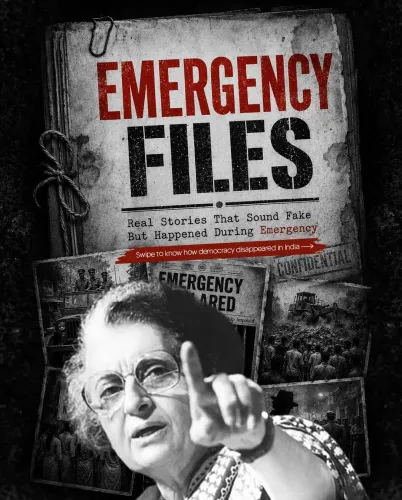
The Emergency was proclaimed under Article 352 of the Constitution on the advice of then Prime Minister Indira Gandhi .
Reddy emphasised that these historical events 'underscore the importance of safeguarding the freedoms guaranteed by our Constitution.' The post forms part of the BJP's annual practice of marking 25 June as a reminder of democratic backsliding under the Congress-era Emergency.
Union Coal and Mines Minister G. Kishan Reddy, who also serves as BJP Telangana state president, on Thursday, 25 June 2026, marked the anniversary of the 1975 Emergency by recalling the mass arrests, press censorship, and suspension of civil liberties that defined the 21-month period under then Prime Minister Indira Gandhi.
Context
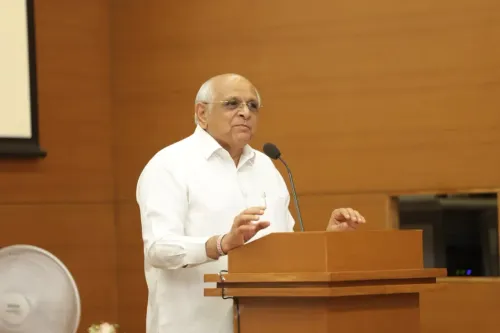
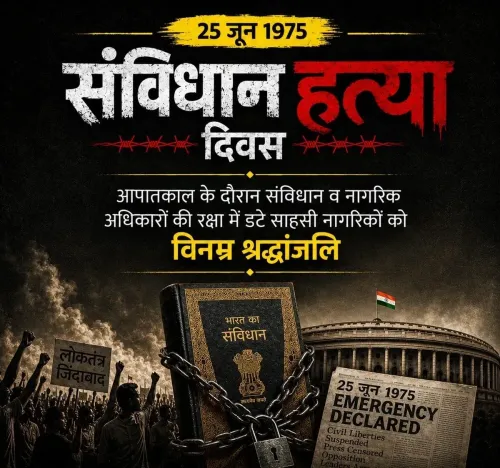
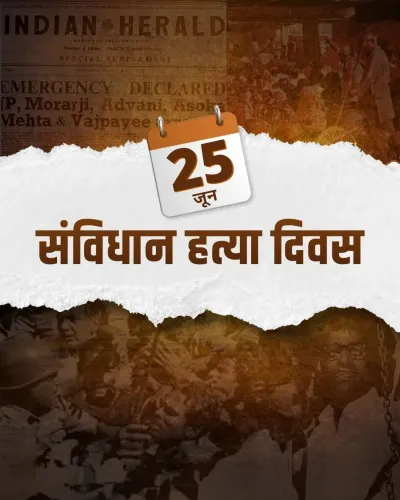
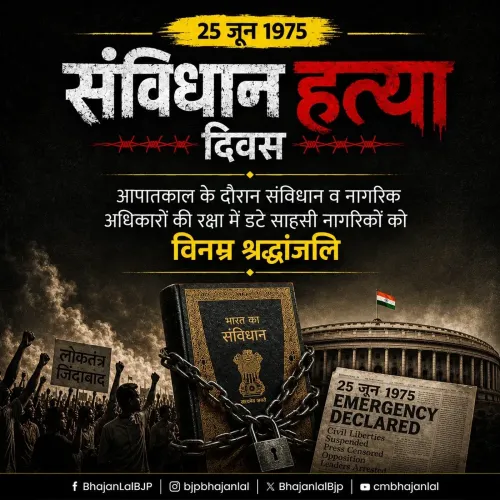
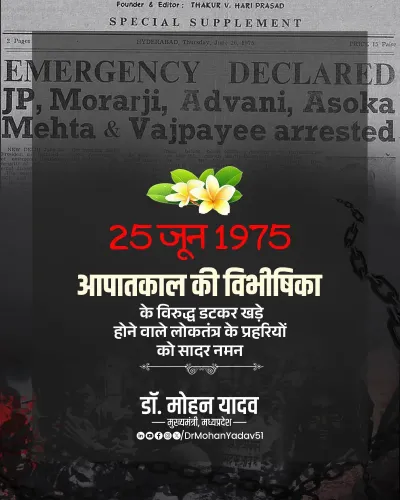
Reddy's post recalled that the Emergency was 'marked by mass arrests, censorship and restrictions on civil liberties,' and that 'political leaders, activists, students and journalists were detained, while newspapers and publications faced unprecedented controls.' He concluded that 'these events underscore the importance of safeguarding the freedoms guaranteed by our Constitution.' The post was accompanied by four images, reinforcing the historical gravity of the occasion.
The Emergency was proclaimed on 25 June 1975 when the President of India, acting on the advice of Prime Minister Indira Gandhi, invoked Article 352 of the Constitution citing internal disturbance. It lasted until March 1977, a period widely regarded as the most severe curtailment of democratic freedoms in independent India's history.
Policy Backdrop
The Emergency of 1975–77 remains one of the most contested episodes in Indian political memory. During those 21 months, fundamental rights were suspended, the press was placed under strict pre-censorship, and tens of thousands of political opponents, journalists, and civil society members were detained without trial under the Maintenance of Internal Security Act (MISA) and related legislation.
BJP leaders have consistently used the 25 June anniversary to highlight what they describe as the Congress party's authoritarian legacy, positioning themselves as defenders of constitutional freedoms. Annual commemorations, party statements, and parliamentary references to the Emergency have become a recurring feature of Indian political discourse, particularly as debates around civil liberties and press freedom continue in contemporary policy circles.
Stakeholders and Impact
The memory of the Emergency resonates across a broad spectrum of Indian society. Political leaders across party lines, civil liberties groups, journalists, and legal scholars continue to invoke the period as a benchmark for assessing the health of democratic institutions. Survivors of Emergency-era detentions and their families regard the anniversary as a moment of solemn remembrance.
For the BJP, the anniversary carries explicit political significance: it anchors the party's self-image as a constitutional safeguard against the kind of executive overreach that the Emergency represented. Reddy's post, framed in measured, non-partisan language, nonetheless fits squarely within this broader political narrative that the party has cultivated for decades.
What's Next
Statements from major parties around 25 June each year signal the continued salience of the Emergency in Indian political life. Observers will watch for any references to constitutional safeguards in upcoming parliamentary debates, particularly around legislation touching on civil liberties, press regulation, or emergency powers. Reddy's post, coming from a sitting Union Minister and state party chief, adds ministerial weight to what has become an annual exercise in constitutional reaffirmation.
Point of View
Constitutional in tone, and devoid of explicit party attacks — yet it fits a well-established BJP playbook of using the Emergency anniversary to draw a contrast between the party's democratic credentials and the Congress party's historical record. By invoking constitutional freedoms rather than partisan rhetoric, the minister lends the statement a degree of moral authority that goes beyond routine political point-scoring. The timing, coming from a sitting Union Minister who doubles as a state party chief, signals that the BJP intends to keep the Emergency's memory politically live as it heads into future electoral cycles in Telangana and at the national level. The broader arc here is one of constitutional nationalism: the party increasingly frames its identity not just around development or Hindutva, but around the defence of democratic institutions against historical and perceived threats.
NationPress
25 Jun 2026
Frequently Asked Questions
What was the Emergency of 1975 in India?
The Emergency was a 21-month period from June 1975 to March 1977 during which the President of India, on the advice of Prime Minister Indira Gandhi , proclaimed a national emergency under Article 352 of the Constitution. Fundamental rights were suspended, the press was censored, and tens of thousands of political opponents, journalists, and activists were detained without trial.
Why did G. Kishan Reddy post about the Emergency on 25 June 2026?
25 June marks the anniversary of the proclamation of the 1975 Emergency. Union Minister G. Kishan Reddy posted on this date to recall the mass arrests and press censorship of that era and to stress the importance of protecting constitutional freedoms, in line with the BJP's annual practice of marking the occasion.
What did G. Kishan Reddy say about the Emergency?
Reddy said the Emergency was 'marked by mass arrests, censorship and restrictions on civil liberties,' that political leaders, activists, students, and journalists were detained, and that newspapers faced 'unprecedented controls.' He concluded that these events 'underscore the importance of safeguarding the freedoms guaranteed by our Constitution.'
Who is G. Kishan Reddy?
G. Kishan Reddy is India's Union Minister of Coal and Mines and the BJP's Telangana state president . He is a senior BJP leader and a member of the Union Cabinet.
Why does the BJP mark the Emergency anniversary every year?
The BJP uses the 25 June Emergency anniversary to highlight what it describes as the Congress party's authoritarian legacy and to present the BJP as a defender of constitutional freedoms and democratic institutions. It has become a recurring feature of the party's political calendar.