CM Sai Pays Tribute to Maharaja Pravirchandra Bhanjdev on Birth Anniversary
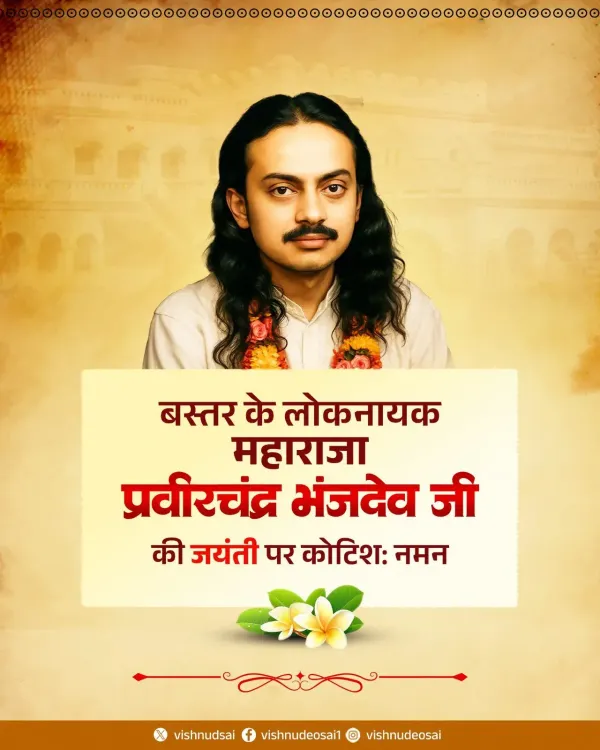
Synopsis
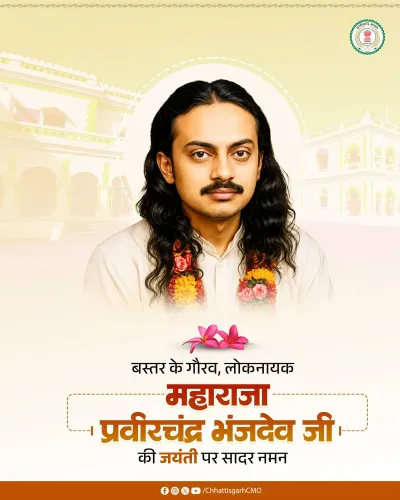
Chhattisgarh Chief Minister Vishnu Deo Sai on 25 June 2026 honoured Maharaja Pravirchandra Bhanjdev on his birth anniversary, calling the last Bastar ruler a guardian of tribal rights and a lifelong inspiration for public service.
Key Takeaways
CM Vishnu Deo Sai paid tribute to Maharaja Pravirchandra Bhanjdev on his birth anniversary on 25 June 2026 .
The Maharaja is remembered as the last ruler of the Bastar princely state, which merged with India in 1948 .
Sai described him as a 'strong guardian' of the rights of tribal communities and a people's leader of Bastar.
Bastar in southern Chhattisgarh has one of the country's highest concentrations of Scheduled Tribe populations.
Such tributes reflect a consistent pattern of official recognition of tribal heritage across Chhattisgarh's political landscape since statehood in 2000 .
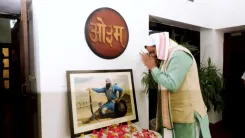
Chhattisgarh Chief Minister Vishnu Deo Sai on Thursday, 25 June 2026 paid tribute to Maharaja Pravirchandra Bhanjdev, the last ruler of the Bastar princely state, on the occasion of the leader's birth anniversary, honouring him as a champion of tribal rights and public service.
Context
In his post, CM Sai described Maharaja Pravirchandra Bhanjdev as 'Bastar ke Loknayak' ('the people's leader of Bastar') and a 'sashakt prahari' ('strong guardian') of the rights of tribal communities. He offered respectful salutations — 'sadar naman' — and noted that the Maharaja's life, devoted to public service, 'will always remain a source of inspiration.'
Maharaja Pravirchandra Bhanjdev is remembered in Bastar and across central India as a figure who stood against land alienation and the exploitation of Adivasi communities in the mid-20th century, well after the princely state's merger with India in 1948.
Policy Backdrop
Bastar, a vast southern region of Chhattisgarh, has one of the highest concentrations of Scheduled Tribe populations in the country. The region's distinct history under princely rule and subsequent struggles over land rights have shaped its political identity for decades.
Since the formation of Chhattisgarh as a separate state in 2000, successive governments have made renewed official efforts to recognise the role of regional tribal leaders in local history, acknowledging the state's demographic and cultural character. Tributes to figures like Maharaja Pravirchandra Bhanjdev have become a consistent feature of the state's commemorative calendar across party lines.
Stakeholders and Impact
The tribute carries significance for Bastar's Adivasi communities, who regard Maharaja Pravirchandra Bhanjdev as a symbol of resistance against the erosion of tribal land rights and cultural autonomy. For the BJP-led state government, such acknowledgements reinforce outreach to the state's substantial Scheduled Tribe electorate.
Political leaders in Chhattisgarh routinely mark anniversaries tied to land rights struggles and tribal heritage in central India, reflecting the electoral and cultural weight of Adivasi constituencies. CM Sai, himself from a tribal community, has consistently positioned the government's agenda around the welfare and recognition of tribal populations.
What's Next
Observers will watch whether the birth anniversary tribute is accompanied by state-level commemorations, cultural programmes, or policy announcements relating to tribal land rights and heritage in Bastar in the coming months. The occasion has in the past served as a moment for the state administration to signal its commitment to Adivasi welfare and the protection of forest and land rights in the region.
Point of View
Sai — himself from an Adivasi background — aligns the BJP's governance narrative with the region's deep-rooted resistance to land alienation. The gesture fits a broader pattern in Chhattisgarh where anniversaries of tribal figures serve as soft-power moments, signalling cultural solidarity ahead of potential policy moves on forest and land rights. Whether the tribute translates into substantive Bastar-focused announcements will determine its lasting political weight.
NationPress
25 Jun 2026
Frequently Asked Questions
Who was Maharaja Pravirchandra Bhanjdev?
Maharaja Pravirchandra Bhanjdev was the last ruler of the Bastar princely state in present-day Chhattisgarh, known for championing the land rights and cultural autonomy of Adivasi communities in the mid-20th century after Bastar's merger with India in 1948.
Why did CM Vishnu Deo Sai pay tribute to Pravirchandra Bhanjdev?
CM Sai paid tribute on the occasion of Maharaja Pravirchandra Bhanjdev's birth anniversary on 25 June 2026, honouring him as a symbol of tribal rights and public service in the Bastar region.
What is the significance of Bastar in Chhattisgarh?
Bastar is a large southern region of Chhattisgarh with one of the country's highest concentrations of Scheduled Tribe populations, and has a distinct history of princely rule and tribal land rights struggles that continue to shape its politics.
What did CM Sai say about Maharaja Pravirchandra Bhanjdev?
CM Sai called him the 'Loknayak' (people's leader) of Bastar and a 'strong guardian' of tribal rights, saying his life devoted to public service 'will always remain a source of inspiration.'
How does the Chhattisgarh government recognise tribal heritage?
Since the state's formation in 2000, Chhattisgarh governments across party lines have marked anniversaries of regional tribal leaders and their roles in land rights history, reflecting the state's large Adivasi population and distinct cultural identity.