Kishan Reddy flags mineral pricing link to housing costs
Synopsis
Coal and Mines Minister G. Kishan Reddy has linked rising limestone and iron ore prices to housing unaffordability, announcing the Modi government's push to rationalise mineral rates nationwide while respecting state financial autonomy.
Key Takeaways
Kishan Reddy directly connected rising limestone and iron ore prices to higher cement and steel costs, affecting housing affordability.
The Modi government is working to rationalise and standardise mineral rates across states to prevent cross-state economic disparities.
The policy also aims to reduce India's reliance on foreign mineral imports .
The minister explicitly stated that measures will respect state governments' financial rights and autonomy over mineral resources.
The push builds on the National Mineral Policy of 2019 , which promoted domestic mineral production and allocation transparency.
No specific timelines or royalty revision figures were announced — the statement is a policy signal pending formal notification.
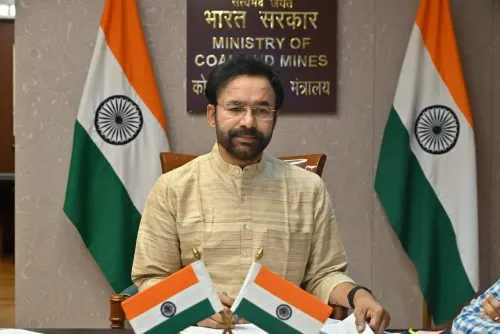
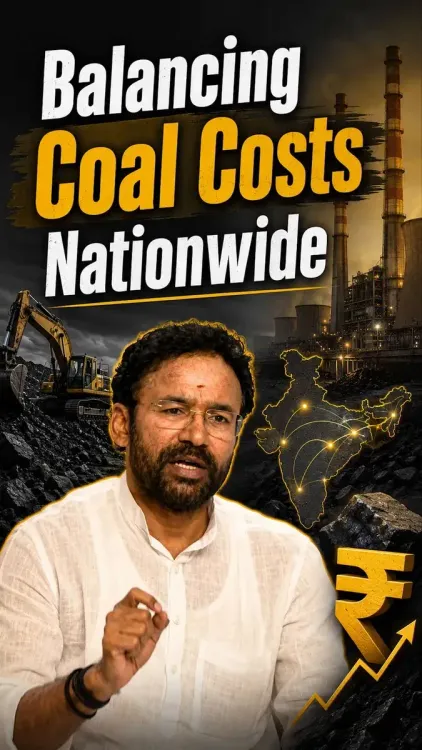
The price of a home in India may well be decided by what happens deep inside a mine. Union Coal and Mines Minister G. Kishan Reddy on Friday, August 14, 2026, made that connection explicit — arguing that rising rates for primary minerals like limestone and iron ore feed directly into costlier cement and steel, ultimately squeezing the housing dreams of ordinary citizens.
The limestone-to-roof-slab chain
Reddy's argument is straightforward and consequential: minerals are the first link in the construction supply chain. When royalty rates or market prices for limestone — the raw material for cement — or iron ore — the backbone of steel — climb unevenly across states, the cost shock ripples outward into every bag of cement and every tonne of rebar. For a country where homeownership remains a central aspiration for hundreds of millions, that upstream volatility is not an abstraction. It lands on EMIs and construction estimates.
The minister stated that the Modi government is working to 'rationalise and standardise mineral rates across the nation' to prevent cross-state economic disparities, maintain market balance, and reduce reliance on foreign mineral imports — a three-part objective that sits at the intersection of housing policy, industrial competitiveness, and federal economics.
Centre, states, and the federal mineral tightrope
India's mineral governance is constitutionally layered: states hold primary rights over minerals within their borders, including the power to set royalty rates within central guidelines. That federal reality makes standardisation politically delicate. Reddy acknowledged this directly, stating the measures would be 'executed while fully respecting and preserving the financial rights and autonomy of State Governments.' The framing is a deliberate signal — this is coordination, not centralisation.
The policy lineage runs back to the National Mineral Policy of 2019, which sought to promote domestic production, improve allocation transparency, and curb import dependence. The current push on rate rationalisation is a continuation of that framework, now applied with a sharper focus on construction-sector affordability.
What the housing sector is watching
Cement and steel producers, state mining departments, and the broader housing sector will be tracking whether Reddy's statement translates into formal central notifications on royalty revisions or inter-state pricing coordination mechanisms. The minister offered no specific timelines or figures — the statement is a policy signal, not a gazette notification. But in a sector as price-sensitive as housing, even a credible signal from the mines ministry moves the conversation.
India's infrastructure ambitions — from affordable housing schemes to highway expansion — are only as affordable as the minerals that build them. Reddy's message is that the government sees that link, and intends to act on it.
The test, as always, will be in the royalty schedules — not the rhetoric.
Frequently Asked Questions
How does limestone pricing affect cement costs in India?
Limestone is the primary raw material for cement production. When limestone royalty rates or market prices rise — particularly unevenly across states — cement manufacturers face higher input costs that are typically passed on to buyers, raising construction expenses.
What is mineral rate rationalisation and why does the government want it?
Mineral rate rationalisation refers to standardising the royalty rates and pricing frameworks for minerals across different states. The central government wants this to prevent cross-state economic disparities, stabilise construction material prices, and reduce dependence on imported minerals.
Do state governments control mineral royalty rates in India?
Yes. Under India's constitutional framework, states hold primary rights over minerals within their borders and collect royalties on extraction. The central government sets outer guidelines, but states retain significant financial autonomy — which is why any national standardisation effort requires careful federal negotiation.
What is the National Mineral Policy 2019?
The National Mineral Policy 2019 was approved by the Modi government to promote domestic mineral production, improve transparency in mining allocations, and reduce India's reliance on mineral imports. The current push on rate rationalisation is a continuation of that broader framework.
Will mineral rate standardisation make homes cheaper in India?
Standardising mineral rates could reduce volatility in cement and steel input costs, which may help stabilise housing construction prices. However, no specific timelines or figures have been announced yet, and the actual impact will depend on formal policy notifications and state-level cooperation.