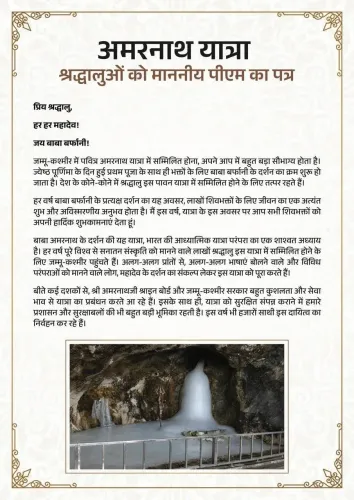
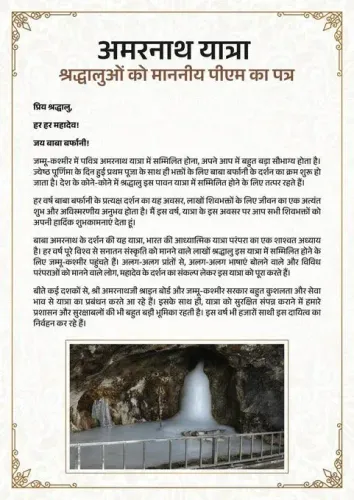
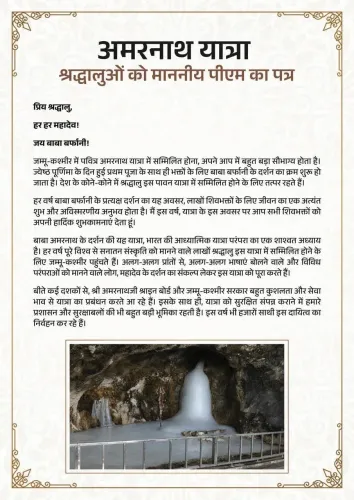
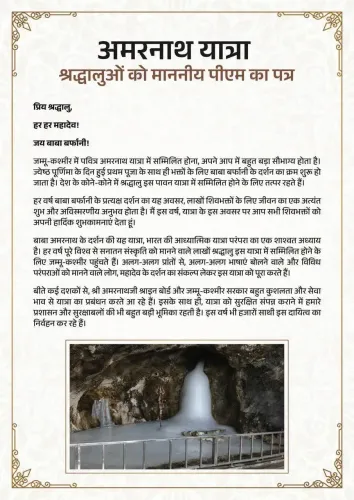
Kishan Reddy shares PM Modi's letter to Amarnath pilgrims
Synopsis
Union Coal and Mines Minister G. Kishan Reddy shared PM Modi's letter to Amarnath pilgrims on 3 July 2026, urging five resolutions: cleanliness, safety compliance, 10% local spending in J&K, tree-planting on Raksha Bandhan, and active contribution to Viksit Bharat.
Key Takeaways
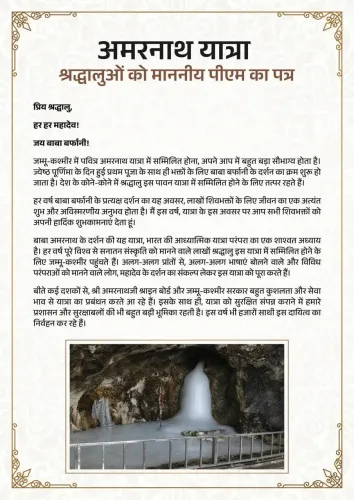
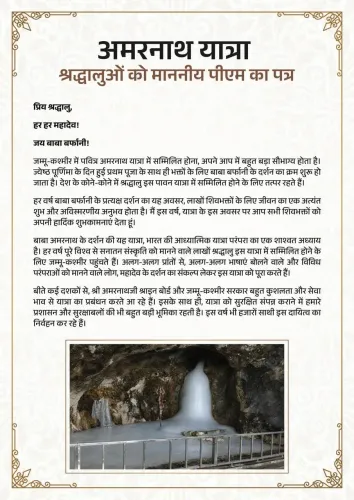
PM Modi has written a letter extending wishes to all pilgrims undertaking the Amarnath Yatra , shared publicly by Union Minister G.
Kishan Reddy on 3 July 2026 .
Pilgrims are urged to spend at least 10 per cent of their travel budget on local products to support J&K youth and family livelihoods.
The 'Ek Ped Maa Ke Naam' campaign is being extended to the yatra, with pilgrims asked to gift a sapling to a sibling on Raksha Bandhan , the yatra's closing day.
The five resolutions link the pilgrimage to four flagship national campaigns: Swachh Bharat , Vocal for Local , Ek Ped Maa Ke Naam , and Viksit Bharat .
PM Modi acknowledged the army, paramilitary forces, J&K Police , and volunteers for their service during the yatra.
Security and administrative protocols for the yatra were strengthened after J&K's reorganisation as a Union Territory in 2019 .
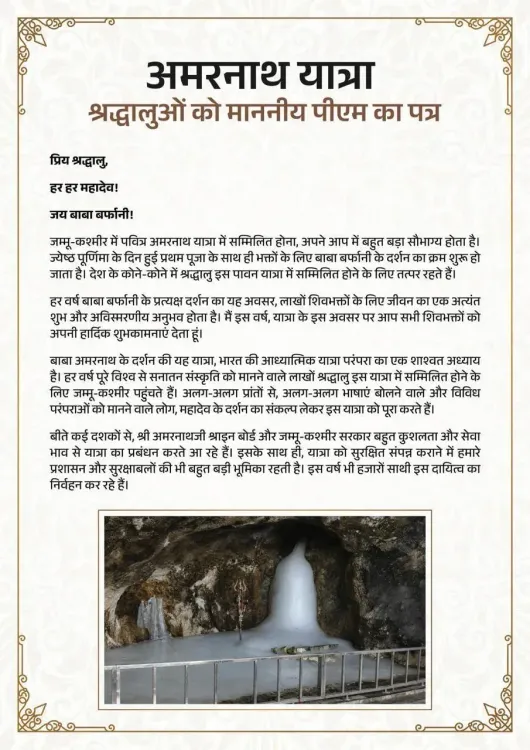
Union Coal and Mines Minister G. Kishan Reddy on Friday, 3 July 2026, shared a message on X highlighting that Prime Minister Narendra Modi has written a letter to all Shiv devotees undertaking the Amarnath Yatra, extending heartfelt wishes and urging pilgrims to observe five specific resolutions during the journey.
Context
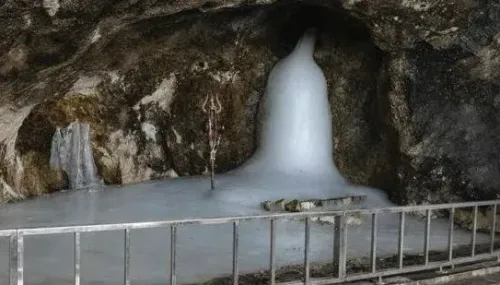
In his post, Kishan Reddy outlined that PM Modi has appealed to devotees of Baba Barfani — the ice Shivalinga enshrined in the Amarnath cave in Jammu and Kashmir — to uphold five pledges throughout the yatra. The minister translated the Prime Minister's call to action across themes of cleanliness, safety, local economic support, environmental responsibility, and national duty. The post concluded with the invocation 'Har Har Mahadev' (Glory to Lord Shiva).
The five resolutions as shared by Kishan Reddy are: maintaining cleanliness along the entire pilgrimage route; following administrative orders and traffic rules while taking special care against rain and cold; spending at least 10 per cent of travel expenditure on local products to support livelihoods of J&K youth and families; gifting a sapling to a sibling on Raksha Bandhan — which coincides with the yatra's closing day — under the 'Ek Ped Maa Ke Naam' (One Tree in Mother's Name) campaign; and contributing actively to the building of a 'Viksit Bharat' (Developed India) by fulfilling one's duties honestly.
Policy Backdrop
Each of the five resolutions maps onto an established government initiative. The cleanliness pledge draws from the Swachh Bharat Mission, launched in 2014, which has consistently targeted public and religious sites. The 'Vocal for Local' directive — urging pilgrims to spend at least 10 per cent of their yatra budget on locally made goods — is rooted in the Atmanirbhar Bharat package announced in May 2020, and has since been applied to tourism corridors across India.
The 'Ek Ped Maa Ke Naam' tree-plantation drive, linked to Raksha Bandhan, was publicly promoted by PM Modi in 2024 and is being extended into the 2026 yatra season. The 'Viksit Bharat' vision — a developed India by 2047 — has been a recurring frame in government communications since 2023, now woven into the pilgrimage message as a call for civic participation.
Security and administrative protocols for the Amarnath Yatra were significantly strengthened after the 2019 reorganisation of Jammu and Kashmir into a Union Territory, with tighter coordination between the army, paramilitary forces, J&K Police, and civil administration.
Stakeholders and Impact
PM Modi, as shared through Kishan Reddy's post, specifically acknowledged the contributions of the armed forces, security personnel, Jammu and Kashmir Police, the administration, and all volunteers engaged in selfless service during the yatra. This recognition underscores the scale of the logistical and security operation that the annual pilgrimage demands.
The 10 per cent local spending appeal is particularly significant for J&K's economy. Local vendors, artisans, and small businesses along the yatra route stand to benefit directly if pilgrims follow the directive. For J&K youth and families, whose livelihoods are closely tied to the short pilgrimage window each year, even a modest uptick in local purchases can have a measurable economic impact.
What's Next
The yatra is scheduled to conclude on Raksha Bandhan, which the Prime Minister has tied to the tree-plantation initiative, giving the campaign a culturally resonant closing moment. Observers will watch whether the 10 per cent local spending nudge translates into measurable gains for J&K's informal economy this season. Any updates from the tourism ministry or parliamentary committees on pilgrimage infrastructure and local livelihood data from the 2026 yatra will offer a clearer picture of whether the five resolutions moved beyond symbolism into impact.
Point of View
Amplified by a senior Cabinet minister and BJP state president, illustrates a now-familiar template: embedding major religious events within the architecture of flagship government campaigns to extend their reach beyond policy circles into mass public behaviour. By tying the Vocal for Local directive specifically to a measurable threshold — 10 per cent of pilgrimage spending — the message moves from aspiration to a concrete behavioural ask, making it easier to frame outcomes around. The simultaneous invocation of Viksit Bharat within a devotional context reflects the government's broader effort to fuse civic nationalism with cultural identity ahead of the 2047 centenary horizon. Whether these nudges generate trackable economic or environmental outcomes in J&K will be the real test of the strategy's durability.
NationPress
3 Jul 2026
Frequently Asked Questions
What did PM Modi write in his letter to Amarnath Yatra pilgrims?
PM Modi extended heartfelt wishes to all pilgrims and urged them to observe five resolutions: maintaining cleanliness, following safety rules and administrative orders, spending at least 10 per cent of travel expenses on local J&K products, gifting a sapling on Raksha Bandhan under the Ek Ped Maa Ke Naam campaign, and contributing to Viksit Bharat through honest duty.
What is the Vocal for Local appeal for Amarnath Yatra 2026?
PM Modi has asked pilgrims to spend at least 10 per cent of their yatra expenditure on locally made products, with the aim of boosting the livelihoods of J&K youth and families who depend on the pilgrimage season for their income.
What is the Ek Ped Maa Ke Naam campaign and how does it relate to Amarnath Yatra?
Ek Ped Maa Ke Naam is a tree-plantation drive promoted by PM Modi since 2024 that encourages people to plant or gift a sapling in their mother's name. For the Amarnath Yatra, pilgrims are asked to gift a sapling to a sibling on Raksha Bandhan, which marks the closing day of the yatra.
Who is G. Kishan Reddy and why did he share this message?
G. Kishan Reddy is the Union Minister of Coal and Mines and the BJP's Telangana state president. He shared PM Modi's letter to Amarnath pilgrims on X on 3 July 2026 as part of the BJP's broader effort to amplify the Prime Minister's message to devotees across the country.
What security arrangements are in place for Amarnath Yatra?
Comprehensive security protocols involving the Indian Army, paramilitary forces, J&K Police, and civil administration are in place for the Amarnath Yatra. These arrangements were significantly strengthened after Jammu and Kashmir was reorganised as a Union Territory in 2019.