Kishan Reddy: Coal Imports Drop 12.95% in April 2026
Synopsis
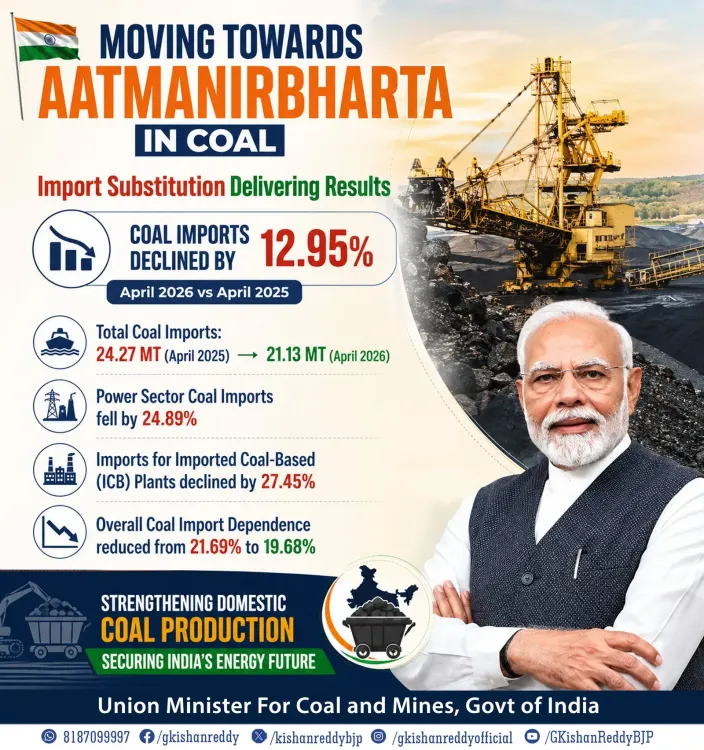
India's coal imports fell 12.95% in April 2026 versus April 2025, with power-sector imports dropping 24.89%, Union Coal Minister G. Kishan Reddy announced on 3 July 2026, crediting coordinated efforts by the Ministry of Coal, Railways, and Coal India Limited under the Aatmanirbhar Bharat framework.
Key Takeaways
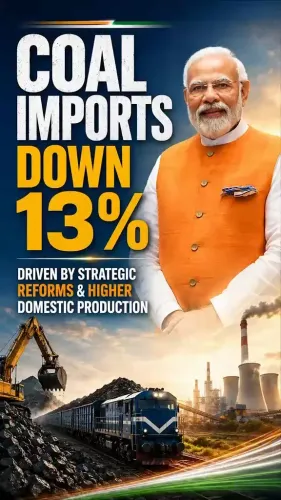
India's overall coal imports declined by 12.95% in April 2026 compared to April 2025 .
Power-sector coal imports recorded a steeper fall of 24.89% year-on-year.
The Ministry of Coal , Ministry of Railways , and Coal India Limited are cited as key contributors to the import substitution effort.
The government has pursued commercial coal mining auctions since 2020 to diversify domestic supply beyond Coal India Limited.
The figures align with India's broader Aatmanirbhar Bharat goal of reducing dependence on imported energy inputs.
Official data is sourced from a Press Information Bureau release linked by the Minister.
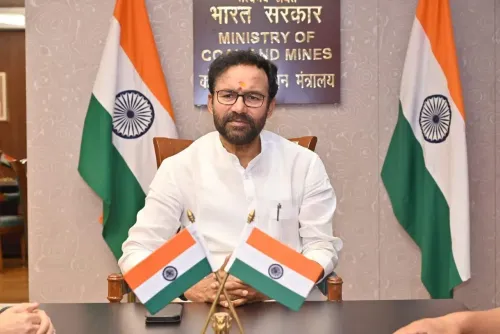
Union Coal and Mines Minister G. Kishan Reddy on Friday, 3 July 2026, announced that India's coal imports declined by 12.95% in April 2026 compared to April 2025, citing sustained government efforts to boost domestic production and reduce import dependence under the Aatmanirbhar Bharat framework.
Context
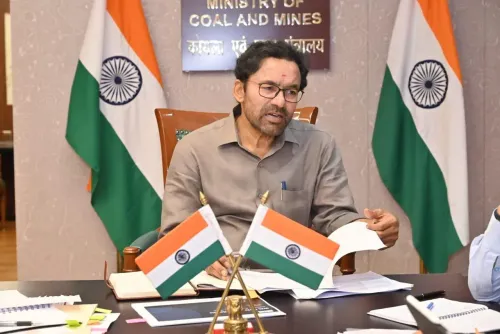
In his post on X, the Minister highlighted that imports by the power sector fell by a sharper 24.89% year-on-year, describing the figures as a reflection of coordinated policy action. He credited Prime Minister Narendra Modi's leadership and pointed to the combined efforts of the Ministry of Coal, the Ministry of Railways, and Coal India Limited (CIL) in strengthening domestic supply chains.
The announcement was accompanied by a reference to a detailed Press Information Bureau release, signalling that the figures carry official government backing. The post framed the import decline as a milestone on the road to a 'Viksit Bharat' (Developed India).
Policy Backdrop
The decline fits within a policy arc that began taking shape after 2020, when the government opened commercial coal mining auctions for the first time, ending decades of near-exclusive reliance on Coal India Limited and state utilities. The move was part of the broader Aatmanirbhar Bharat initiative announced in May 2020, which sought structural reforms across energy, defence, and manufacturing.
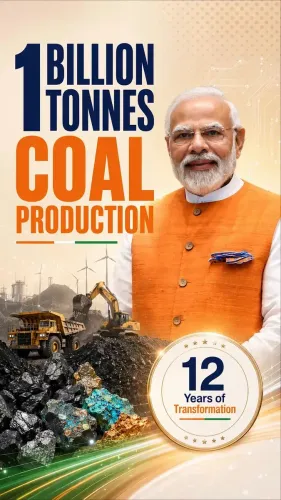
Since then, the Ministry of Coal has pursued annual production targets trending toward 1 billion tonnes, backed by faster regulatory clearances and railway infrastructure upgrades. Coal India Limited, the world's largest coal producer, has remained central to these supply-side efforts, while logistics coordination with the Ministry of Railways has been a recurring policy priority.
Coal continues to supply the majority of India's thermal power generation, making production reliability and import substitution a core energy-security concern even as renewable capacity expands in parallel.
Stakeholders and Impact
The most direct beneficiaries of falling import volumes are power utilities and industrial consumers who have historically sourced a portion of their coal requirements from overseas markets, incurring higher costs tied to global price fluctuations and freight rates. A 24.89% drop in power-sector imports in particular suggests that domestic supply has become sufficiently reliable to displace a significant share of imported volumes.
For Coal India Limited and domestic mining companies operating under commercial auction licences, higher offtake from the domestic market strengthens revenue visibility. Railway networks that carry coal from pithead to plant also stand to benefit from sustained freight volumes.
What's Next
Subsequent monthly coal production and import data from the Ministry of Coal will indicate whether the April 2026 decline represents a durable trend or a seasonal fluctuation. Any targets or allocations announced in the upcoming Union Budget or energy policy reviews will be watched closely by power utilities and mining stakeholders alike.
If the import-substitution momentum is sustained, it would mark a significant step toward the government's stated goal of a self-reliant coal sector — a foundation the Minister described as essential to 'Viksit Bharat.'
Point of View
As highlighted by Minister Kishan Reddy, represent a tangible data point in the government's long-running Aatmanirbhar Bharat energy narrative, arriving at a time when the administration is keen to demonstrate measurable outcomes from structural reforms initiated in 2020. The sharper 24.89% decline in power-sector imports is particularly significant, suggesting that domestic supply chains have matured enough to absorb demand that previously leaked to overseas markets. For the BJP, which holds the Coal portfolio and the Telangana state presidency through Kishan Reddy, publicising such figures ahead of budget season serves both a policy and a political communication purpose. The broader test will be whether this trend holds across subsequent months as monsoon-season logistics and global energy prices introduce fresh variables.
NationPress
2 Oct 2026
Frequently Asked Questions
How much did India's coal imports fall in April 2026?
India's coal imports declined by 12.95% in April 2026 compared to April 2025, according to an announcement by Union Coal Minister G. Kishan Reddy on 3 July 2026.
Why did India's power sector coal imports fall so sharply?
The government attributes the 24.89% year-on-year fall in power-sector coal imports to enhanced domestic coal production, stronger supply chains, and coordinated efforts between the Ministry of Coal, Ministry of Railways, and Coal India Limited.
What is Aatmanirbhar Bharat in the context of coal?
Aatmanirbhar Bharat, launched in May 2020, included opening commercial coal mining auctions for the first time and setting higher domestic production targets to reduce India's reliance on imported coal.
What is Coal India Limited's role in reducing coal imports?
Coal India Limited, the world's largest coal producer, is the primary domestic supplier and has been central to the government's strategy of raising output to substitute imported coal for power generation and industry.
What should we watch for next in India's coal sector?
Subsequent monthly import and production data from the Ministry of Coal, along with any new targets in the Union Budget or energy policy updates, will indicate whether April 2026's import decline is a sustained trend.