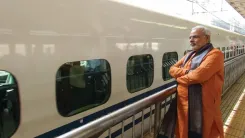
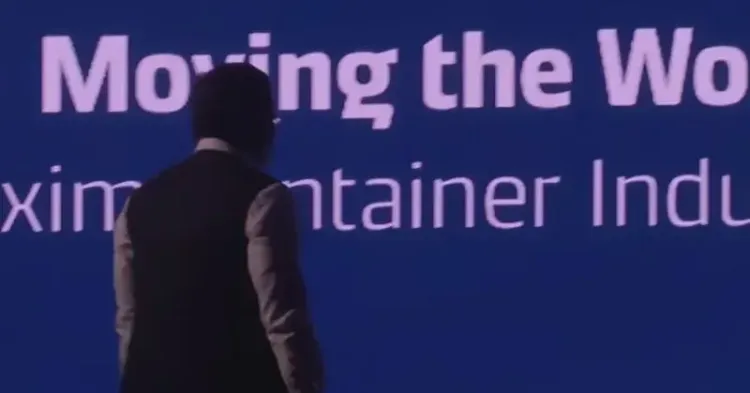
Sonowal at Launch of India's First EXIM Container by Maersk
Synopsis
Union Minister Sarbananda Sonowal addressed the unveiling of India's first EXIM-grade container by Maersk in Greater Noida on 3 July 2026, marking a landmark step in domestic maritime manufacturing under Atmanirbhar Bharat and the National Logistics Policy framework.
Key Takeaways
India's first EXIM-grade container was unveiled by Maersk at a facility in Greater Noida on 3 July 2026 .
Union Minister Sarbananda Sonowal was present live at the ceremony, reflecting Central government endorsement of the milestone.
The development aligns with the National Logistics Policy (2022) , which targets reduced logistics costs and improved EXIM container availability.
The initiative supports the Atmanirbhar Bharat goal of reducing India's dependence on imported shipping containers.
Policy frameworks including Sagarmala (2015) and Maritime India Vision 2030 form the backdrop for this domestic manufacturing push.
Exporters, importers, port authorities, and multimodal logistics operators are the primary stakeholders set to benefit from a domestic container supply base.
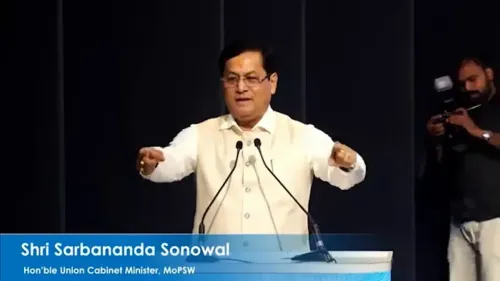
Union Minister of Ports, Shipping and Waterways Sarbananda Sonowal addressed the unveiling of India's first EXIM-grade container manufactured by Maersk at Greater Noida on Friday, 3 July 2026, marking a significant step in the country's push for domestic maritime manufacturing.
Context
The event, held at a facility in Greater Noida in the National Capital Region, saw the Danish shipping and logistics giant Maersk unveil what is being positioned as the first container built to EXIM (export-import) grade standards within India. Minister Sonowal was present live at the ceremony, signalling the Central government's direct engagement with the milestone. The development is seen as a concrete output of India's sustained effort to build domestic container manufacturing capacity.
India has historically depended heavily on imported containers, a dependence that came under sharp focus during global supply chain disruptions in recent years. Domestic production of EXIM-grade containers has been a stated priority under the Atmanirbhar Bharat framework, and this unveiling represents one of the earliest tangible deliveries of that agenda in the shipping sector.
Policy Backdrop
The event sits at the intersection of several Central government policy frameworks. The Sagarmala Project, launched in 2015, set out to modernise Indian ports and promote coastal shipping and port-led industrialisation. The Maritime India Vision 2030, released in 2021, laid out targets for port capacity expansion, increased shipping tonnage, and enhanced container handling infrastructure across the country.
The National Logistics Policy, released in 2022, added a sharper commercial dimension, targeting a reduction in logistics costs as a share of GDP and improved availability of EXIM containers for Indian traders. Together, these frameworks created the policy environment in which a partnership between a global operator like Maersk and Indian manufacturing facilities could take shape. The choice of Greater Noida, a major logistics and industrial hub within the NCR, underscores the intent to link inland manufacturing centres directly to port-bound supply chains.
Minister Sonowal, who has held the Ports, Shipping and Waterways portfolio since 2021, has been the political face of these maritime modernisation drives, regularly engaging with port authorities, shipping lines, and logistics stakeholders to accelerate implementation.
Stakeholders and Impact
The primary beneficiaries of increased domestic EXIM container availability are Indian exporters and importers, who have faced persistent shortages and elevated leasing costs for standard shipping containers. A domestic supply base could reduce turnaround times and lower costs for small and medium enterprises engaged in international trade.
Port authorities and multimodal logistics operators stand to gain from a more reliable container supply chain that is less exposed to global shipping disruptions. For Maersk, the move deepens its footprint in the Indian market beyond pure shipping operations, positioning the company as a manufacturing and logistics partner aligned with India's self-reliance goals. The collaboration reflects a broader pattern of global shipping majors seeking to embed themselves in India's rapidly expanding trade infrastructure.
What's Next
Attention will now turn to the pace at which additional EXIM-grade containers roll out from this and potentially other domestic facilities. Industry observers will watch for any production targets, government procurement commitments, or incentive structures that may be announced to scale the initiative. Upcoming Union Budget deliberations and maritime policy updates are expected to provide further signals on whether domestic container manufacturing will receive dedicated fiscal support.
Parliamentary committees overseeing shipping and commerce may also take up questions of EXIM logistics standards and quality certification for domestically produced containers. If the Maersk facility in Greater Noida demonstrates commercial viability, it could catalyse similar investments by other global and domestic players, accelerating India's transition toward a self-sufficient container supply chain.
Point of View
With a Union Minister in attendance, is more than a ceremonial milestone — it signals that the government is actively converting its logistics policy commitments into industrial outcomes. The choice of a global shipping major as the manufacturing partner reflects a pragmatic strand within Atmanirbhar Bharat: leveraging foreign technology and capital to seed domestic capacity rather than excluding it. For Minister Sonowal, the event adds a tangible delivery to a portfolio defined largely by policy documents and port modernisation targets since 2021. Whether this remains a one-off showcase or the opening of a scalable domestic container industry will depend on the fiscal and regulatory follow-through visible in the next budget cycle.
NationPress
3 Jul 2026
Frequently Asked Questions
What is India's first EXIM-grade container and who made it?
India's first EXIM-grade container is a shipping container built to export-import quality standards and manufactured domestically by Maersk , the Danish multinational shipping and logistics company, at a facility in Greater Noida , Uttar Pradesh.
Why is domestic container manufacturing important for India?
India has historically relied on imported containers, making its exporters and importers vulnerable to global supply chain disruptions and high leasing costs. Domestic production aims to reduce this dependence, lower logistics costs, and support rising trade volumes under the National Logistics Policy 2022 .
What is the Sagarmala Project and how does it relate to this?
The Sagarmala Project , launched in 2015 , is the Central government's port-led development initiative to modernise ports, improve connectivity, and promote coastal shipping. Domestic container manufacturing is part of the broader industrial ecosystem Sagarmala seeks to build around Indian ports.
What did Sarbananda Sonowal say at the Maersk event in Greater Noida?
Minister Sonowal addressed the gathering live at the unveiling ceremony in Greater Noida on 3 July 2026 . The specific remarks from his address are available in the live broadcast shared on his official social media account.
What policy frameworks support EXIM container manufacturing in India?
Three key frameworks support this push: the Sagarmala Project (2015) for port-led industrialisation, Maritime India Vision 2030 (2021) for capacity and tonnage targets, and the National Logistics Policy (2022) for reducing logistics costs and improving container availability.