Jal Shakti Minister Paatil flags Meerut school water pledge drive
Synopsis
Union Jal Shakti Minister C. R. Paatil on 3 July 2026 spotlighted a school-level water conservation pledge drive at Poothi village in Meerut's Mawana tehsil, framing it as a grassroots realisation of PM Modi's Red Fort call to make water conservation a people's movement.
Key Takeaways
Union Jal Shakti Minister C.
Paatil posted about a water conservation awareness event at Poothi village, Mawana tehsil, Meerut on 3 July 2026 .
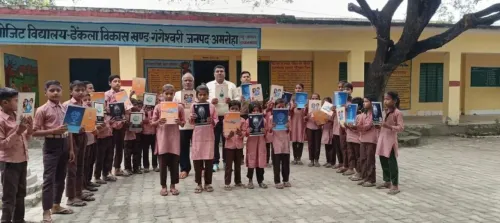
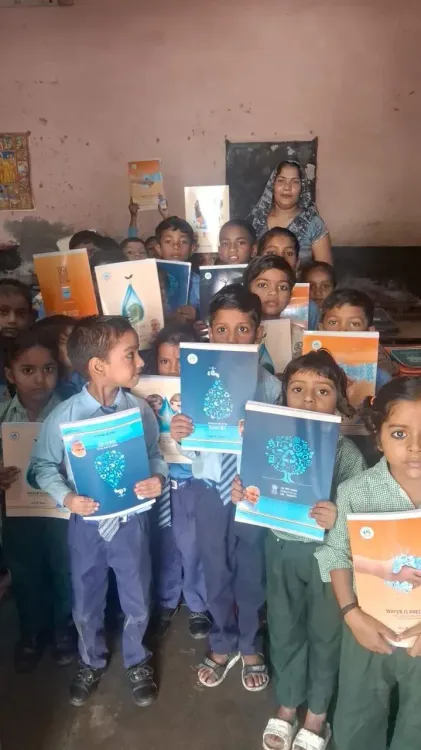
Schoolchildren at the Ganga-bank village were made to take a water-saving pledge and were distributed notebooks as part of the outreach.
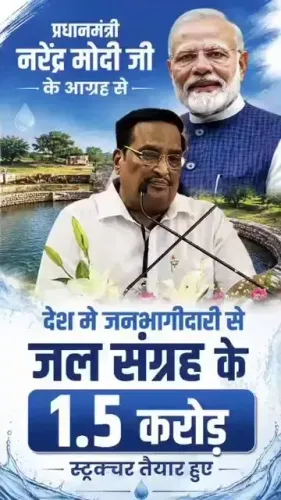
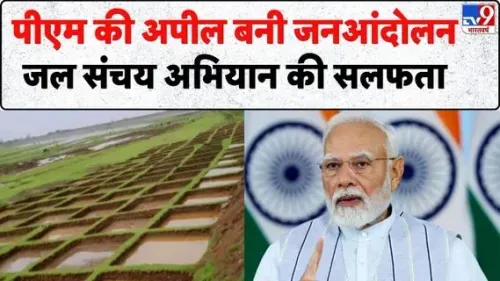
The drive is framed as a ground-level implementation of PM Narendra Modi 's call from the Red Fort to turn water conservation into a jan andolan (people's movement).
The event falls under the policy umbrella of the Namami Gange programme (2014) and the Jal Jeevan Mission (2019), both of which emphasise community participation.
The Jal Shakti Abhiyan framework is the broader campaign vehicle through which such village-level conservation events are being conducted across India.
Union Jal Shakti Minister C. R. Paatil on Friday, 3 July 2026, highlighted a water conservation awareness drive held at Poothi village in Mawana tehsil, Meerut district, Uttar Pradesh, where schoolchildren were made to take a pledge to save water and were distributed notebooks as part of the outreach. The event, conducted on the banks of the Ganga river, was cited by the minister as a grassroots expression of Prime Minister Narendra Modi's call to turn water conservation into a people's movement.
Context
In his post, Minister Paatil wrote that PM Modi had issued a call from the ramparts of the Red Fort — 'jal sanrakshan ko jan-andolan banana' (to make water conservation a people's movement) — and that this vision is now taking shape across every corner of the country through public participation. He specifically pointed to the Poothi village initiative as an example of that inspiration being translated into action at the community level.
The drive involved engaging school students on the importance of conserving water, distributing notebooks, and administering a formal pledge to save water. The Ganga-bank setting of the village lends symbolic weight to the outreach, given the river's centrality to national conservation policy.
Policy Backdrop
The initiative draws from two flagship central government programmes. The Namami Gange programme, approved in 2014, is an integrated mission for the conservation and pollution abatement of the Ganga river basin, covering riverine districts such as Meerut. The Jal Jeevan Mission, launched in 2019, aims to provide tap water to every rural household with a strong emphasis on community participation and source sustainability.
Together, these schemes have shifted central water governance away from purely supply-side infrastructure toward behaviour-change and community mobilisation — a pattern this school-level pledge drive directly reflects. The Jal Shakti Abhiyan, a time-bound campaign under the Jal Shakti Ministry, has similarly sought to embed conservation habits through local participation in water-stressed and riverine districts.
Stakeholders and Impact
The most immediate beneficiaries of such awareness drives are the school-going children of Ganga-basin villages, who are positioned both as messengers within households and as future stewards of local water resources. Villagers in Mawana tehsil — a predominantly agricultural belt dependent on the Ganga's water table — stand to benefit from heightened community awareness about groundwater depletion and river health.
For the Jal Shakti Ministry, school-based pledge programmes serve as low-cost, high-visibility tools to demonstrate that national conservation goals are being operationalised at the panchayat and village level. The distribution of notebooks also functions as a tangible, lasting reminder of the conservation message for young participants.
What's Next
The broader question is whether such awareness events are systematically linked to village-level water security plans under the Jal Shakti Abhiyan framework, or remain standalone outreach exercises. State and district administrations in Uttar Pradesh will be key to ensuring that pledge drives in Ganga-bank villages feed into measurable outcomes — such as rainwater harvesting structures or reduced groundwater extraction — rather than serving only as symbolic gestures. As the monsoon season progresses, the ministry is expected to intensify community-level conservation campaigns across riverine districts nationwide.
Point of View
Anchoring local outreach directly to PM Modi's Independence Day messaging. By invoking the Red Fort address, Minister Paatil reinforces the BJP's long-running communication strategy of connecting grassroots activity to the Prime Minister's vision, lending political salience to what would otherwise be a routine district-level awareness drive. The choice of a Ganga-bank village in Meerut — a constituency-sensitive district in western Uttar Pradesh — also carries an implicit political geography. Whether such pledge drives translate into verifiable, community-owned water security outcomes, or remain primarily in the realm of optics, will determine the long-term credibility of the ministry's jan andolan narrative.
NationPress
3 Jul 2026
Frequently Asked Questions
What did CR Paatil post about water conservation on 3 July 2026?
Union Jal Shakti Minister C. R. Paatil posted about a school-level water conservation awareness drive held at Poothi village in Mawana tehsil, Meerut, where children were given a water-saving pledge and distributed notebooks, citing it as an example of PM Modi's Red Fort call for a water conservation people's movement being realised on the ground.
Where is Poothi village located?
Poothi village is located in Mawana tehsil of Meerut district, Uttar Pradesh, on the banks of the Ganga river.
What is the Jal Shakti Abhiyan?
The Jal Shakti Abhiyan is a time-bound community mobilisation campaign run by the Union Jal Shakti Ministry to promote water conservation, rainwater harvesting, and groundwater recharge across India, particularly in water-stressed and riverine districts.
How does the Namami Gange programme relate to events like the Poothi village pledge drive?
The Namami Gange programme, approved in 2014, is an integrated mission for Ganga conservation and pollution abatement that covers riverine districts such as Meerut. School-level awareness drives in Ganga-bank villages are part of the broader community participation component of this mission.
What is PM Modi's jan andolan call on water conservation?
Prime Minister Narendra Modi has called from the Red Fort for water conservation to become a jan andolan — a people's movement — urging citizens across India to collectively adopt water-saving practices as a civic responsibility.