Kishan Reddy shares PM Modi's remarks on India's 7.7% growth amid West Asia tensions
Synopsis
Union Coal and Mines Minister G. Kishan Reddy shared PM Narendra Modi's pre-Monsoon Session remarks on 20 July 2026, highlighting India's 7.7% GDP growth despite energy challenges posed by the West Asia conflict, underscoring the government's economic resilience narrative ahead of Parliament.
Key Takeaways
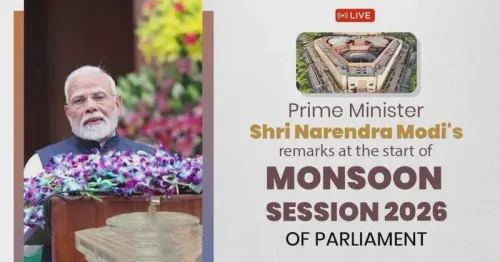
Kishan Reddy shared PM Modi's remarks on X on 20 July 2026 , ahead of the Monsoon Session of Parliament, 2026 .
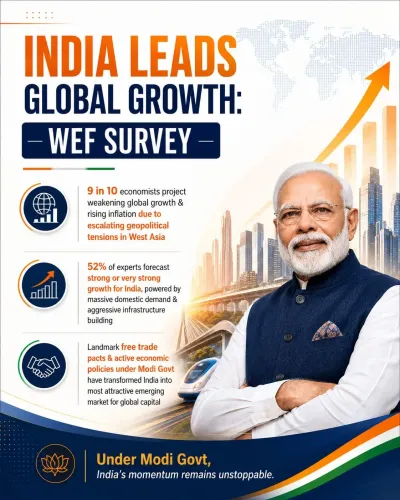
PM Modi cited India as the world's fastest-growing major economy, expanding at 7.7% despite global headwinds.
The conflict in West Asia was identified as a key challenge, given India's reliance on the region for crude oil imports.
The government framed the growth figure as evidence of 'the resilience of the Indian economy and the determination of Indians.' The Monsoon Session is expected to include discussions on energy security and reducing import dependence.
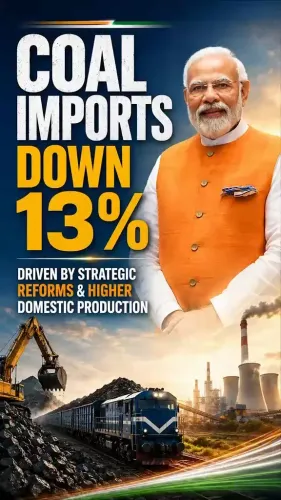
Kishan Reddy's ministry oversees domestic coal output, a key lever in India's energy self-reliance strategy.
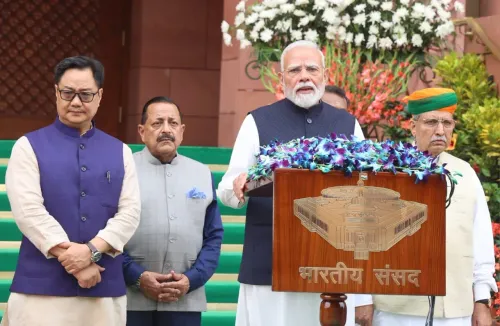
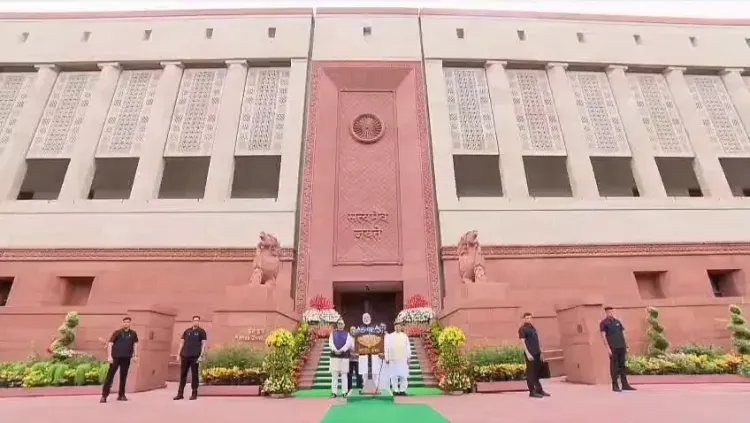
Union Coal and Mines Minister G. Kishan Reddy on Monday, 20 July 2026 shared remarks by Prime Minister Narendra Modi on India's economic resilience, quoting the Prime Minister's statement ahead of the Monsoon Session of Parliament, 2026. The remarks highlighted India's ability to sustain high growth despite global energy disruptions stemming from the ongoing conflict in West Asia.
Context
In the quoted remarks, PM Modi noted that the conflict in West Asia 'posed a significant challenge for a country like India, which relies on imports to meet a substantial part of its energy requirements.' Despite those headwinds, he said, India has 'continued to emerge as the world's fastest-growing major economy, with the economy expanding at 7.7%.' The Prime Minister described this performance as reflecting 'the resilience of the Indian economy and the determination of Indians.'
Kishan Reddy, who serves as BJP Telangana state president in addition to his cabinet role, amplified the remarks through his official X account ahead of the parliamentary session, a move consistent with the party's broader communication strategy of linking global events to domestic economic achievements.
Policy Backdrop
India is among the world's largest importers of crude oil, with West Asia serving as its primary supply region. Geopolitical instability in the region — whether from the 2022 Russia-Ukraine conflict or recurring tensions in the Gulf — has historically exerted upward pressure on India's import bill and posed risks to energy security.
In response to past disruptions, successive governments have pursued a multi-pronged strategy: diversifying import sources, building strategic petroleum reserves, and ramping up domestic coal and renewable energy output. The Ministry of Coal and Mines, which Kishan Reddy heads, has been central to the domestic energy self-reliance push, with coal output targeted as a buffer against oil import volatility.
India has reported GDP growth consistently above 7% across several recent quarters, a performance that the government has repeatedly cited as evidence of structural economic strength rather than cyclical luck. The framing of global adversity alongside domestic resilience is a recurring motif in government communication ahead of parliamentary sessions.
Stakeholders and Impact
Energy importers and the broader manufacturing sector — which is acutely sensitive to fuel price movements — are the primary stakeholders in the West Asia situation. A sustained conflict that disrupts oil supply routes or drives up crude prices could widen India's current account deficit and exert inflationary pressure on domestic consumers.
At the same time, the government's narrative of 7.7% growth provides a political anchor for the ruling BJP as it enters the Monsoon Session, where the opposition is expected to press the treasury benches on cost-of-living concerns and energy import dependence. Kishan Reddy's amplification of the PM's remarks signals that economic resilience will be a central government talking point on the floor of Parliament.
What's Next
The Monsoon Session of Parliament, 2026 is expected to take up legislative business and discussions related to energy security allocations and strategies to reduce import dependence. The government's framing ahead of the session suggests it will defend its economic record while potentially introducing or advancing measures on domestic energy production.
How the West Asia situation evolves in the coming weeks will be closely watched by policymakers and markets alike, as any escalation could test the resilience narrative that the government is currently projecting.
Point of View
Positioning the BJP government's economic record as the opening frame of parliamentary discourse. Citing a specific growth figure of 7.7% alongside an external adversity like the West Asia conflict is a well-worn government tactic to deflect opposition criticism of inflation and import costs. For Kishan Reddy personally, amplifying the PM's economic narrative also reinforces his dual role as a cabinet minister and state party president in Telangana, where the BJP is seeking to expand its footprint. The broader arc points to energy security becoming a central legislative battleground in the session ahead.
NationPress
21 Jul 2026
Frequently Asked Questions
What did PM Modi say about India's economy ahead of the Monsoon Session 2026?
PM Modi stated that India has continued to emerge as the world's fastest-growing major economy, expanding at 7.7% , despite the significant challenge posed by the conflict in West Asia to India's energy imports.
Why is the West Asia conflict a concern for India's economy?
India relies on imports to meet a substantial part of its energy requirements, and West Asia is its primary source of crude oil. Conflict in the region can disrupt supply and raise import costs, pressuring the current account deficit and domestic fuel prices.
Who is G. Kishan Reddy?
G. Kishan Reddy is the Union Minister of Coal and Mines and the BJP Telangana state president. He shared PM Modi's pre-Monsoon Session economic remarks on X on 20 July 2026 .
What is the Monsoon Session of Parliament 2026?
The Monsoon Session of Parliament, 2026 is a scheduled sitting of both Houses of Parliament expected to take up legislative business including discussions on energy security and import dependence mitigation.
How has India managed energy security during global oil disruptions?
India has diversified its crude oil import sources, maintained strategic petroleum reserves, and ramped up domestic coal production to cushion the impact of geopolitical disruptions on its energy supply.