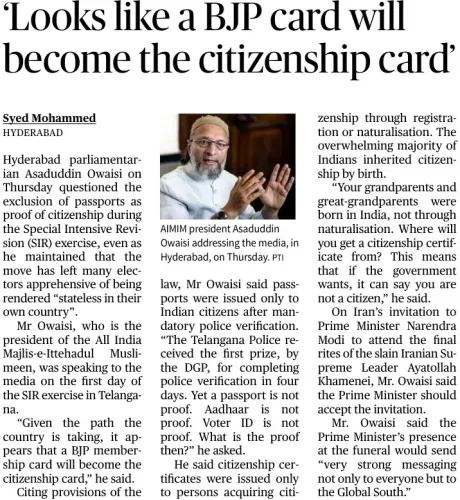
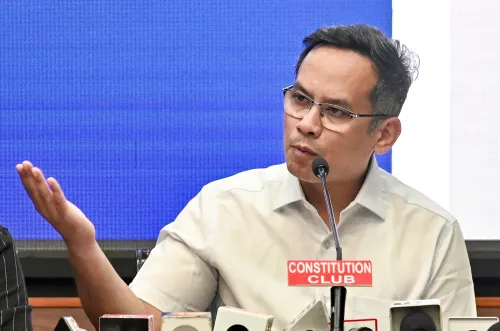
Kishan Reddy slams Owaisi over passport-citizenship remarks
Synopsis
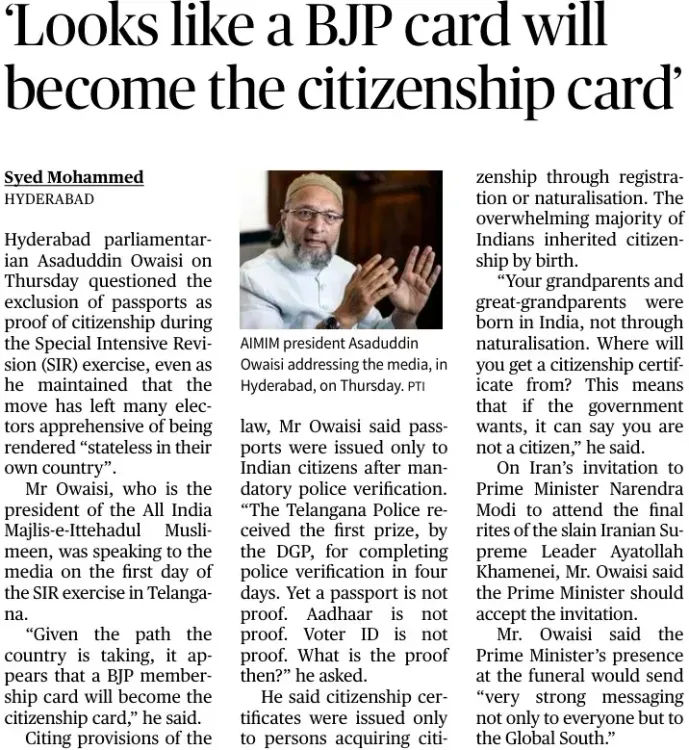
Union Coal and Mines Minister G. Kishan Reddy on 27 June 2026 rebuked Hyderabad MP Asaduddin Owaisi, calling his remarks on passports and citizenship legally incorrect. Reddy cited the Citizenship Act 1955, Passports Act 1967, and a 2013 Bombay High Court ruling to argue that a passport is a travel document, not proof of citizenship.
Key Takeaways
Kishan Reddy publicly rebuked Hyderabad MP Asaduddin Owaisi on 27 June 2026 over remarks on passports and citizenship.
Reddy said Owaisi's comments were 'legally wrong' and either reflected ignorance of Indian law or a deliberate attempt to mislead the public.
The MEA's clarification did not devalue the Indian passport; it stated only that a passport alone is not conclusive proof of citizenship.
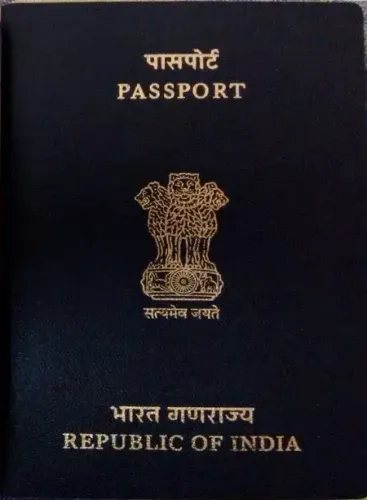
Under the Passports Act, 1967 — enacted during Congress rule — Section 20 allows the Central Government to issue a passport even to a non-citizen, making it legally insufficient as a citizenship document.
The Bombay High Court ruled in 2013 that holding a passport does not by itself establish citizenship under the Citizenship Act.
Citizenship in India is determined by birth, descent, or naturalisation under the Citizenship Act, 1955 , supported by multiple documents, not a passport alone.
Union Coal and Mines Minister G. Kishan Reddy on Friday, 27 June 2026, sharply criticised Hyderabad MP Asaduddin Owaisi for comments on passports and citizenship, calling them legally incorrect, misleading, and irresponsible. Reddy, who also serves as BJP Telangana state president, said Owaisi's remarks either reflected a fundamental ignorance of Indian law or were a deliberate attempt to create confusion among the public for political gain.
Context
Posting in Telugu, Reddy stated that Owaisi's comments on the passport-citizenship issue were 'చట్టపరంగా తప్పు' ('legally wrong') and 'బాధ్యతారాహిత్యంగా' ('irresponsible'). He noted that as a barrister trained at a prominent foreign institution, Owaisi was expected to understand the basic principles of Indian law, making his remarks all the more 'regrettable.' Reddy said the public would rightly expect a people's representative with legal knowledge to be aware of the clear statutory distinction between a passport and citizenship.
The minister was responding to remarks by Owaisi concerning a clarification issued by the Ministry of External Affairs (MEA). Reddy underlined that the MEA had not said an Indian passport holds no value — it had only clarified that a passport alone is not the definitive proof of Indian citizenship.
Policy Backdrop
Reddy laid out the legal framework in detail. Under the Indian Constitution and the Citizenship Act, 1955, citizenship is determined by birth, descent, and naturalisation — not by any single administrative document. The Passports Act, 1967 — enacted during Congress rule — governs the issuance of passports and explicitly designates them as travel documents only.
Reddy highlighted Section 20 of the Passports Act, which empowers the Central Government to issue a passport even to a non-citizen if it is in the public interest — making it legally untenable to treat a passport as conclusive proof of citizenship. He also cited a 2013 Bombay High Court ruling that held possession of a passport does not by itself satisfy the requirements of the Citizenship Act. 'This is not a new rule introduced by the Modi government,' Reddy wrote, noting that the Passports Act has been in force since 1967 under Congress governance.
Citizenship, he emphasised, is established through legally recognised documentation such as birth certificates, parental records, school records, voter list entries, residence proof, and government records — alongside a passport and other contemporaneous documents — particularly when date of birth, place of birth, or parents' citizenship status must be verified.
Stakeholders and Impact
The exchange touches a politically sensitive nerve in India, where debates over citizenship documentation have intensified since the passage of the Citizenship Amendment Act (CAA) in 2019 and subsequent discussions around a National Register of Citizens (NRC). Owaisi has been a prominent and vocal critic of both measures. Reddy's post is directed not only at Owaisi but at a broader public audience, seeking to clarify that the legal position on passports and citizenship has remained consistent across governments.
For ordinary passport holders, the legal distinction carries practical weight: citizenship rights flow from the Citizenship Act, 1955, not from the passport, which remains a travel facilitation document. Courts and government authorities may require a range of documents to establish citizenship, and a passport alone cannot substitute for that evidentiary standard.
What's Next
Reddy called on Owaisi to read the Citizenship Act, 1955 and the Passports Act, 1967 before making further public statements on the subject. He urged leaders in constitutional positions to speak responsibly on such matters rather than stoking public anxiety for political benefit. Any formal parliamentary debate, MEA clarification, or court proceedings referencing this legal distinction in the coming weeks will determine whether the exchange remains a political flashpoint or is resolved through official guidance.
Point of View
Deploying statutory text and court precedent to shift the debate from political optics to juridical ground — a tactic that places Owaisi on the defensive without engaging the underlying policy grievance. The invocation of the Congress-era Passports Act, 1967 is particularly pointed, framing the legal position as bipartisan and long-settled rather than a BJP-era imposition. This exchange is part of a recurring pattern in which the citizenship-documentation debate — energised since CAA 2019 — is fought as much in public discourse as in Parliament or courts. How Owaisi responds, and whether the MEA issues additional guidance, will determine whether this remains a one-day skirmish or escalates into a sustained legislative or judicial confrontation.
NationPress
27 Jun 2026
Frequently Asked Questions
Is an Indian passport proof of Indian citizenship?
No. Under Indian law, a passport is a travel document issued under the Passports Act, 1967 and does not by itself constitute conclusive proof of citizenship. The Bombay High Court reaffirmed this in 2013, and the Citizenship Act, 1955 governs how citizenship is actually determined.
What did G. Kishan Reddy say about Owaisi's passport remarks?
Reddy called Owaisi's comments legally wrong, misleading, and irresponsible, saying they either reflected a lack of understanding of basic Indian law or were a deliberate effort to create public confusion for political benefit.
What does the Passports Act, 1967 say about citizenship?
The Passports Act, 1967 designates passports strictly as travel documents. Section 20 of the Act even allows the Central Government to issue a passport to a non-citizen in the public interest, which is why a passport cannot be treated as proof of Indian citizenship.
How is Indian citizenship determined if not by passport?
Indian citizenship is determined under the Citizenship Act, 1955 through birth, descent, or naturalisation. Establishing citizenship requires documents such as birth certificates, parental records, school records, voter list entries, and residence proof — not a passport alone.
Was the passport-citizenship rule introduced by the Modi government?
No. As Kishan Reddy pointed out, the Passports Act, 1967 — which limits passports to travel documents — was enacted under Congress rule and has been in force for decades. The legal distinction between passports and citizenship is not a new policy.