Kishan Reddy Targets 'Always Against' Gang at Republic Summit
Synopsis
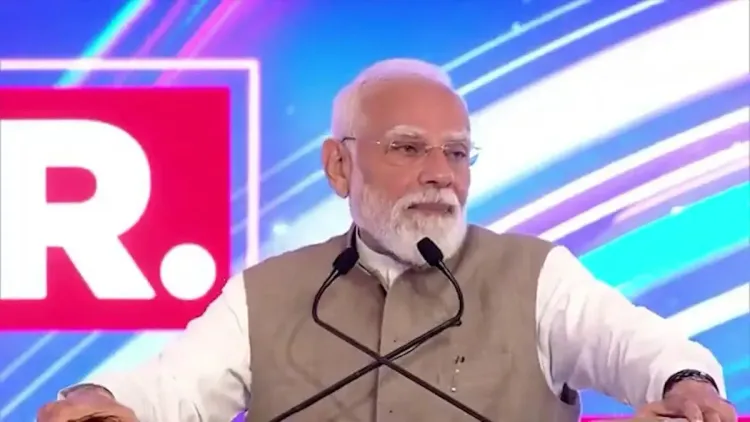
Union Coal and Mines Minister G. Kishan Reddy used the Republic Summit 2026 platform to attack what he termed the 'Always Against' gang — those who demand infrastructure and energy security while opposing the dams, power plants and mining projects needed to deliver them.
Key Takeaways
Union Coal and Mines Minister G.
Kishan Reddy coined the term 'Always Against' gang at #RepublicSummit2026 on June 23, 2026 .
He argued that critics simultaneously demand infrastructure, energy security and critical mineral supply chains while opposing the projects — dams, power plants, mines — that produce them.
The remarks align with the government's sustained push to expand domestic coal production and critical mineral extraction launched since the National Mineral Policy revision of 2019 .
Commercial coal mining was opened to private sector participation in 2020 through auctions to cut import dependency.
Progress on mineral block auctions and potential changes to the Mines and Minerals Act will be key indicators of whether the policy agenda advances.
Union Coal and Mines Minister G. Kishan Reddy on Tuesday, June 23, 2026, sharply criticised what he called the 'Always Against' gang — a term he used to describe those who simultaneously demand development yet oppose the infrastructure and mining projects needed to deliver it. The remarks were made in the context of #RepublicSummit2026, a national policy conclave.
Context
Reddy's post draws a pointed contrast between India's aspirations for development and a section of opinion he argues works against the very instruments of progress. In his words: 'the Always Against gang' demands better infrastructure, energy security, industrial growth and stronger supply chains for critical minerals, yet opposes dams, power plants and mining — the projects he says are essential to achieving those goals.
The statement was made at a moment when the central government is pressing ahead with an ambitious agenda to expand domestic mineral extraction and secure critical mineral supply chains, both for industrial use and for the energy transition.
Policy Backdrop
The tension Reddy describes has deep policy roots. The National Mineral Policy of 2019 was revised to attract private investment and modernise mining practices. In 2020, the government opened commercial coal mining to private sector participation through competitive auctions, aiming to reduce import dependence and boost domestic output.
As Union Minister of Coal and Mines, Reddy has been at the centre of this push, overseeing mineral block auctions and advocating for faster project clearances. Resistance from environmental groups and local communities to mining and power infrastructure has been a recurring point of friction in this policy space — a pattern that appears to inform his remarks.
India's stated goals of energy security and self-reliance in critical minerals — including those essential for battery storage and clean-energy manufacturing — have added urgency to the government's case for expanding domestic extraction capacity.
Stakeholders and Impact
The mining industry and energy sector stand to benefit most directly from the policy environment Reddy is defending. Industry bodies have long argued that project delays caused by legal and civil challenges inflate costs and slow capacity addition.
Opposition parties and civil society groups, however, have consistently argued that environmental safeguards and community consent processes are non-negotiable and that the government conflates legitimate dissent with obstruction. The phrase 'Always Against gang' is likely to sharpen that debate.
For Telangana, where Reddy also serves as BJP state president, the discourse carries additional political weight, as the state holds significant mineral reserves and has been a focus of centre-state negotiations over mining royalties and project approvals.
What's Next
Attention will now turn to the progress of pending mineral block auctions and any proposed amendments to the Mines and Minerals (Development and Regulation) Act in upcoming parliamentary sessions. The government's ability to translate its pro-development rhetoric into cleared, operational projects will be the practical test of the position Reddy articulated at #RepublicSummit2026.
If legislative momentum builds around faster clearances or revised consent norms, the political pushback from opposition quarters and environmental advocates is likely to intensify — making this debate a defining fault line of the current policy cycle.
Point of View
Signalling that the government intends to make development-versus-obstruction a live political theme heading into the next legislative cycle. For the opposition, the challenge is to distinguish principled environmental safeguarding from blanket resistance — a distinction Reddy's language is designed to blur. The discourse will sharpen as mineral block auctions and Mines Act amendments move through Parliament.
NationPress
23 Jun 2026
Frequently Asked Questions
Who is G. Kishan Reddy and what is his current role?
G. Kishan Reddy is India's Union Minister of Coal and Mines and also serves as the BJP's Telangana state president . He oversees mineral sector policy, including coal block auctions and critical mineral development.
What did Kishan Reddy mean by the 'Always Against' gang?
Reddy used the term 'Always Against' gang to describe those who demand development outcomes — such as energy security and infrastructure — while simultaneously opposing the projects like dams, power plants and mines that would deliver them.
What is Republic Summit 2026?
#RepublicSummit2026 is a national policy conclave at which senior government figures and public voices discuss India's development agenda. Specific details of its participants and format are not independently verified.
What is India's policy on commercial coal mining?
Since 2020 , India opened commercial coal mining to private sector participation through competitive auctions. The move was aimed at boosting domestic production and reducing coal imports. The National Mineral Policy was also revised in 2019 to encourage private investment.
Why does opposition to mining projects matter for India's energy security?
India's goals of energy security and self-reliance in critical minerals — including those used in batteries and clean-energy manufacturing — depend on expanding domestic extraction. Delays caused by legal challenges or civil opposition can slow capacity addition and increase import dependence, according to the government's stated position.