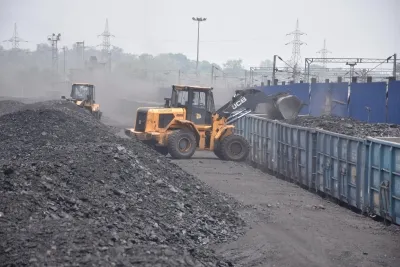
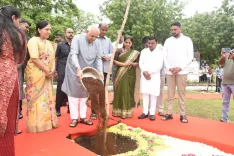
Kishan Reddy: WCL Turns Betul Mine Into Green Cover

Synopsis
Western Coalfields Limited has completed ecological reclamation of the Satpura-II underground mine in Betul, Madhya Pradesh — planting roughly 84,075 native saplings, sealing mine shafts, and handing the land to the State Forest Department alongside a new check dam for water conservation.
Key Takeaways
Western Coalfields Limited (WCL) completed the scientific closure of the Satpura-II Underground Mine in Betul, Madhya Pradesh in 2024 .
Approximately 84,075 native saplings have been planted on the reclaimed mine site.
The reclaimed land has been formally handed over to the Madhya Pradesh State Forest Department .
A newly built check dam for rainwater harvesting and groundwater recharge accompanies the land handover.
The project was announced by Union Coal and Mines Minister G.
Kishan Reddy on August 2, 2026 .
India's mine closure guidelines, formalised around 2009 , mandate scientific reclamation plans for all coal mines.
A coal mine in Betul, Madhya Pradesh is now a forest. That is the headline from Union Coal and Mines Minister G. Kishan Reddy on Sunday, August 2, 2026 — and the numbers behind it make the transformation concrete.
From underground coal to 84,075 saplings
Western Coalfields Limited (WCL), a subsidiary of Coal India operating primarily across Madhya Pradesh and Maharashtra, completed the scientific closure of its Satpura-II Underground Mine in 2024. What followed was a methodical dismantling: incline shafts sealed safely, surface structures removed, and approximately 84,075 native saplings planted across the reclaimed land. The site has since been formally handed over to the Madhya Pradesh State Forest Department, effectively returning mined earth to public ecological custody. A newly constructed check dam — built for rainwater harvesting and groundwater recharge — accompanies the handover, addressing a chronic pressure point in central India's water-stressed districts. Betul sits on the edge of the Satpura range, where forest cover and groundwater levels have long been intertwined with the fate of mining operations.Mine closure rules and the long road to enforcement
India's Ministry of Coal formalised scientific mine closure guidelines around 2009, requiring all operating coal mines to submit progressive reclamation plans. For years, implementation lagged. The Satpura-II closure represents what those guidelines look like when they are actually executed — sealed shafts, restored topography, native species replanting, and a legal handover to forest authorities rather than simply abandoning exhausted land. Minister Reddy framed the project as aligned with Prime Minister Narendra Modi's vision of sustainability, positioning it within a broader government narrative that seeks to reconcile India's coal dependency with its environmental commitments. India remains the world's second-largest coal consumer, and Coal India subsidiaries together manage hundreds of mines at various stages of operation and closure across the country.What the Betul model signals for Coal India's estate
The Satpura-II handover is a data point in a larger pattern. Across Coal India's subsidiaries, exhausted mine sites are increasingly being converted into afforestation zones and water conservation assets — a shift driven partly by regulatory pressure and partly by reputational considerations as India navigates its energy transition commitments. Whether this pace of reclamation scales to the full inventory of closed and closing mines is the real test. For Betul's local communities, the immediate dividend is tangible: green cover where there was once a mine entrance, and a check dam that could ease groundwater stress through the monsoon cycle and beyond. The forest department now holds the deed. The saplings are in the ground. The next question is whether they survive — and whether the next closure follows the same script.Point of View
It serves a dual political purpose: demonstrating environmental credibility while Coal India continues to expand output elsewhere. The coordination between a Coal India subsidiary and a state forest department is also notable in a federal context where such inter-agency handovers have historically been slow. The real policy signal will come if the Ministry of Coal publishes a consolidated count of mines at similar reclamation stages — turning a single headline into a verifiable programme.
NationPress
2 Aug 2026
Frequently Asked Questions
What happened to the Satpura-II underground mine in Betul?
The Satpura-II Underground Mine in Betul, Madhya Pradesh was scientifically closed in 2024. Western Coalfields Limited sealed the mine shafts, dismantled surface structures, planted approximately 84,075 native saplings, and handed the reclaimed land to the Madhya Pradesh State Forest Department.
What is Western Coalfields Limited (WCL)?
Western Coalfields Limited is a subsidiary of Coal India Limited. It operates underground and opencast coal mines primarily in Madhya Pradesh and Maharashtra.
What is a scientific mine closure in India?
A scientific mine closure involves safe sealing of mine openings, removal of surface structures, ecological restoration through replanting, and formal handover of land — as required under Ministry of Coal guidelines formalised around 2009.
What is the check dam built at the Satpura-II site for?
The check dam constructed at the reclaimed Satpura-II site is designed for rainwater harvesting and groundwater recharge, helping address water stress in the Betul region of Madhya Pradesh.
How many saplings were planted at the reclaimed Satpura-II mine?
Approximately 84,075 native saplings were planted at the reclaimed Satpura-II mine site in Betul, Madhya Pradesh, as part of the ecological restoration effort by Western Coalfields Limited.