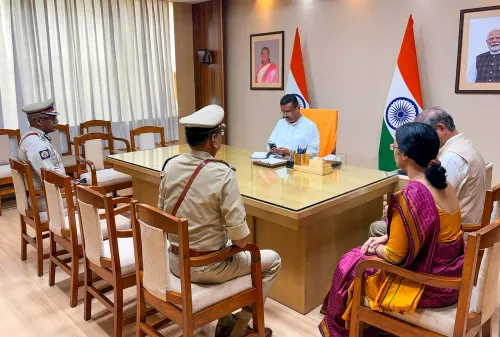
Kolkata Police mandates uniforms on duty, 5 specialised units exempt
Synopsis
Kolkata Police has formally barred its personnel from performing official duties in plain clothes — invoking a 27-year-old Supreme Court ruling that many in the force had apparently stopped following. The order, signed by Commissioner Ajay Nand, exempts only five intelligence and investigative units, and requires prior approval for any exception elsewhere.
Key Takeaways
Kolkata Police Commissioner Ajay Nand issued the uniform mandate on 24 May , effective immediately across all ranks.
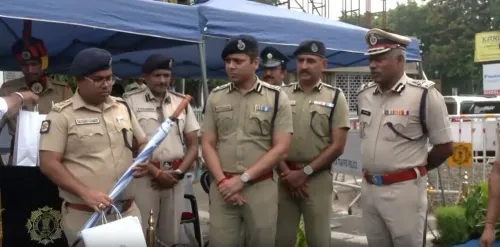
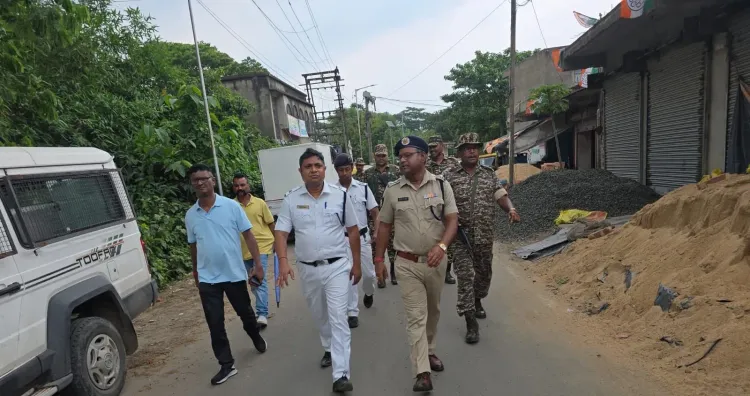
All personnel must be in uniform for raids, arrests, law and order duties, and any other official function.
Five units are exempt: Detective Department , Special Branch , Enforcement Branch , Special Task Force , and Cybercrime Division .
Any non-exempt officer needing to work in plain dress must obtain prior permission from higher authorities.
The order cites the Supreme Court's 1997 D.K.
Basu vs West Bengal ruling, which mandates uniforms and visible name tags during arrests and interrogations.
The judgment protects fundamental rights under Articles 21 and 22 of the Constitution and was originally issued to curb custodial misconduct.
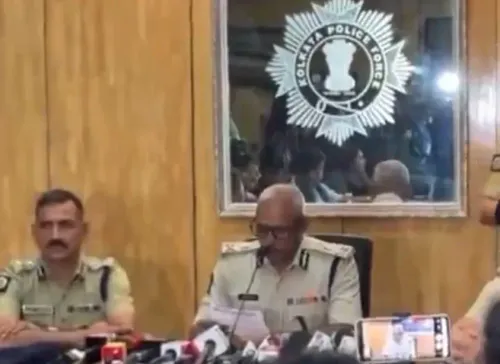
Kolkata Police has issued a formal order requiring all personnel — across every rank — to be in uniform while performing official duties, with exceptions carved out for five specialised departments where plain-clothes operations are operationally essential. The directive, issued from the office of Police Commissioner Ajay Nand on 24 May, takes immediate effect.
Key Developments
The order bars officers and staff from conducting raids, making arrests, maintaining law and order, or carrying out any other official function in plain dress. Personnel from the Detective Department, Special Branch, Enforcement Branch, Special Task Force, and the Cybercrime Division are exempt, given that plain-clothes work is central to their mandates.
For officers outside these five units who require an exception, prior written permission from higher authorities is now mandatory before proceeding on duty in plain dress.
The Supreme Court Directive Behind the Order
The Commissioner's notification explicitly invokes the Supreme Court's landmark 1997 ruling in the D.K. Basu versus West Bengal Government case — a judgment handed down during the Left Front government's tenure in the state. In that case, the apex court laid down binding guidelines to curb police misconduct, custodial torture, and deaths in lock-ups.
Among the court's directives: all police personnel on duty must be in uniform, and those conducting arrests or interrogations must wear visible name tags with accurate designations. The ruling is regarded as a cornerstone of the protection of fundamental rights under Articles 21 and 22 of the Constitution.
Why This Order Matters Now
The reissuance of this directive — nearly three decades after the Supreme Court's ruling — signals that compliance had slipped within the force. A senior city police official confirmed the notification had been formally circulated, underscoring that this is not a guideline but an enforceable order. Notably, incidents of unidentified persons conducting police-style operations have periodically drawn public concern in urban India, making uniform compliance a live accountability issue.
This comes amid broader national scrutiny of police conduct standards, with courts and civil society groups repeatedly flagging gaps between landmark judgments and on-ground practice.
What Happens Next
The order is now in force across all Kolkata Police units outside the five exempt departments. Whether the Commissioner's office will institute a monitoring or compliance mechanism remains to be seen. Rights groups are likely to watch implementation closely, given the D.K. Basu judgment's foundational status in custodial rights jurisprudence.
Frequently Asked Questions
What is the Kolkata Police uniform order issued in May 2025?
Kolkata Police issued an order on 24 May 2025 requiring all personnel to be in uniform while on official duty. The directive, signed by Police Commissioner Ajay Nand, bans plain-clothes operations for all units except five specialised departments.
Which Kolkata Police departments are exempt from the uniform rule?
Five departments are exempt: the Detective Department, Special Branch, Enforcement Branch, Special Task Force, and Cybercrime Division. These units are excluded because plain-clothes work is considered integral to their operational functions.
What is the D.K. Basu vs West Bengal case cited in the order?
It is a landmark 1997 Supreme Court judgment that laid down binding guidelines for police conduct during arrests and detention, aimed at curbing custodial torture and deaths in lock-ups. The ruling requires police on duty to be in uniform and wear visible name tags with accurate designations, and is rooted in the protection of fundamental rights under Articles 21 and 22 of the Constitution.
What happens if a non-exempt officer needs to work in plain clothes?
Officers from departments not covered by the exemption must seek prior written permission from higher authorities before performing any official duty in plain dress. Proceeding without such permission would be a violation of the order.
Why was this order issued now, nearly 30 years after the Supreme Court ruling?
While the order does not explicitly state a trigger, its issuance suggests that plain-clothes operations without authorisation had become a recurring practice within the force. The Commissioner's office has chosen to reassert compliance with the Supreme Court's binding directive.