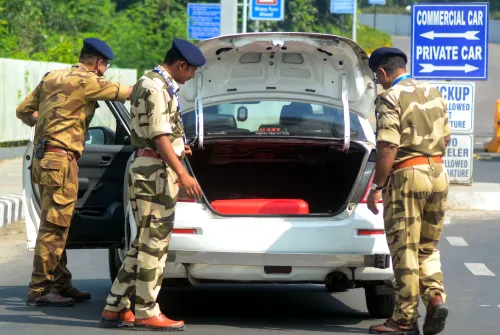
Kolkata Police to patrol banks under new 10-point directive by Commissioner

Synopsis
Kolkata Police has overhauled its bank security model — shifting patrolling responsibility from the centralised Anti-Robbery Wing to local station OCs under a fresh 10-point directive. The move signals a push for faster ground response to rising financial crime, with round-the-clock surveillance now mandated even when bank branches are shut.
Key Takeaways
Kolkata Police Commissioner Ajay Nand issued a 10-point directive on 20 August reassigning bank security patrolling to local police station OCs.
Previously, the Anti-Robbery Wing of the intelligence department handled bank patrols; local stations now take over that role.
OCs must verify CCTV coverage , guard adequacy, and emergency alarm status at each bank under their jurisdiction.
Patrols are mandated round the clock — including when branches are closed.
The Anti-Robbery Wing will refocus on intelligence gathering, criminal profiling, and supporting stations when needed.
Additional deployment is required during festivals, large events, or high-value cash transactions .
Kolkata Police Commissioner Ajay Nand has issued a 10-point directive reassigning bank security patrolling from the intelligence department's anti-robbery wing to local police station personnel, with officers-in-charge (OC) of each police station now directly accountable for the safety of banks and financial institutions across the city. Lalbazar, the Kolkata Police headquarters, formally issued the directive on Thursday, 20 August.
Key Developments
Until now, the Anti-Robbery Wing of the intelligence department handled patrolling and security checks outside banks. Under the new arrangement, that responsibility shifts to local police stations, with OCs required to conduct regular security reviews. Patrols will cover not just banking hours but also periods when branches are closed — a significant expansion of the surveillance mandate.
What the 10-Point Directive Covers
The Commissioner's directive lays out specific obligations for station-level officers. Police personnel on patrol must make regular visits to banks and verify whether each branch has adequate security guards, whether those guards are trained, whether sufficient CCTV cameras are operational, and whether emergency alarm systems are functional.
Officers are also required to closely monitor any suspicious persons or vehicles near bank premises and maintain regular contact with bank security staff. Any credible intelligence or signals of planned robbery or financial crime must be escalated to higher authorities immediately.
Why Lalbazar Issued the Directive
According to police, financial fraud and crimes targeting financial institutions have been on the rise in Kolkata, prompting Lalbazar to tighten precautionary measures. The directive reflects a structural shift: by decentralising bank security to local stations, the force aims to ensure faster ground-level response rather than relying on a centralised intelligence unit for routine patrolling.
Notably, the Anti-Robbery Wing will not be sidelined entirely — it will now concentrate on gathering and analysing intelligence related to robberies, identifying known criminals, and supporting police stations when required. Information exchange between the intelligence wing and local stations on criminal patterns will continue.
Supervision and Special Deployments
The concerned Assistant Commissioner or Deputy Commissioner of each area will supervise bank patrolling and conduct periodic reviews. During festivals, large public events, or periods of high cash movement at branches, the concerned police station will deploy additional personnel. If the threat level warrants it, the station can act in consultation with the intelligence department.
With this directive in place, Kolkata's bank security framework is set to operate on a more localised, proactive footing — and its effectiveness will depend largely on consistent implementation at the station level.
Point of View
But risks diluting the focused expertise the Anti-Robbery Wing had built around financial crime. The real question is whether already-stretched local stations can absorb this additional mandate without compromising other policing duties. Rising financial fraud in Kolkata demands sustained attention — not just a structural reshuffle on paper.
NationPress
5 Oct 2026
Frequently Asked Questions
What is the new Kolkata Police directive on bank security?
Kolkata Police Commissioner Ajay Nand has issued a 10-point directive making officers-in-charge of local police stations responsible for patrolling and securing banks in their jurisdiction. The directive, issued on 20 August, shifts this role away from the intelligence department's Anti-Robbery Wing.
Why has Kolkata Police changed its bank patrolling system?
According to police, financial fraud and crimes targeting banks and financial institutions have increased in Kolkata. Lalbazar issued the directive to tighten precautions and ensure faster, ground-level response through local stations rather than a centralised unit.
What will the Anti-Robbery Wing do now?
The Anti-Robbery Wing of the intelligence department will now focus exclusively on gathering and analysing intelligence related to robberies, identifying criminals, and providing support to local police stations when required. It will no longer handle routine bank patrols.
What does the 10-point directive require OCs to check at banks?
OCs must verify that banks have adequate and trained security guards, functional CCTV cameras, and working emergency alarms. They must also monitor suspicious persons or vehicles near branches and maintain contact with bank security staff.
Will banks be monitored only during working hours?
No. The directive mandates that police patrol banks and monitor them even when branches are closed, covering high-risk periods outside standard banking hours as well as during festivals and large cash transactions.