Kolkata Port logs 5.1% cargo growth; Haldia imports lime for first time
Synopsis
Kolkata's Syama Prasad Mookerjee Port has posted a solid 5.10% cargo growth in the first seven months of FY2026-27, with container traffic up nearly 8%. But the headline moment is Haldia's first-ever quick lime import — a small consignment with big implications for eastern India's steel sector and the port's industrial diversification ambitions.
Key Takeaways
Syama Prasad Mookerjee Port (SMP), Kolkata handled 40.527 MMT of cargo in April–October 2026 , up 5.10% year-on-year.
Haldia Dock Complex grew 5.28% to 29.752 MMT ; Kolkata Dock System rose 4.58% to 10,775 MMT .
Container traffic reached 5,87,399 TEUs , a 7.98% increase; KDS recorded a 15.83% jump in October 2026 alone.
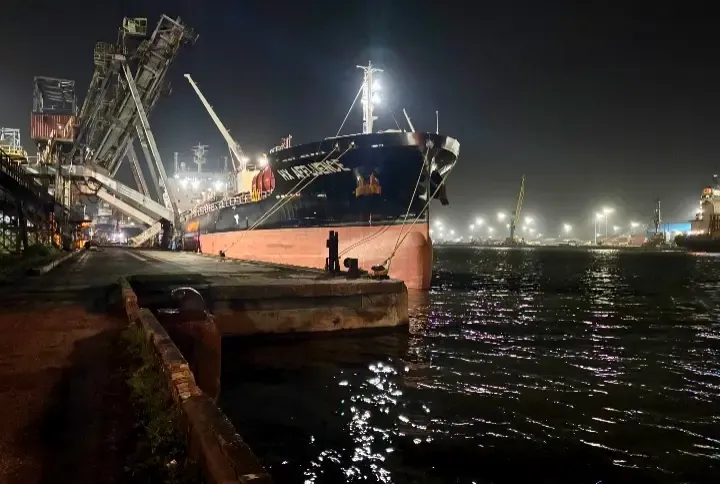
The MV ASIAN HONOR delivered 8,133 tonnes of quick lime and hydrated lime from Dibba, UAE on 1 November 2026 — Haldia's first such consignment.
Quick lime is a key steelmaking raw material; the new cargo stream is expected to support industries across eastern India .
The port remains constrained by limited draught as the country's oldest operational riverine major port.
Syama Prasad Mookerjee Port (SMP), Kolkata, handled 40.527 million metric tonnes (MMT) of cargo between April and October 2026, registering a 5.10% increase over the 38.562 MMT recorded in the corresponding period of the previous financial year. The port also marked a milestone by receiving its first-ever consignment of quick lime and hydrated lime at the Haldia Dock Complex (HDC), signalling a push to diversify industrial cargo.
Cargo Growth Across Both Dock Systems
Both major facilities under SMP, Kolkata contributed to the growth. The Haldia Dock Complex (HDC) handled 29.752 MMT, up from 28.259 MMT in April–October 2025, a growth of 5.28%. The Kolkata Dock System (KDS) grew by 4.58%, handling 10,775 MMT against 10.303 MMT in the same period of the previous fiscal year.
Rathendra Raman, Chairperson of SMP, Kolkata, attributed the performance to infrastructure upgrades and improved operational efficiency. Both private berth operators and the port authority inducted additional cranes for vessel operations, while a floating crane deployed at the Diamond Harbour anchorage helped bring in more cargo and reduce dead freight on vessels.
Container Traffic Surges Nearly 8%
Container handling emerged as a standout performer. SMP, Kolkata processed 5,87,399 TEUs (twenty-foot equivalent units) during April–October 2026, compared to 5,43,982 TEUs a year earlier — an overall growth of 7.98%.
KDS handled 4,54,310 TEUs, registering a 7.51% rise, while HDC processed 1,33,089 TEUs, posting a stronger growth of 9.64%. October was particularly strong for KDS, which recorded a 15.83% jump in container traffic, handling 64,224 TEUs against 55,449 TEUs in October 2025.
'This performance underscores the continued momentum in containerised cargo movement through SMP, Kolkata,' Raman said, adding that equipment induction and anchorage deployment were key drivers.
First-Ever Quick Lime Import at Haldia
In a notable first, the Haldia Dock Complex received a consignment of quick lime and hydrated lime on 1 November 2026. The vessel MV ASIAN HONOR arrived from Dibba, United Arab Emirates, carrying 8,133 tonnes of the material packed in bags.
Quick lime is a critical raw material in steel manufacturing, used to clean steel, remove impurities, and produce slag. The port authority expects this new cargo stream to attract further industrial business and support steel and allied industries across eastern India. This development is significant for SMP, Kolkata, given its strategic role as a gateway for Nepal and Bhutan — two landlocked neighbours heavily reliant on Indian ports for bulk commodity imports.
Constraints and the Road Ahead
Despite the growth, SMP, Kolkata — the oldest operational riverine major port in the country — continues to operate under draught constraints, limiting the size of vessels it can accommodate. Port management has had to adopt targeted strategies to grow its cargo share for eastern and northern India, as well as for the landlocked economies of Nepal and Bhutan.
Chairperson Raman indicated the port is focused on better operations, stronger infrastructure, and improved customer service, and expressed confidence in achieving higher targets in the years ahead.
Point of View
Kolkata is creditable for a riverine port hemmed in by draught limitations, but the more telling number is the 15.83% container surge at KDS in October — it suggests momentum, not just a statistical bounce. The quick lime import at Haldia is a minor tonnage milestone with an outsized strategic signal: if the port can consistently attract industrial raw materials for the steel belt of eastern India, it begins to reposition itself beyond bulk commodities. The real challenge, however, remains structural — draught constraints cap vessel size and limit competitive reach against deeper-water alternatives. Infrastructure investment to ease those constraints, not just crane inductions, will determine whether today's growth figures become a lasting trend or a seasonal peak.
NationPress
3 Nov 2026
Frequently Asked Questions
How much cargo did Kolkata Port handle between April and October 2026?
Syama Prasad Mookerjee Port (SMP), Kolkata handled 40.527 MMT of cargo from April to October 2026, a 5.10% rise over the 38.562 MMT recorded in the same period of the previous financial year. Both the Haldia Dock Complex and the Kolkata Dock System contributed to this growth.
What is the significance of Haldia receiving quick lime for the first time?
On 1 November 2026, the Haldia Dock Complex received its first-ever consignment of quick lime and hydrated lime — 8,133 tonnes aboard the MV ASIAN HONOR from Dibba, UAE. Quick lime is a critical raw material in steel production, used to remove impurities and produce slag, and this new cargo stream is expected to support industrial growth in eastern India.
How did container traffic perform at Kolkata Port in 2026?
SMP, Kolkata handled 5,87,399 TEUs in April–October 2026, up 7.98% from 5,43,982 TEUs a year earlier. October was particularly strong for the Kolkata Dock System, which saw a 15.83% jump in container traffic, handling 64,224 TEUs against 55,449 TEUs in October 2025.
What are the main constraints facing Syama Prasad Mookerjee Port?
SMP, Kolkata — the oldest operational riverine major port in India — faces draught constraints that limit the size of vessels it can accommodate. This requires port management to adopt strategic measures to grow cargo volumes for eastern and northern India and for the landlocked nations of Nepal and Bhutan.
What infrastructure steps has Kolkata Port taken to boost cargo handling?
The port has inducted additional cranes for vessel operations at both private berths and port-operated facilities. It has also deployed a floating crane at the Diamond Harbour anchorage, which has helped increase cargo intake and reduce dead freight on vessels calling at the port.