Karnataka Dy CM Parameshwara urges Modi for time-bound women's 33% quota rollout
Synopsis
Karnataka Deputy CM G. Parameshwara used a Commonwealth Women Parliamentarians conference in Bengaluru to press PM Modi for a legally binding, time-bound plan to operationalise the 33% women's reservation — warning that the 2023 constitutional amendment remains symbolic as long as it stays chained to an incomplete Census and delimitation process.
Key Takeaways
Karnataka Deputy CM G.
Parameshwara urged PM Modi and the Union Government on 17 November 2026 to fix a time-bound roadmap for 33% women's reservation in Parliament and state assemblies.
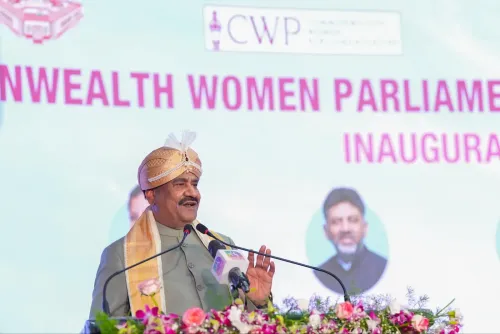
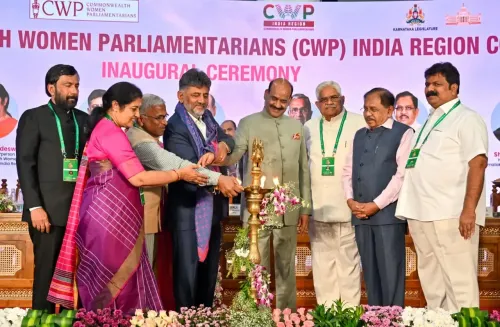
The appeal was made at the inaugural CWP India Region Conference at Vidhana Soudha Banquet Hall, Bengaluru .
The Constitution (108th Amendment) Bill , passed in the Rajya Sabha in 2010 with 186 votes , never completed its parliamentary journey.
The 106th Constitutional Amendment (2023) enacted the quota but linked implementation to the Census and delimitation, leaving it unoperationalised.
Parameshwara called for delinking the reservation from delimitation disputes and for cross-party consensus to accelerate roll-out.
He also proposed cyber-safety measures and mentorship programmes for women legislators at the conference.
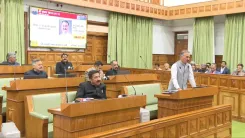
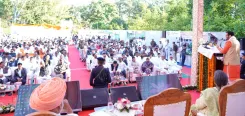
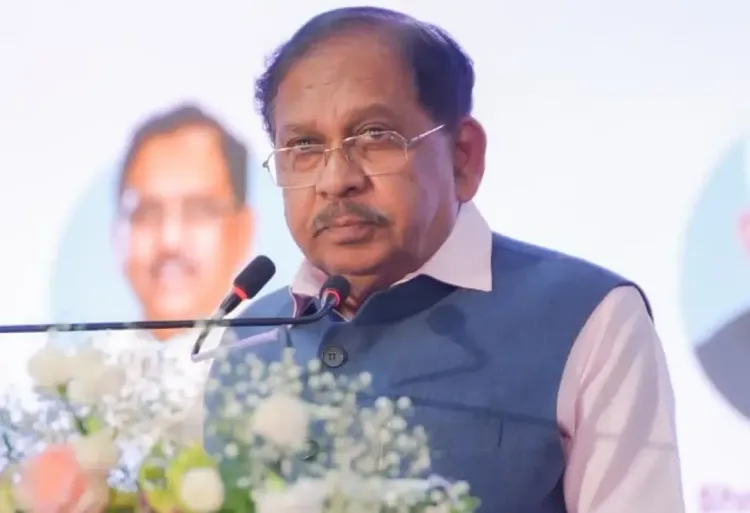
Karnataka Deputy Chief Minister G. Parameshwara on Tuesday, 17 November 2026, urged the Union Government and Prime Minister Narendra Modi to establish a clear, lawful, and time-bound roadmap for implementing 33 per cent reservation for women in Parliament and State Legislative Assemblies at the earliest possible elections. He made the appeal in Bengaluru at the inaugural session of the first Conference of Commonwealth Women Parliamentarians (CWP), India Region, held at the Vidhana Soudha Banquet Hall.
The Core Appeal
Addressing delegates, Parameshwara argued that women's political representation must move beyond constitutional assurances and translate into meaningful participation in governance and decision-making. 'The question before us is not whether women are capable of leadership. Women have established that beyond argument. The question is whether our institutions have been courageous enough to share power with women,' he said.
He called on Parliament to consider a consensus-based approach to delink the reservation from wider disputes over delimitation — a step he said would remove the principal procedural obstacle to implementation.
Legislative History Behind the Demand
Parameshwara recalled that the Constitution (108th Amendment) Bill was introduced in 2008 under the Congress-led UPA government of former Prime Minister Manmohan Singh and Sonia Gandhi. The bill was passed in the Rajya Sabha on 9 March 2010 with 186 votes in favour and one against, but could not complete its passage through Parliament.
He also cited Congress leader Rahul Gandhi's 2018 letter to Modi offering party support for the legislation, and noted that the Congress's 2024 election manifesto had sought implementation without delays linked to delimitation. Welcoming the 106th Constitutional Amendment enacted in 2023, Parameshwara said the reservation had yet to translate into actual representation, as its roll-out remains tied to the Census and the subsequent delimitation exercise.
Digital Safety and Mentorship Agenda
On the conference theme of inclusive cyberspace and mentorship, Parameshwara highlighted the dangers of online abuse, threats, coordinated harassment, manipulated images, and deepfakes targeting women leaders. He proposed confidential cyber-incident reporting systems, rapid-response assistance, digital-security and artificial-intelligence literacy programmes, and structured training in public communication and legislative research.
He also advocated cross-party mentorship programmes linking experienced parliamentarians with first-time women representatives, alongside legislative research support, safe travel and accommodation, childcare facilities, anti-harassment mechanisms, and greater opportunities for women to chair parliamentary committees.
Historical Anchoring and Vision for 2047
Drawing on Karnataka's democratic heritage, Parameshwara cited the 12th-century Anubhava Mantapa associated with philosopher-saints Basavanna and Allama Prabhu as an early model of equality and women's participation in public discourse. Looking ahead to 2047, he said India's democratic progress must be measured by whether women could aspire to leadership at every level — from Gram Sabhas to Parliament and the highest offices of government.
He concluded that women's representation was not a concession granted by democracy, but a measure of whether democracy had fulfilled its foundational promise of equality. With the Census and delimitation timelines still uncertain, the question of when the 33 per cent quota will actually take effect remains open.
Point of View
He frames the Congress as the persistent advocate and the BJP-led Centre as the reluctant gatekeeper. The 106th Amendment of 2023 gave the government credit for enshrining the quota constitutionally, while simultaneously building in a deferral mechanism — Census plus delimitation — that could push actual implementation well past 2029. That architecture of deferred delivery is the real target of Tuesday's statement. Unless Parliament agrees to delink the quota from delimitation, the 33% reservation risks remaining a constitutional decoration rather than a governance reality.
NationPress
17 Nov 2026
Frequently Asked Questions
What is the 33% women's reservation in Parliament that Parameshwara is demanding?
It is a constitutional provision that would reserve one-third of seats in the Lok Sabha and all State Legislative Assemblies for women. The 106th Constitutional Amendment , passed in 2023 , enacted the quota but linked its implementation to the completion of the national Census and a subsequent delimitation exercise, meaning it has not yet taken effect in any election.
Why has the 33% women's reservation not been implemented yet?
The amendment explicitly conditions implementation on the Census and delimitation process, neither of which has been completed. Critics, including Parameshwara, argue that this linkage creates an indefinite delay and are calling on Parliament to delink the reservation from delimitation through a consensus-based approach.
What was the Constitution (108th Amendment) Bill mentioned at the conference?
It was a women's reservation bill introduced in 2008 under the UPA government of Manmohan Singh . The Rajya Sabha passed it on 9 March 2010 with 186 votes in favour and one against, but it never completed passage through the Lok Sabha and therefore did not become law.
What else did Parameshwara propose at the CWP conference?
Beyond the reservation demand, he proposed confidential cyber-incident reporting systems, rapid-response digital safety assistance, AI literacy programmes, cross-party mentorship linking senior and first-time women parliamentarians, childcare and safe travel facilities, anti-harassment mechanisms, and more opportunities for women to chair legislative committees.
What is the Commonwealth Women Parliamentarians India Region conference?
It is a forum of women parliamentarians from Commonwealth nations, with an India Region chapter. The inaugural conference of the India Region was held on 17 November 2026 at the Vidhana Soudha Banquet Hall in Bengaluru , with its theme focused on inclusive cyberspace and mentorship for women in elected office.