Lalan Singh flags rising women power in panchayats
Synopsis
Union Minister Rajiv Ranjan Singh (Lalan Singh) highlighted the rising strength of women in Indian panchayats, pointing to the constitutional framework established by the 73rd Amendment and decades of expanding reservation that now stretches to 50 percent in several states.
Key Takeaways
Union Panchayati Raj Minister Lalan Singh posted on X on 24 September 2026 underlining women's growing strength in panchayat institutions.
The 73rd Constitutional Amendment (1992) mandated a minimum one-third reservation of panchayat seats for women.
Several Indian states, including Bihar , have raised the quota to 50 percent through state legislation.
The Ministry of Panchayati Raj regularly highlights aggregate trends in elected women representatives as a governance priority.
Ensuring genuine decision-making authority for elected women representatives — beyond token representation — remains the ongoing policy challenge.
More than three decades after a constitutional amendment rewrote the rules of rural democracy, Union Panchayati Raj and Fisheries Minister Rajiv Ranjan Singh is underlining the gains — highlighting on Thursday, 24 September 2026 that women's power in panchayats is steadily growing.
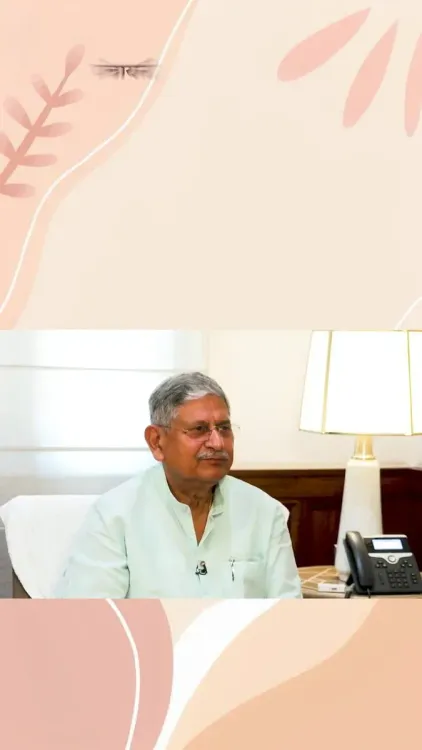
Posting in Hindi on X and tagging the Ministry of Panchayati Raj (@mopr_goi), the minister's message was direct: 'Panchayaton mein mahilaon ki taakat lagatar badh rahi hai' ('The strength of women in panchayats is continuously increasing'). The post was accompanied by a video, signalling an official ministry communication rather than a casual observation.
The 1992 amendment that started it all
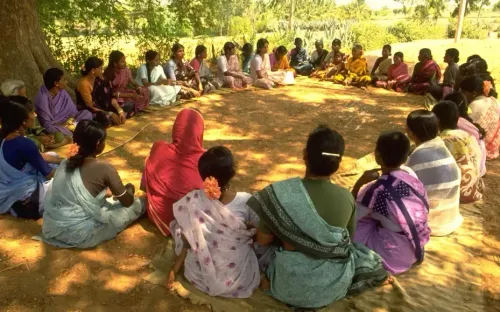
The bedrock of women's political participation in rural India is the 73rd Constitutional Amendment Act of 1992, which gave constitutional status to panchayat institutions and mandated a minimum one-third reservation of seats — including chairperson positions — for women. It was a structural shift: overnight, the village council stopped being an exclusively male preserve.
Several states moved further. Through state legislation, a number of them raised the women's quota to 50 percent — meaning that in roughly half of India's states today, at least every other panchayat seat must be held by a woman. The compounding effect over thirty-plus years has produced a large, if unevenly distributed, cohort of elected women leaders at the grassroots.
Why the Ministry keeps returning to this story
The Ministry of Panchayati Raj has made gender representation a recurring communication theme — and not without reason. Elected women representatives at the panchayat level now number in the millions across the country, making Indian local governance one of the largest formal experiments in women's political inclusion anywhere in the world. Each successive state panchayat election becomes a data point in that longer arc.
For Lalan Singh, a senior Janata Dal (United) leader whose party governs Bihar — a state that has maintained 50 percent reservation for women in panchayat bodies — the message carries home-state resonance as much as national policy significance. Bihar's experience is frequently cited as a model for how legislative intent can translate into on-the-ground representation.
The work, though, is far from finished. Representation and authority are not the same thing. Ensuring that elected women representatives exercise genuine decision-making power — rather than functioning as proxies — remains the central challenge that periodic ministry reports and state panchayat election outcomes will continue to test.
Point of View
But converting formal seat counts into substantive political agency remains work in progress, and the ministry's periodic communications serve as both scorecard and political signalling.
NationPress
24 Sept 2026
Frequently Asked Questions
What percentage of panchayat seats are reserved for women in India?
The 73rd Constitutional Amendment mandates a minimum one-third reservation of panchayat seats for women. Several states have raised this to 50 percent through their own legislation.
Which amendment gave women reservation in panchayats?
The 73rd Constitutional Amendment Act of 1992 gave constitutional status to panchayats and mandated at least 33 percent reservation for women in seats and leadership positions.
Which states have 50 percent reservation for women in panchayats?
Several states, including Bihar, have enacted legislation raising women's reservation in panchayat bodies to 50 percent, going beyond the constitutional minimum.
Who is Lalan Singh and which ministry does he head?
Lalan Singh is the popular name for Rajiv Ranjan Singh, the Union Minister of Panchayati Raj, Fisheries, Animal Husbandry and Dairying, and a senior Janata Dal (United) leader.
What is the role of the Ministry of Panchayati Raj in women's empowerment?
The Ministry of Panchayati Raj is responsible for policy, capacity building and implementation for panchayat institutions, including monitoring gender representation and publishing data on elected women representatives.