Lalan Singh launches Atmanirbhar Panchayat programme, SAMARTH portal
Synopsis
Union Minister Rajiv Ranjan Singh launched the Atmanirbhar Panchayat programme, SAMARTH Portal, and Model OSR Rules at Krishi Bhavan on 27 July 2026 to make India's gram panchayats fiscally self-reliant and digitally capable. The Ministry also received the NAeG 2026 Gold Award for its Panchayat Advancement Index.
Key Takeaways
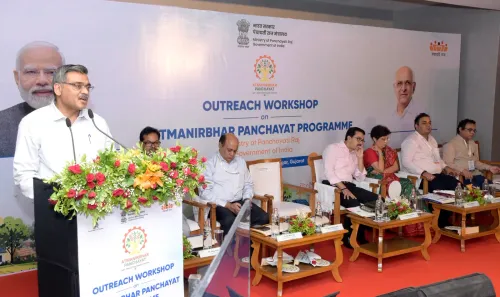
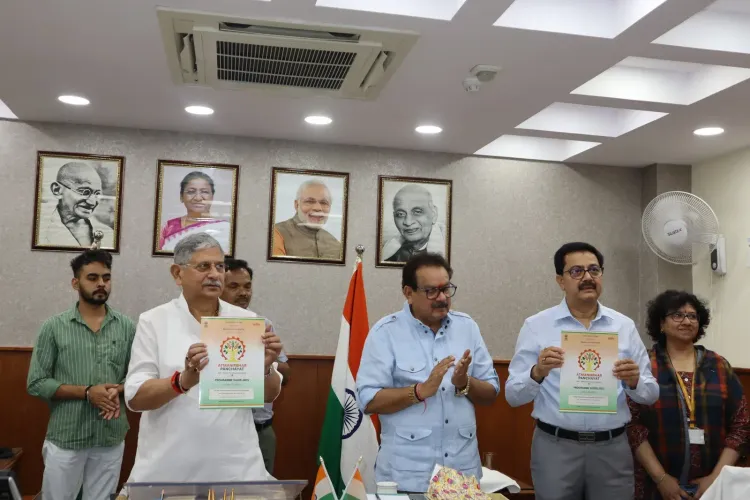
Union Minister Lalan Singh launched the Atmanirbhar Panchayat programme and SAMARTH Panchayat Portal at Krishi Bhavan, New Delhi on 27 July 2026 .
Model Own Source Revenue (OSR) Rules were released to help panchayats levy and collect local revenues, reducing grant dependency.
The SAMARTH Portal aims to digitise panchayat planning, revenue management, and service delivery across India's approximately 2.5 lakh gram panchayats .
The Ministry of Panchayati Raj received the National e-Governance Award (NAeG) 2026 Gold Trophy for its Panchayat Advancement Index (PAI) .
The initiatives align with the Viksit Bharat 2047 framework and build on the constitutional mandate of the 73rd Amendment Act, 1992 .
State-level adoption of Model OSR Rules and SAMARTH Portal integration will determine the on-ground impact of these reforms.
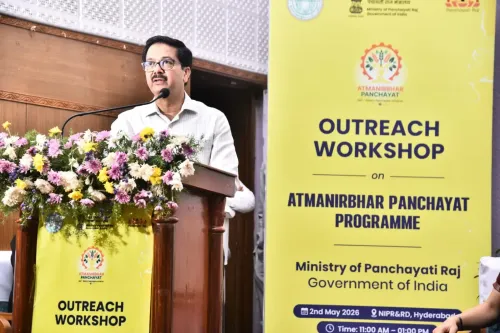
Union Panchayati Raj and Fisheries Minister Rajiv Ranjan Singh, popularly known as Lalan Singh, on Monday, 27 July 2026, launched the Atmanirbhar Panchayat programme and the SAMARTH Panchayat Portal at Krishi Bhavan, New Delhi, alongside releasing a Model Own Source Revenue (OSR) Rules framework for Panchayati Raj Institutions across India.
Context
Addressing the launch, Minister Singh described the initiatives as a milestone for gram panchayats, stating — 'ये पहलें पंचायतों को आर्थिक रूप से सशक्त, तकनीकी रूप से सक्षम तथा स्थानीय स्तर पर राजस्व सृजन के माध्यम से आत्मनिर्भर बनाने की दिशा में मील का पत्थर सिद्ध होंगी' ('These initiatives will prove to be a milestone in making panchayats economically empowered, technologically capable, and self-reliant through local revenue generation'). The three-pronged launch — a new programme, a digital portal, and a model regulatory framework — marks one of the more comprehensive single-day rollouts by the Ministry of Panchayati Raj in recent years.
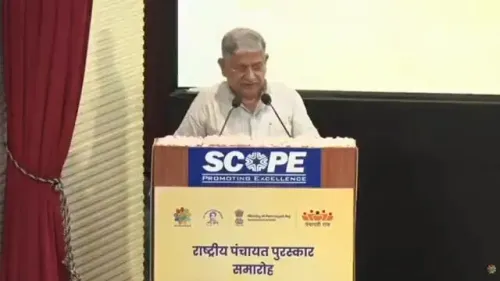
At the same event, the Ministry formally received the National e-Governance Award (NAeG) 2026 Gold Trophy for its Panchayat Advancement Index (PAI), recognised under the category of data-driven governance for Viksit Bharat. The award citation acknowledged the Ministry's sustained efforts in strengthening good governance, transparency, and evidence-based decision-making at the panchayat level.
Policy Backdrop
The launches build on a constitutional and legislative lineage stretching back to the 73rd Constitutional Amendment Act, 1992, which gave Panchayati Raj Institutions (PRIs) formal constitutional status and mandated fiscal and administrative devolution to the third tier of government. Despite that mandate, panchayats across India have remained heavily dependent on central and state grants, with own-source revenue — taxes, fees, and local levies — contributing a negligible share of their budgets.
The Model OSR Rules released on Monday are designed to give states a template for enabling panchayats to levy and collect local revenues systematically. This complements earlier efforts under the Rashtriya Gram Swaraj Abhiyan (2018) and the broader Digital India programme, which extended e-governance tools to rural local bodies. The SAMARTH Portal is positioned as a unified digital interface for panchayat planning, revenue tracking, and service delivery — reducing paperwork and improving real-time oversight.
The Panchayat Advancement Index, for which the Ministry received the NAeG Gold Award, is a composite performance metric that ranks panchayats on governance outcomes, feeding into the government's Viksit Bharat 2047 framework — the national vision for a developed India by the centenary of independence.
Stakeholders and Impact
India has approximately 2.5 lakh gram panchayats covering the bulk of the country's rural population. For these institutions, the Atmanirbhar Panchayat programme and the Model OSR Rules represent a structural shift: rather than waiting for devolved grants, panchayats would be encouraged and equipped to raise revenues locally — through property taxes, user charges, and service fees — reducing fiscal dependency on higher tiers of government.
The SAMARTH Portal is expected to benefit elected panchayat representatives and administrative staff by digitising processes that are currently manual or fragmented across state-specific systems. Civil society organisations working on rural governance and Finance Commission observers have long argued that strengthening panchayat own-source revenues is a prerequisite for meaningful decentralisation — a concern these initiatives directly address.
What's Next
The practical impact of Monday's launches will depend heavily on state governments, which must notify and adapt the Model OSR Rules within their own legislative frameworks. Integration of the SAMARTH Portal into existing state-level panchayat planning and accounting systems will be a key operational test. Upcoming Finance Commission deliberations are expected to examine whether untied grants to panchayats should be linked to own-source revenue performance — a linkage these reforms could facilitate. If states move swiftly on adoption, the combination of fiscal tools and digital infrastructure could meaningfully advance the constitutional promise of self-governing village republics.
Point of View
A portal, and a model rulebook — signals that the Ministry of Panchayati Raj is moving from capacity-building rhetoric to structural fiscal reform, targeting the chronic under-collection of own-source revenues that has long undermined genuine decentralisation. The NAeG Gold Award for the Panchayat Advancement Index adds institutional credibility to the Ministry's data-governance push, reinforcing the central government's broader pattern of using performance indices to drive accountability across schemes. For the ruling NDA coalition, strengthening gram panchayats also carries political salience ahead of panchayat election cycles in several large states. The real test, however, lies with state governments: without timely notification of Model OSR Rules and seamless portal integration, these launches risk becoming well-intentioned announcements that stall at the state-centre interface.
NationPress
27 Jul 2026
Frequently Asked Questions
What is the Atmanirbhar Panchayat programme?
The Atmanirbhar Panchayat programme is a central government initiative aimed at making gram panchayats economically self-reliant by enabling them to generate local revenues through own-source mechanisms such as property taxes, user charges, and local levies, reducing their dependence on central and state grants.
What is the SAMARTH Panchayat Portal?
The SAMARTH Panchayat Portal is a digital platform launched by the Ministry of Panchayati Raj to support gram panchayats in planning, revenue management, and service delivery, aiming to digitise processes that are currently manual or fragmented across state systems.
What are Model OSR Rules for panchayats?
Model Own Source Revenue (OSR) Rules are a template regulatory framework released by the Ministry of Panchayati Raj to guide state governments in enabling panchayats to systematically levy and collect local revenues, strengthening their fiscal base.
What is the Panchayat Advancement Index (PAI)?
The Panchayat Advancement Index is a data-driven composite metric developed by the Ministry of Panchayati Raj to measure and rank panchayat performance on governance outcomes, supporting evidence-based reforms under the Viksit Bharat 2047 vision.
What is the NAeG 2026 Gold Award received by the Panchayati Raj Ministry?
The National e-Governance Award (NAeG) 2026 Gold Trophy was received by the Ministry of Panchayati Raj for its Panchayat Advancement Index, recognising the Ministry's use of data-driven governance tools to promote transparency and good governance at the panchayat level.